 how-to
How to Prepare for a Dental Bridge Procedure
Table of Contents
- What Happens During a Dental Bridge Procedure
- Managing Dental Anxiety During Treatment
- Dental Bridge Recovery Time and Aftercare
- Frequently Asked Questions
Last Updated: September 14, 2026
What Happens During a Dental Bridge Procedure
A dental bridge is a fixed prosthetic that replaces missing teeth by anchoring a false tooth (a pontic) to the natural teeth or implants on either side.
The dental bridge procedure follows a predictable sequence: your dentist numbs the area, reshapes the abutment teeth, and takes impressions or digital scans (the NHS). You leave with a temporary bridge, then return for a fitting where it is checked for bite alignment and cemented into place.
| Stage | What Happens | How You Prepare |
|---|---|---|
| Consultation | Radiographs, dental history, treatment plan | Bring medication list, ask about sedation |
| Preparation | Enamel reduction, local anaesthesia | Eat a light meal, arrange a lift home |
| Fitting | Permanent bridge cemented, bite checked | Book a follow-up visit in advance |
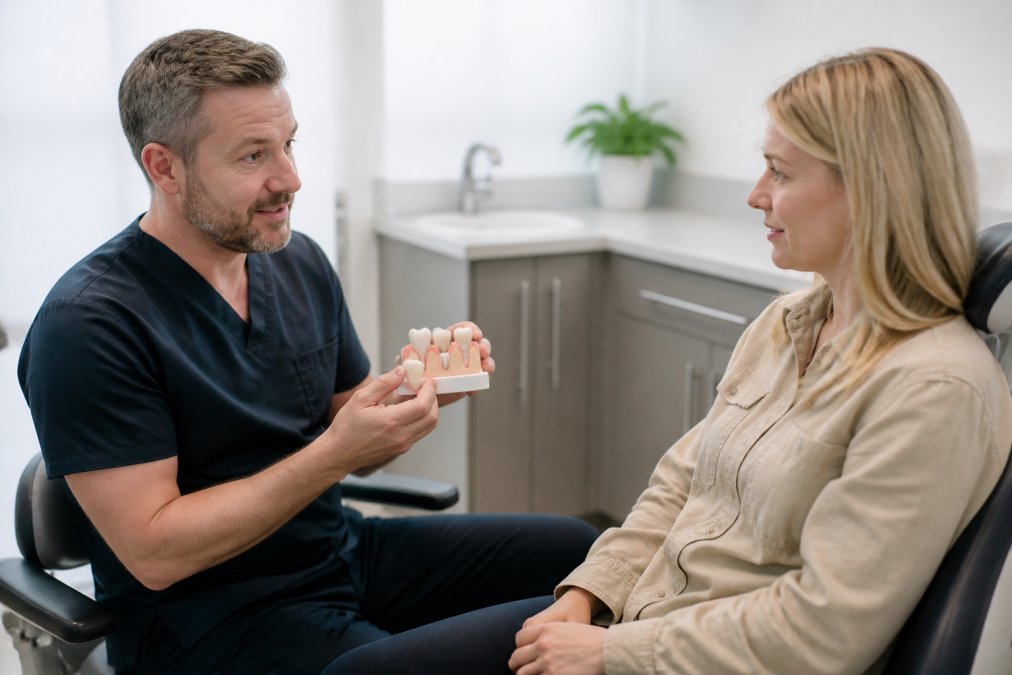
If you have not seen a dentist in years, the first visit is a conversation, not a commitment, nothing is drilled on day one.
Managing Dental Anxiety During Treatment
Managing dental anxiety during treatment is a skill you can plan for. Sedation dentistry, from inhalation to intravenous options, exists for patients who find the chair difficult, discuss it at consultation (Sedation options for dental treatment - Overview).
Practical steps that help: book a morning slot, agree a hand signal to pause treatment, bring headphones, and arrange a lift home if you use sedation. Staying silent about nerves is a mistake, the more your clinician knows, the more they can adjust.
Dental Bridge Recovery Time and Aftercare
Dental bridge recovery time is shorter than most people expect. Mild sensitivity and gum tenderness are normal for the first few days, and over-the-counter pain relief is usually enough. Eat soft food, then reintroduce harder textures gradually.
Long-term success depends on hygiene around the pontic, which cannot be flossed like a natural tooth, use interdental brushes or superfloss daily. Gum health around the abutment teeth determines how long the bridge lasts, so regular check-ups are essential.
| Timeline | What to Expect | What to Do |
|---|---|---|
| Days 1-3 | Sensitivity, mild swelling | Soft food, pain relief as advised |
| Weeks 2-4 | Bite feels normal | Resume normal diet, keep cleaning routine |
| Ongoing | Stable prosthetic | Check-ups, interdental cleaning daily |
If you have been putting off treatment and want to know what a fixed bridge, cantilever bridge, Maryland bridge, or implant-supported bridge would mean for you, NHS guidance on dental treatments is a useful starting point, though a consultation is the only way to get advice for your own situation.
Missing teeth affect how you eat, speak, and feel about your smile, and the preparation stage is where a good outcome is won or lost. At Rodney Street Dental, our CQC and GDC registered team builds bespoke treatment plans around your comfort, using trusted systems like Straumann and BioHorizons for restorative work, alongside teeth whitening and orthodontics such as Invisalign and Fastbraces. We offer video walkthroughs of your plan and prioritise a calm, unhurried environment for anxious patients. Get started with Rodney Street Dental and take the first step toward a healthy, confident smile.
Frequently Asked Questions
How painful is it to get a dental bridge fitted?
Most people feel pressure rather than pain, because the area is numbed with local anesthesia before any work begins. Some sensitivity around the prepared teeth is common for a few days afterwards and usually settles with over-the-counter pain relief. If discomfort lasts longer or worsens, contact your dentist so they can check the fit and your gum health.
What should I avoid doing after receiving a dental bridge?
Avoid chewing hard foods such as ice, nuts and crusty bread on the bridge for the first few days, and steer clear of very sticky sweets that can pull at the dental cement. Skip smoking and alcohol while the gum tissue heals, keep up gentle brushing and daily cleaning under the pontic, and attend your follow-up visit so the bite alignment can be checked.
How long does the entire dental bridge procedure take?
Fitting a fixed bridge usually involves two or three appointments. The first covers the consultation, radiographs and preparation of the abutment teeth, when a temporary bridge is fitted. Impressions are then sent to a dental laboratory, and the final fitting typically happens a couple of weeks later, once the permanent prosthetic is ready.