 how-to
Prevent Gum Pain During Whitening: A How-To Guide
Table of Contents
- How to Prevent Gum Pain During Whitening
- How to Protect Gums from Whitening Strips
- Whitening Gel on Gums: What to Do Immediately
- Frequently Asked Questions
Last Updated: October 8, 2026
How to Prevent Gum Pain During Whitening
Teeth whitening can transform your smile, but gum irritation is common, and preventable with the right approach to prevent gum pain whitening.
At Rodney Street Dental, we help patients achieve brighter teeth whilst protecting their gums. Most discomfort happens because whitening gel contacts soft tissue, so follow a few simple steps to whiten safely.
Gum pain during whitening occurs when bleaching agents irritate delicate gum tissue. Even brief contact can cause sensitivity or mild burning, so keep gel off your gums entirely.
To prevent gum pain whitening, use a gum barrier, apply gel 2-3mm below the gumline, and follow product directions exactly.
How to Protect Gums from Whitening Strips
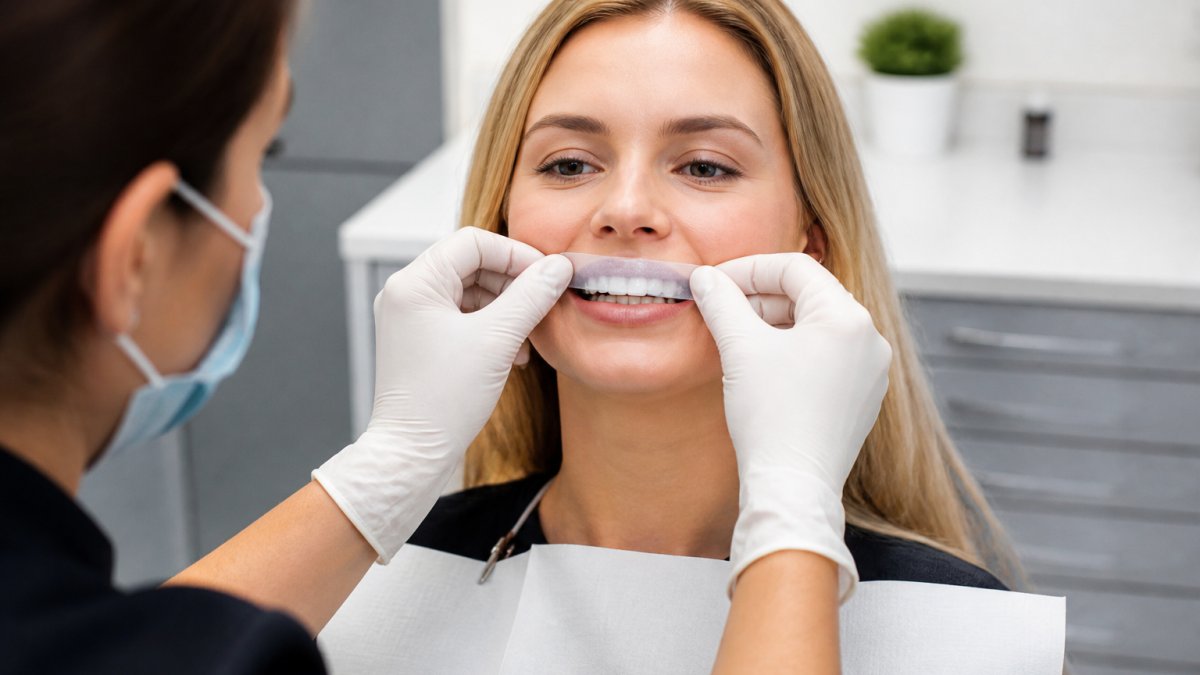
Whitening strips are convenient but need careful placement, with the edge below your gumline and off soft tissue.
Step 1: Dry your teeth completely. Moisture stops the strip sticking, so wipe your teeth with a clean tissue.
Step 2: Position the strip carefully. Start at the centre and press outward, leaving a 2-3mm gap above your gumline.
Step 3: Smooth out air bubbles. Press along the strip for full contact; air gaps reduce effectiveness and let gel seep underneath.
Step 4: Check your gums. If the edge touches your gum, reposition the strip higher.
Step 5: Set a timer. Most strips work for 30 minutes; leaving them on longer only increases irritation risk.
Tenderness after whitening is usually temporary and fades within hours. Use a desensitizing toothpaste for a few days and avoid hot and cold foods temporarily.
Whitening Gel on Gums: What to Do Immediately
If whitening gel contacts your gums, act quickly.
Step 1: Rinse right away. Use lukewarm water for 20-30 seconds; hot water can increase irritation.
Step 2: Remove the whitening product. Take strips off immediately, or remove a tray and rinse both it and your mouth.
Step 3: Apply a protective barrier. Use a fluoride mouthwash or a saltwater rinse (half a teaspoon of salt in warm water) to soothe tissue and reduce inflammation.
Step 4: Use over-the-counter pain relief if needed. A standard pain reliever helps if discomfort persists; follow the packet dosage.
Step 5: Wait before whitening again. Give gums 24-48 hours to recover; if irritation lasts longer than a few hours, skip your next session.
Most gel contact causes only mild, temporary irritation that resolves within hours. If you notice severe burning, blistering, or swelling that doesn't improve, contact your dentist.
Gum protection makes whitening safer and more comfortable. These steps work for most at-home products: keep gel off soft tissue, follow directions, and stop if irritation occurs.
For professional whitening that minimises gum risk, Rodney Street Dental offers professional teeth whitening with custom trays and protective barriers applied by our qualified team. We use trusted brands like Boutique Whitening and Philips Zoom, tailored to your teeth and gum sensitivity. Contact us to discuss a whitening plan that works for your smile.
Frequently Asked Questions
Why do my gums hurt when I whiten my teeth?
Gum pain during whitening occurs when the whitening gel, which contains peroxide compounds, contacts soft tissue directly. The gumline is sensitive and lacks the protective enamel that covers teeth. Even brief contact can cause irritation, tenderness, or a burning sensation. Gum pain is more common with at-home whitening strips or trays if they're not fitted properly or left on too long. Professional whitening treatments minimise this risk because dentists apply protective barriers and control application carefully.
How long do sore gums last after teeth whitening?
Mild irritation typically resolves within 24 to 48 hours. If you experience persistent soreness beyond a week, or if the area shows signs of a chemical burn (blistering, severe redness, or white patches), contact your dentist. Most discomfort can be managed with desensitising toothpaste, saltwater rinses, and avoiding hot or acidic foods during recovery. Professional whitening treatments cause less prolonged discomfort because the gel is applied under controlled conditions and removed promptly.
What should I do if whitening gel gets on my gums?
Stop the treatment immediately and rinse your mouth thoroughly with cool water for at least one minute. Use a soft cloth to gently pat the area dry. Avoid touching it further. Monitor the area over the next few hours, mild redness or tingling usually fades. If you notice blistering, severe pain, or white patches that don't improve within a few hours, contact your dentist. Never resume whitening until the area has fully healed.