 how-to
Managing Sensitivity After Whitening
Table of Contents
- Why Teeth Become Sensitive After Whitening
- How Long Does Whitening Sensitivity Last
- Immediate Steps to Relieve Post-Whitening Pain
- Foods to Avoid After Teeth Whitening
- Frequently Asked Questions
Last Updated: August 29, 2026
Why Teeth Become Sensitive After Whitening
Teeth whitening uses bleaching agents like hydrogen peroxide or carbamide peroxide to penetrate the enamel and lighten the underlying dentin (the American Dental Association). These agents temporarily open microscopic tubules in your teeth that lead directly to the nerve. Cold water, hot beverages, acidic foods, and even air can trigger the exposed nerve, causing sharp pain.
Your tooth structure contains tiny tunnels normally protected by enamel. When bleaching agents work through, they expose the dentin beneath, a layer containing fluid-filled channels connected to the pulp where your nerve sits. The sensitivity is temporary because your body begins remineralising the enamel almost immediately after treatment, but during the first few days, your teeth are genuinely more vulnerable.
How Long Does Whitening Sensitivity Last
Sensitivity after whitening typically subsides within 24 to 72 hours for most people (peer-reviewed research). The timeline depends on how aggressive the treatment was, how porous your enamel is, and how well you protect your teeth immediately after.
Professional whitening treatments tend to cause more initial sensitivity than over-the-counter options because they use stronger concentrations. However, professional treatments also come with guidance on managing discomfort. If sensitivity persists beyond a week, contact your dentist, as prolonged sensitivity can indicate enamel erosion or other underlying issues.
Immediate Steps to Relieve Post-Whitening Pain
The first 48 hours after whitening are critical. Start with a desensitising toothpaste containing potassium nitrate or strontium chloride (the American Dental Association). These ingredients block the tubules and calm nerve activity. Apply it directly to sensitive areas and leave it on for a few minutes before rinsing.
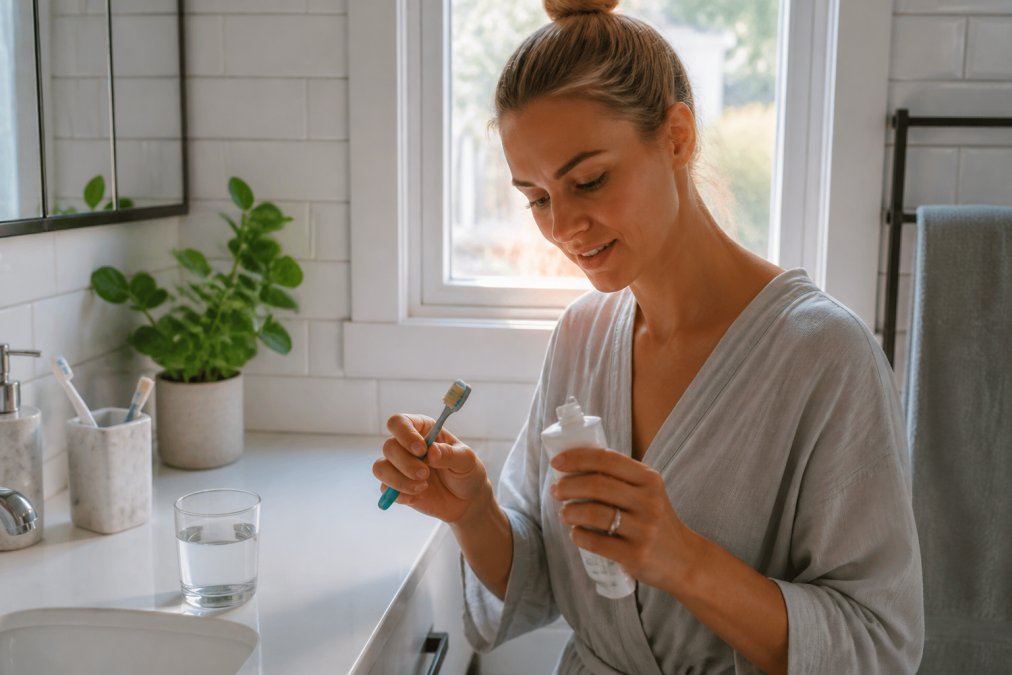
For immediate relief, over-the-counter analgesics like ibuprofen or paracetamol reduce inflammation around the nerve. Avoid touching sensitive teeth with your tongue or fingers. Rinse gently with lukewarm water only. If pain is severe, apply a fluoride gel to strengthen enamel and support remineralisation. Use a soft-bristled toothbrush with gentle, circular motions, hard brushing damages enamel further.
Foods to Avoid After Teeth Whitening
Avoid hot beverages entirely for at least 48 hours; temperature triggers exposed tubules and causes sharp pain. Cold foods and drinks are equally problematic, ice cream, cold smoothies, and iced coffee cause intense sensitivity. Stick to room-temperature options.

Acidic foods and drinks erode enamel and expose more dentin. Avoid citrus fruits, vinegar-based dressings, fizzy drinks, wine, tomato sauce, and pineapple. Strongly coloured foods like red wine, berries, beetroot, and soy sauce can stain freshly whitened teeth, rinse with water immediately if you consume them.
For the first week, stick to mild, room-temperature foods: plain yoghurt, mashed potato, scrambled eggs, soft pasta, and white fish.
Managing sensitivity after whitening is straightforward when you know what to do. The discomfort is temporary, and most people return to normal eating and drinking within a week. If you're considering professional whitening and want guidance tailored to your teeth, Rodney Street Dental offers bespoke treatment plans with comprehensive aftercare support. Our team uses trusted brands like Boutique Whitening and Philips Zoom, and we prioritise your comfort throughout the entire process. Contact us to discuss how we can help you achieve a brighter smile with minimal sensitivity.
Frequently Asked Questions
How long does sensitivity last after teeth whitening?
Post-whitening sensitivity typically subsides within 24 to 48 hours for most patients, though some may experience discomfort for up to a week. The duration depends on the whitening method used, the strength of the bleaching agents (hydrogen peroxide or carbamide peroxide), and your individual enamel thickness. Desensitising toothpaste and fluoride gel applications can accelerate recovery. If sensitivity persists beyond a week, contact your dentist to rule out micro-cracks or underlying enamel erosion.
What should I avoid eating or drinking after professional whitening?
Avoid acidic foods and drinks for at least 48 hours after treatment, including citrus fruits, tomatoes, vinegar-based dressings, red wine, and cola. Steer clear of hot beverages like tea and coffee, as thermal sensitivity is heightened post-whitening. Dark-coloured foods such as berries, soy sauce, and beetroot can stain newly whitened teeth. Stick to neutral-temperature, light-coloured foods like yoghurt, white fish, and pasta until sensitivity subsides and your enamel remineralises.
Can over-the-counter pain relief help with sensitivity after whitening?
Yes. Ibuprofen and acetaminophen can help manage post-whitening discomfort when taken as directed on the packaging. Many patients find ibuprofen particularly effective because it reduces pulp inflammation, which is the primary cause of 'zingers' (sharp, shooting pain triggered by cold stimuli). Take pain relief before sensitivity becomes severe for best results. Combine this with desensitising toothpaste containing potassium nitrate or fluoride to address sensitivity at the source rather than just masking the pain.
This article was written using GrandRanker