 ultimate-guide
Do Dental Veneers Look Natural in Wedding Photos?
Table of Contents
- Why Veneers Can Look Natural or Fake in Photographs
- How Long Before the Wedding Should You Get Veneers?
- Porcelain Veneers vs Composite Bonding for Weddings
- Frequently Asked Questions
Last Updated: September 16, 2026
Why Veneers Can Look Natural or Fake in Photographs
The biggest worry about do dental veneers look natural in wedding photos is translucency: natural teeth let light through the enamel edge, giving soft shadows near the gum line and a warmer tone toward the root. Dental veneers that read as "fake" usually fail on three points: too opaque, too uniformly white, or edged too straight.
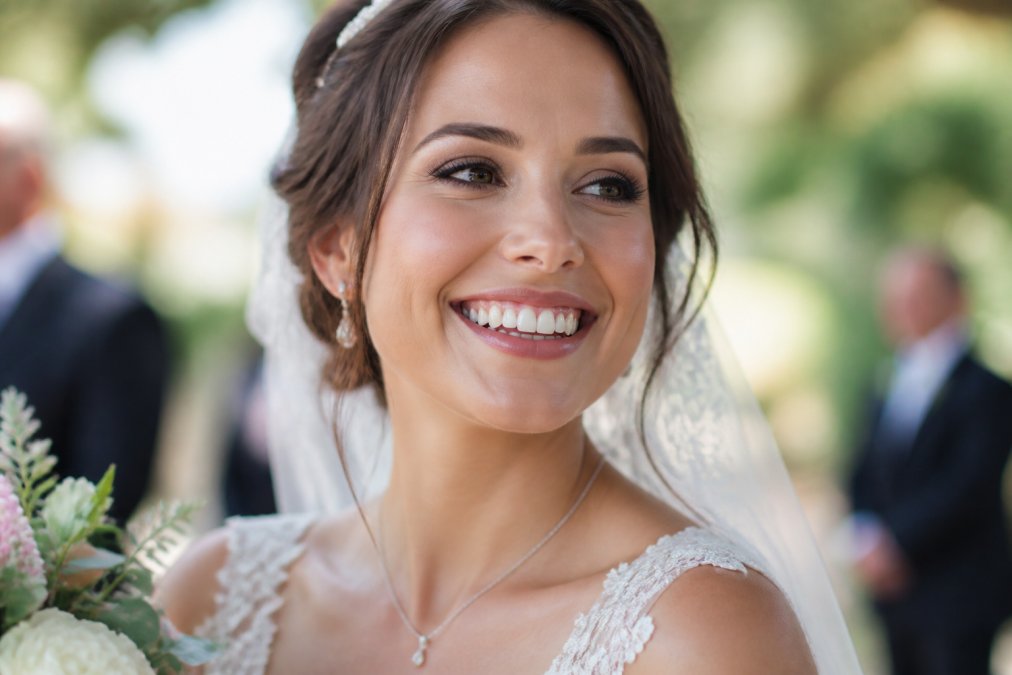
Wedding photography makes this harder: flash, golden-hour backlight and high-resolution editing exaggerate contrast, so a shade that looks right in the mirror can appear flat or grey on camera. Choose your shade in daylight.
How Long Before the Wedding Should You Get Veneers?
Aim to finish treatment at least four to eight weeks before the wedding day, so gum irritation settles, the bonding stabilises, and there is time for a review if a margin needs refining. Porcelain veneers typically need two or three visits; composite bonding can often be done in one longer appointment.
If you are also considering professional teeth whitening, do it before the veneers are made, not after. Whitening only changes natural tooth structure, so the veneer shade must be matched to your final whitened teeth.
| Treatment | Typical Visits | Ideal Lead Time | Best For |
|---|---|---|---|
| Porcelain veneers | 2-3 | 4-8 weeks | Long-term shade stability |
| Composite bonding | 1-2 | 2-4 weeks | Quick, reversible changes |
| Whitening before veneers | 1-2 | Before veneer fitting | Matching surrounding teeth |
Porcelain Veneers vs Composite Bonding for Weddings
Porcelain veneers hold their shade and surface texture better over time, which matters across a long day of photographs under varied light. Composite bonding is faster and less invasive, but the resin can stain and may need polishing sooner.
Whichever you choose, the outcome depends on planning rather than the material alone. At Rodney Street Dental, treatment starts with a consultation and a bespoke plan, so shade, shape and timing are agreed before any work begins. Our team is CQC and GDC registered and uses trusted brands such as Boutique Whitening and Philips Zoom. For current options and to book, see our teeth whitening service.
Planning a smile for a big day is a timing and shade-matching problem, not just a cosmetic one. Rodney Street Dental builds bespoke treatment plans with video walkthroughs so you can see the proposed result before committing, and our fully-qualified team works with trusted materials to keep the finish natural. If you want a natural-looking smile on camera, contact us to arrange a consultation built around your wedding date.
Frequently Asked Questions
How can I make sure my dental veneers don't look too white in wedding photos?
Choose a shade that sits close to your natural tooth colour rather than the brightest white available. Photographers use flash and bright lighting that can make very white veneers look artificial. Ask your dentist to show you shade samples in different lighting conditions and consider a slightly warmer tone. Natural-looking dental veneers should blend with your skin tone and the whites of your eyes, not stand out against them.
How long before my wedding should I get dental veneers?
Allow at least three to six months before the wedding date. This gives time for consultations, any preparatory treatment, the fitting process, and a period to adjust to how they feel and look. If you also need teeth whitening or gum treatment, that adds time. Starting early means you can make small refinements without rushing, and your smile will be fully settled well before the day.
What is the difference between composite bonding and porcelain veneers for wedding photos?
Composite bonding uses a tooth-coloured resin applied directly to the tooth and shaped by hand, usually in a single visit. Porcelain veneers are custom-made in a dental laboratory and bonded in a separate appointment. Porcelain tends to resist staining better and can look more lifelike in close-up photographs. Composite bonding costs less and is quicker, but it may need more maintenance over time. Your dentist can advise which suits your timeline and goals.