 ultimate-guide
Does Regular Dental Cleaning Prevent Cavities?
Table of Contents
- How Dental Cleaning Prevents Cavities
- What Happens During a Dental Scale and Polish
- How Often Should You See a Dentist for a Check-Up?
- Dental Hygiene Routine Best Practices
- The Role of Professional Tools Versus Home Care
- What High-Risk Patients Need to Know
- Conclusion
- Frequently Asked Questions
Last Updated: September 26, 2026
How Dental Cleaning Prevents Cavities
Yes, the question of does regular dental cleaning prevent cavities is answered by how it removes plaque and tartar that daily brushing cannot reach, before it demineralises enamel. Decay develops when oral bacteria metabolise sugars and produce acid; saliva can reverse early damage through remineralisation, but only if the plaque layer is thin enough, and hardened tartar blocks that process entirely. Once plaque mineralises into calculus, only scaling instruments remove it.
What Happens During a Dental Scale and Polish
A scale and polish is the routine professional cleaning most adults know as a "hygiene visit": a dental professional removes calculus above and below the gum line, then polishes the tooth surfaces so new plaque struggles to attach.
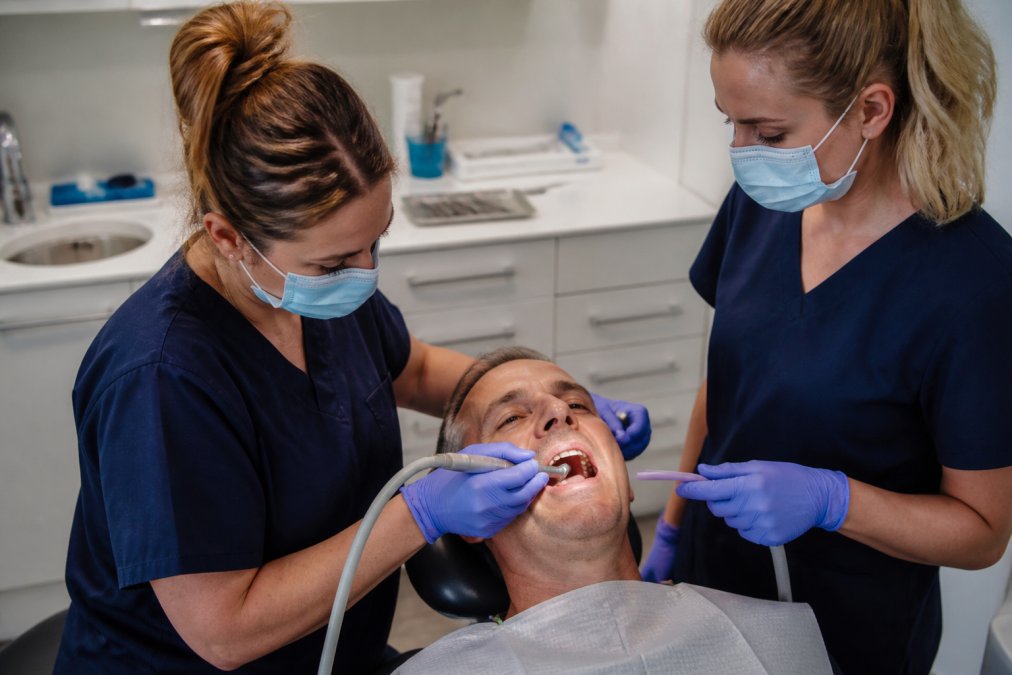
The appointment usually follows a predictable sequence: an oral health assessment (sometimes with x-rays), scaling with hand and ultrasonic instruments, polishing, a fluoride varnish or gel, and tailored interdental cleaning advice. The polish is not cosmetic, smoothing the enamel reduces the surface area biofilm can grip, and for patients with gingivitis or early periodontal disease it is early intervention.
How Often Should You See a Dentist for a Check-Up?
Most adults should attend a dental check-up at intervals their dentist recommends, often every six months, a default, not a universal law, since your interval depends on decay risk, gum health, smoking status, diet, and interdental cleaning at home.
The NHS guidance on dental check-ups sets out the general principle that your recall interval should be based on your individual risk, and the Oral Health Foundation's patient resources offer practical guidance on interdental cleaning technique.
Dental Hygiene Routine Best Practices
A dental hygiene routine is the daily set of habits that keeps plaque from maturing into the deposits that cause tooth decay and gum disease. Build it around these steps: brush twice daily for two minutes with fluoride toothpaste; clean between teeth once a day with floss or interdental brushes; spit rather than rinse after brushing; limit sugary or acidic food and drink; and attend your check-up at the interval your dentist advises.
| Problem | What causes it | What fixes it |
|---|---|---|
| Bleeding gums on brushing | Plaque at the gum line causing gingivitis | Interdental cleaning plus professional scaling |
| Persistent bad breath | Bacterial infection in plaque and gum pockets | Scale and polish, then improved daily routine |
| Visible yellow deposits | Calculus that has mineralised | Professional scaling, not brushing harder |
The Role of Professional Tools Versus Home Care
When considering does regular dental cleaning prevent cavities, professional tools and home care do different jobs, and neither replaces the other: home care reduces how quickly plaque forms, while professional instruments remove what has already hardened beyond the reach of a brush. A toothbrush and fluoride toothpaste remove soft plaque and deliver fluoride daily; floss and interdental brushes reach the approximal surfaces where most adult decay starts; scalers remove calculus above and below the gum line; and polishing and fluoride varnish smooth enamel and support remineralisation.
What High-Risk Patients Need to Know
Some patients need more than the standard six-month pattern, and risk is not fixed, it changes with medication, health conditions, and life stage. Higher-risk groups include smokers and vapers; people taking medication that causes dry mouth; adults with multiple restorations or recurrent decay; patients with diabetes; anyone with existing periodontal disease, which needs ongoing maintenance rather than a one-off clean; and older adults with exposed root surfaces.
Conclusion
Cavity prevention is not a single product or appointment; it is a system of daily habits supported by professional cleaning at the right intervals. If you have been putting off a check-up, a proper assessment is the sensible next step.
Frequently Asked Questions
Do dental cleanings actually prevent cavities?
Professional dental cleaning removes plaque and tartar that brushing and flossing miss, especially in hard-to-reach areas. By clearing this bacterial buildup, cleaning reduces the acids that cause enamel demineralization and tooth decay. While cleaning alone cannot guarantee zero cavities, it significantly lowers your risk when combined with a consistent home dental hygiene routine and regular check-ups.
Why do I still get cavities despite maintaining good dental hygiene?
Even with excellent brushing and interdental cleaning, some areas remain difficult to reach. Genetics, dry mouth, diet, and the natural shape of your teeth can also increase cavity risk. A dentist can identify early enamel demineralization during a check-up and recommend preventive measures such as fluoride treatment or dental sealants before a cavity fully forms.
Are there any risks or downsides to professional dental cleaning?
Professional cleaning is generally safe and well tolerated. Some patients experience mild gum sensitivity or slight bleeding during scaling, particularly if they have gingivitis or periodontal disease. This usually settles within a day or two. If you have dental anxiety or a complex medical history, let your dental team know so they can adapt the appointment to your comfort.
Our services and products
- Dental implants (Straumann, BioHorizons)
- Orthodontics: Invisalign and Fastbraces
- Professional teeth whitening (Boutique Whitening, Philips Zoom)
- Routine check-ups and hygiene appointments
- Bespoke treatment plans with video walkthroughs
Contact us to book a consultation.