 how-to
How to Overcome Dental Anxiety: 4 Steps That Work
Table of Contents
- Why Dental Anxiety Feels So Overwhelming
- Breathing Exercises for Dental Appointments
- Communicating Fear to Your Dentist
- Sedation Dentistry Options for Severe Anxiety
- What Matters Most for Lasting Relief
- Frequently Asked Questions
Last Updated: September 6, 2026
Why Dental Anxiety Feels So Overwhelming
Dental anxiety is a genuine psychological response and one of the most common reasons people postpone essential oral health care (peer-reviewed research). The knot in your stomach, the racing heart, the urge to cancel: these are not signs of weakness but your body's natural alarm system reacting to perceived threat.
The longer you stay away, the more daunting treatment becomes, and the more likely minor issues escalate into complex procedures. The good news is that dental anxiety is highly treatable, and the strategies below have helped countless patients reclaim their confidence.
Breathing Exercises for Dental Appointments
Controlled breathing is your most accessible tool for calming the nervous system before and during treatment. The goal is to activate the parasympathetic response, which counteracts the fight-or-flight panic that fuels dental anxiety.
A simple technique is the 4-7-8 method: breathe in through your nose for four counts, hold for seven, and exhale slowly through your mouth for eight (the NIH). Repeat four times; the extended exhale signals your brain to relax. Another option is diaphragmatic breathing, placing one hand on your belly and making it rise with each inhale while keeping your chest still.
Communicating Fear to Your Dentist
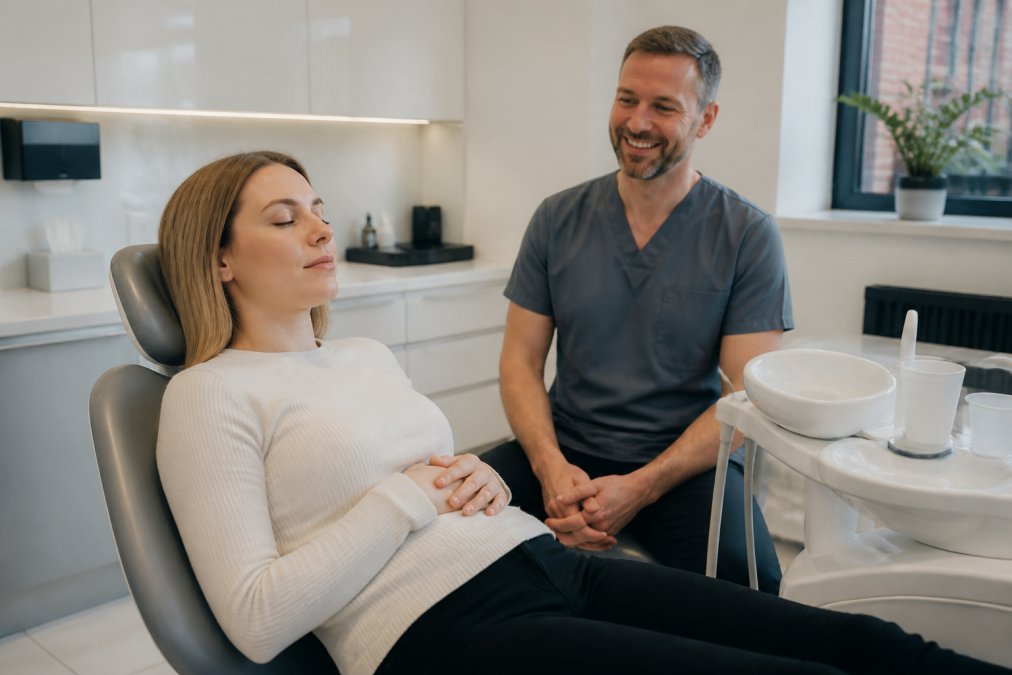
Many patients assume their dentist will judge them for feeling afraid, so they stay silent and endure the appointment in distress. In practice, the opposite is true. A clear conversation before treatment begins is one of the most effective ways to reduce dental anxiety.
A simple statement works: "I feel very anxious about dental procedures, and I have not been in a while. I need us to go slowly and check in with me regularly." A fear-friendly dentist will respond with patience, explain each step before acting, and agree on a stop signal, such as raising your left hand, that pauses the appointment instantly. This transforms you from a passive recipient into an active participant in your own care.
If embarrassment about the state of your teeth is part of the anxiety, say that too. Dentists see every stage of oral health daily, and their focus is on helping you improve, not judging where you start.
Sedation Dentistry Options for Severe Anxiety
For some patients, relaxation techniques and open communication are not sufficient on their own, and that is where sedation dentistry options become valuable. Sedation exists on a spectrum, from mild relaxation to deeper states, tailored to your anxiety level and the complexity of the procedure.
Nitrous oxide, sometimes called laughing gas, is a common choice for mild to moderate anxiety; you remain fully awake and able to speak, but feel a calm detachment that fades quickly once the gas stops (the American Dental Association). Oral sedation, such as a low dose of diazepam taken before the appointment, suits patients needing more substantial relief while staying conscious. For lengthy or invasive procedures, intravenous sedation offers a deeper level of relaxation where you are sleepy but still breathing independently.
What Matters Most for Lasting Relief
Dental anxiety rarely disappears overnight, but it responds well to a consistent approach. Building a trusting relationship with a single practice, using your breathing techniques, and being honest about your fears are the foundations of long-term change.
Notice what helped and what did not, and share that feedback so your next visit can be even smoother. Acknowledge the courage it took to attend, and consider a small reward afterwards to create a positive association.
For patients in Liverpool who have avoided the dentist for years, the team at Rodney Street Dental understands that returning to care requires more than clinical expertise. The practice is CQC and GDC registered, and every treatment plan is built around your comfort and your goals, with trusted brands and a fully-qualified team focused on both clinical excellence and compassionate care. Whether you need routine care, teeth whitening, or a complete smile transformation, the first step is simply having a conversation about what makes you feel safe.
Frequently Asked Questions
What can I do if I'm too scared to go to the dentist?
Start by booking a consultation with no treatment involved. This lets you meet the team, see the practice, and discuss your dental anxiety without pressure. Practices like Rodney Street Dental offer bespoke treatment plans with video walkthroughs so you know exactly what to expect. Bring a friend for support, use headphones to play music, and agree on a stop signal with your dentist before any procedure begins.
Are there specific techniques to help with dental phobia?
Yes. Breathing exercises for dental appointments are highly effective, such as the 4-7-8 method: breathe in for 4 seconds, hold for 7, exhale for 8. Progressive muscle relaxation and guided imagery also help. For severe dental phobia, ask about sedation dentistry options like nitrous oxide. Cognitive behavioural therapy techniques can reframe negative thoughts about dental procedures.
Dental anxiety is a real and understandable barrier, but it does not have to define your oral health. Rodney Street Dental combines bespoke treatment plans with a warm, non-clinical environment designed to put nervous patients at ease. From Invisalign and Fastbraces to restorative implants and professional whitening, every service is delivered with your comfort as the priority. Contact Rodney Street Dental today to begin your journey towards a healthier, more confident smile.