 how-to
How to Fix a Broken Tooth Crown Temporarily
Table of Contents
- Step 1: Assess the Damage and Protect the Exposed Tooth
- Step 2: Using Temporary Dental Cement for Crowns
- Step 3: When to Seek Emergency Dental Care for a Broken Crown
- Looking After the Tooth Until Your Appointment
- Preventing Future Crown Problems
- Frequently Asked Questions
Last Updated: September 21, 2026
Step 1: Assess the Damage and Protect the Exposed Tooth
A broken tooth crown needs calm, quick action: once it comes loose, the tooth underneath is exposed and vulnerable. This guide from Rodney Street Dental shows how to fix a broken tooth crown temporarily until you can be seen.
Find the crown, check your mouth, pillow or the sink. If you swallow it, don't panic; it will pass safely. Rinse it gently with warm water and set it aside. If the tooth bleeds, bite on clean gauze or a damp tea towel for ten minutes.
Protect the exposed tooth, the dentine and pulp underneath become sensitive fast. Avoid hot and cold drinks, breathe through your nose and keep your tongue away from sharp edges. If the tooth feels jagged, cover it with dental wax from a pharmacy.
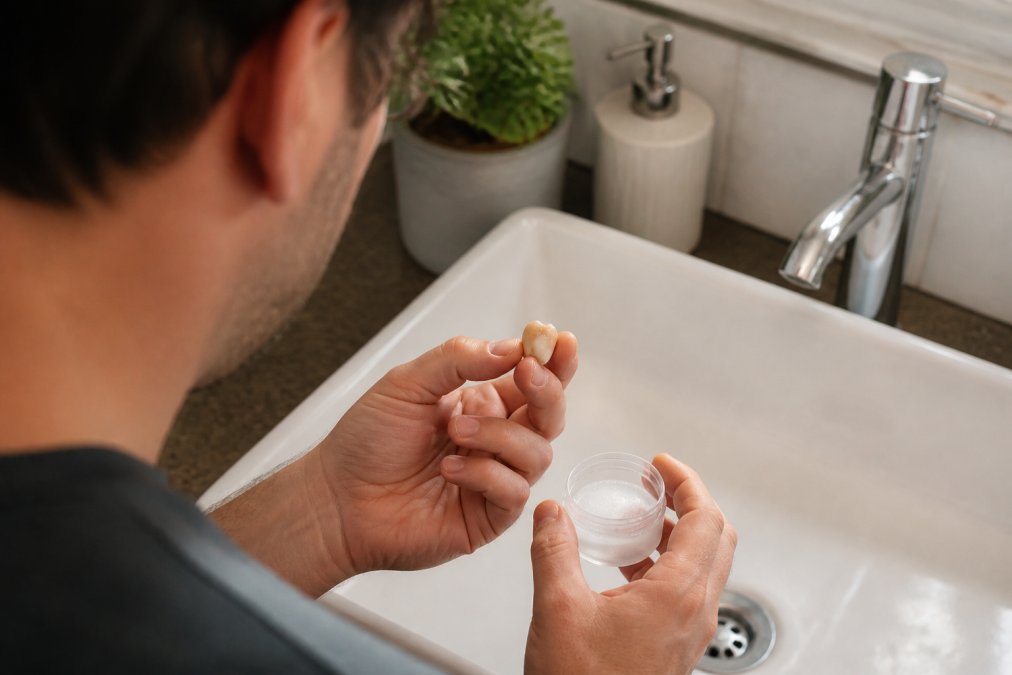
If you can't reattach it, store the crown in a small container or a cup of milk, never tissue.
Step 2: Using Temporary Dental Cement for Crowns
Temporary dental cement is the best at-home option for reattaching a crown, available over the counter at most pharmacies. Follow the kit's mixing instructions closely.
Here's the basic process:
- Clean and dry the crown and tooth
- Mix the cement as directed
- Apply a thin layer inside the crown
- Seat it gently, bite down and hold firm pressure for two to three minutes
Don't use too much cement, excess can push the crown up and throw off your bite. Denture adhesive is too soft to hold a crown for long. Clove oil can ease sensitivity but won't fix the crown.
After reattaching, avoid chewing on that side and skip anything sticky or hard.
Step 3: When to Seek Emergency Dental Care for a Broken Crown
Not every broken crown is a dental emergency, but some are. Call an emergency dentist straight away if you have:
- Severe or throbbing pain that won't settle
- Bleeding that won't stop after ten minutes
- A swollen face, jaw or gum
- A loose or shifted tooth
- Signs of infection, like fever or a bad taste
These signs suggest the dental pulp may be involved, and a broken tooth crown that exposes the pulp raises the risk of infection. Even without pain, book an appointment within a few days so a dentist can check the abutment and gingival tissue.
| Situation | What to Do | Urgency |
|---|---|---|
| Crown off, no pain | Reattach with temporary cement | Book within days |
| Sharp edge, mild sensitivity | Cover with dental wax | Book within days |
| Severe pain or swelling | Call an emergency dentist | Same day |
| Bleeding that won't stop | Seek urgent care | Immediately |
Emergency care focuses on relieving pain and protecting the tooth; a dentist may reshape the crown, fit a temporary restoration or plan a permanent cement fix later.
Looking After the Tooth Until Your Appointment
A temporary fix buys you time, not a cure. Keep the area clean. Brush gently around the tooth and rinse with warm salt water.
- Use a soft-bristled brush
- Avoid flossing tightly around the crown
- Skip sugary snacks and fizzy drinks
Watch for changes. New pain, a bad smell, or a loose crown all mean you should call sooner.
If the tooth is fractured below the gum line, no home fix will work. That needs a dentist.
Preventing Future Crown Problems
Good habits keep crowns in place longer.
- Avoid chewing ice, pens or hard sweets
- Wear a mouthguard if you grind your teeth
- Keep up with check-ups and treat gum disease early
Occlusal pressure from grinding is a common cause of crown failure. A night guard can help. If a crown keeps coming loose, the abutment may need review. Don't keep reattaching it yourself.
A broken crown is unsettling, but it rarely means a lost tooth.
Our Services
- Dental Implants - Long-term solutions for missing or damaged teeth
- Orthodontics - Invisalign and Fastbraces for discreet straightening
- Teeth Whitening - Professional whitening for a brighter smile
- Routine Check-ups - Ongoing care for lasting oral health
Frequently Asked Questions
My temporary crown broke off on the weekend. What should I do?
If your temporary crown comes off over the weekend, keep the area clean and avoid chewing on that side. You can use over-the-counter temporary dental cement from a pharmacy to reattach it if the crown is intact. If you have pain, swelling, or the tooth is fractured, contact an emergency dentist. Do not use superglue. A broken tooth crown needs professional assessment to prevent infection or further damage.
How long can I leave a broken crown before seeing a dentist?
A temporary fix is not a long-term solution. You should see a dentist within a few days, ideally 24 to 48 hours. Leaving a broken tooth crown untreated exposes the tooth to bacteria, which can lead to infection, sensitivity, and further fracture. If you cannot get an appointment quickly, keep the area clean and use temporary dental cement for crowns as a short-term measure, but do not delay professional care.
Can I use superglue to fix a broken crown at home?
No. Superglue is toxic and not designed for use in the mouth. It can damage the tooth, irritate gums, and make professional repair more difficult. Only use temporary dental cement for crowns that is specifically made for oral use and available from a pharmacy. If you are unsure, leave the crown out and protect the exposed tooth with dental wax or sugar-free chewing gum until you can see a dentist.