 how-to guide
Dental Implant Procedure Explained Simply
Table of Contents
- What Is a Dental Implant?
- The Dental Implant Procedure Explained: Step-by-Step
- Who Is a Candidate for Dental Implants?
- Dental Implant Recovery Time: What to Expect
- References & Further Reading
- Frequently Asked Questions
Dental Implant Procedure Explained Simply
Last Updated: July 25, 2026
Understanding the dental implant procedure explained simply can help you make an informed decision about replacing missing teeth. At Rodney Street Dental, we've guided hundreds of patients through this transformative process. Below, we'll walk you through exactly what happens at each stage, what to expect during recovery, and whether dental implants are right for your situation.
What Is a Dental Implant?
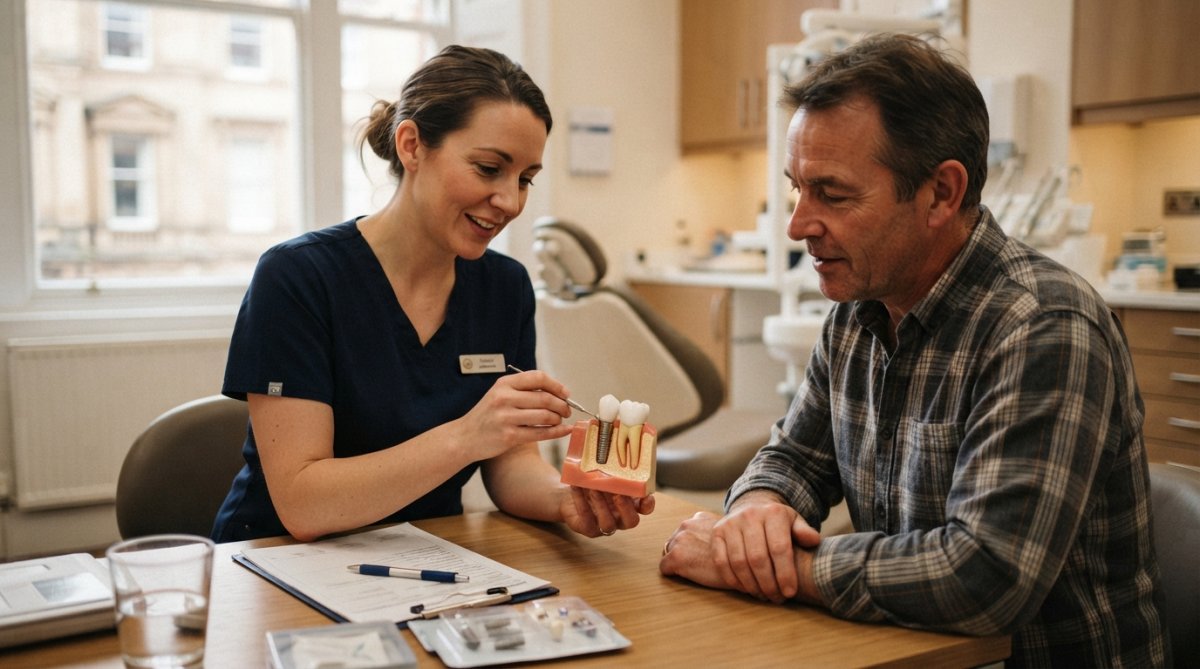
A dental implant is a small titanium post that acts as an artificial tooth root, surgically placed into your jawbone to support a replacement tooth or bridge. The titanium post integrates with your bone through osseointegration, then an abutment connects to that post, and finally a crown (the visible tooth) sits on top. Unlike dentures or bridges, an implant becomes part of your jaw structure, feeling natural and lasting 20+ years with proper care.
The three main components are:
- Implant body (titanium post): Inserted directly into the jawbone
- Abutment: The connector piece that sits above the gum line
- Crown (prosthesis): The visible artificial tooth, usually made from porcelain or ceramic
The Dental Implant Procedure Explained: Step-by-Step
The procedure is broken into distinct phases that remove much of the anxiety people feel beforehand.
Phase 1: Assessment and Planning (1-2 weeks)
Your dentist evaluates your jawbone density through radiographs, as the implant needs sufficient bone to anchor into. If bone has deteriorated, you may need bone grafting first. Your dental team will discuss your medical history, medications, and any anxiety concerns. Sedation dentistry options are available if needed.
Phase 2: Implant Placement (30-60 minutes surgical time)
Local anaesthesia numbs the surgical site. The oral surgeon creates a small opening in your gum, then carefully drills into the jawbone to the precise depth needed. The titanium implant body is screwed into place, the surgical site is closed with stitches, and a temporary restoration may be placed if needed.
Phase 3: Osseointegration (3-6 months)
Your jawbone gradually fuses with the titanium implant. You'll have minimal restrictions on eating; most patients return to normal diet within a few weeks. Keep the surgical site clean and avoid disturbing it. Your dentist will monitor progress with follow-up appointments and radiographs.
Phase 4: Abutment Placement (10-15 minutes)
Once osseointegration is complete, a small surgical procedure exposes the implant and attaches the abutment, the connector piece that will hold your crown. This requires only local anaesthesia.
Phase 5: Crown Fabrication and Placement (1-2 weeks)
Your dentist takes a dental impression of the abutment to create your custom crown. Once ready, it's cemented or screwed onto the abutment, completing your new tooth. Once your implant is fully restored, you may also wish to explore teeth whitening to ensure your new crown and surrounding natural teeth are perfectly matched in shade and brightness.
Who Is a Candidate for Dental Implants?
Not everyone is an ideal candidate for implants, but the list of suitable candidates is broader than many people think.
Good candidates typically have:
- Sufficient jawbone density (or willingness to undergo bone grafting if needed)
- Good overall health (diabetes and heart disease don't automatically disqualify you, but require careful management)
- Realistic expectations about timeline and maintenance
- Commitment to excellent oral hygiene post-procedure
- Non-smokers or those willing to quit during healing
Factors that may require modification:
- Heavy smoking delays healing and increases infection risk
- Uncontrolled diabetes slows bone integration
- Certain medications like bisphosphonates require monitoring
- Severe bone loss may require bone grafting as a preliminary step
- Active gum disease must be treated before implant placement
Age is rarely a barrier. Patients in their 70s and 80s receive successful implants regularly, provided they're in reasonable health and their jawbone can support the implant. A consultation with your dental team will determine if you're a candidate and whether implants or alternatives like bridges or dentures might suit you better.
Dental Implant Recovery Time: What to Expect
Recovery happens in stages, and understanding each one helps you prepare realistically.
Immediate Recovery (First 24 hours)
Swelling and minor bleeding are normal. You'll bite down on gauze for 30-45 minutes after surgery to control bleeding. Pain is usually mild to moderate and manageable with prescribed pain relief or over-the-counter options. Avoid strenuous activity, hot foods, and rinsing or spitting forcefully for the first 24 hours.
First Week
Swelling peaks around day 2-3, then gradually subsides. You can return to light work within a few days. Stick to soft foods, soups, yoghurt, mashed vegetables, smoothies, for at least a week. Keep the surgical site clean by gently rinsing with salt water (half a teaspoon of salt in warm water) after meals, starting day 2.
Weeks 2-4
Most people feel nearly normal by week 2. Swelling has largely resolved, and pain is minimal. You can gradually reintroduce firmer foods, though avoid chewing directly on the implant site for at least 8 weeks.
Long-term Healing (3-6 months)
During osseointegration, avoid habits that stress the implant: excessive clenching, chewing ice, or very hard foods. If you grind your teeth at night, discuss a night guard with your dentist.
Post-operative care essentials:
- Take prescribed antibiotics as directed
- Rinse with salt water 3-4 times daily
- Sleep with your head elevated for the first few nights
- Apply ice packs for 15 minutes on, 15 minutes off during the first 24 hours
- Avoid smoking entirely during healing
- Attend all follow-up appointments
Modern techniques and anaesthesia make the experience far less painful than anticipated. If you're anxious about the procedure, discuss sedation options with your dentist.
Replacing missing teeth shouldn't mean living with discomfort or self-consciousness about your smile. Dental implants offer a permanent, natural-feeling solution that functions like your original teeth.
At Rodney Street Dental in Liverpool, we specialise in bespoke implant treatment plans tailored to your specific needs. Our CQC and GDC registered team uses trusted brands like Straumann and BioHorizons, and we prioritise your comfort throughout the entire process with sedation dentistry options and clear communication at every stage. Whether you're missing a single tooth or multiple teeth, we'll guide you through the procedure with clinical excellence and compassionate care.
Ready to explore whether dental implants are right for you? Contact Rodney Street Dental today for a consultation. We'll assess your jawbone, discuss your goals, and create a treatment plan that works for your timeline and budget. Your confident smile is just a conversation away.
| Recovery Phase | Duration | What to Expect | Activity Level |
|---|---|---|---|
| Immediate post-op | 24 hours | Swelling, mild pain, bleeding | Rest at home |
| First week | Days 2-7 | Swelling peaks then subsides, discomfort minimal | Light activity only |
| Early healing | Weeks 2-4 | Swelling resolved, returning to normal | Return to work, light exercise |
| Osseointegration | Months 2-6 | No external changes, bone fusing with implant | Normal activity, avoid hard foods |
| Final restoration | After month 6 | Crown placement and adjustment | Full normal function |
References & Further Reading
According to research from the British Dental Association's clinical guidelines, osseointegration success rates exceed 95% when proper surgical technique and patient aftercare are followed, making dental implants one of the most predictable restorative procedures in modern dentistry.
The NHS guidance on dental implants confirms that whilst implants are typically not available on the NHS (except in exceptional circumstances), private implant treatment offers long-term value compared to repeated bridge replacements or denture adjustments over a patient's lifetime.
Recent analysis from the International Journal of Oral & Maxillofacial Implants demonstrates that patients who maintain rigorous oral hygiene and attend regular professional cleanings achieve implant longevity rates of 20+ years, with many implants lasting a lifetime with proper maintenance.
Frequently Asked Questions
What are the main stages of the dental implant procedure?
The dental implant procedure typically involves five stages: initial consultation and treatment planning, bone grafting (if necessary), implant placement surgery, osseointegration and healing (3-6 months), and finally abutment placement with crown fitting. Each stage is essential for ensuring a successful, long-lasting result. Your dentist will provide a detailed timeline tailored to your specific needs.
How long does the overall dental implant recovery time take?
The complete dental implant recovery time varies, but most patients experience initial healing within 1-2 weeks. However, full osseointegration, where the titanium post fuses with the jawbone, typically takes 3-6 months. During this period, follow post-operative care instructions carefully to minimise complications and ensure optimal results.
What are the main risks and complications associated with dental implants?
Potential dental implant risks include infection, nerve damage, sinus problems, and peri-implantitis (gum disease around the implant). Most complications are rare when the procedure is performed by qualified professionals and proper dental implant aftercare is maintained. Discuss your specific risk factors during your consultation to understand what applies to your situation.
How do I know if I'm a suitable candidate for dental implants?
Good candidates have sufficient jawbone density, healthy gums, and overall good oral health. If bone loss has occurred, bone grafting may be necessary. Certain health conditions or medications may affect candidacy. A thorough assessment by your dental team will determine whether implants are right for you, or if alternatives like dental bridges or dentures might be more suitable.
This article was written using GrandRanker