 ultimate-guide
Can You Whiten Teeth With Crowns? A Practical Guide
Table of Contents
- Can You Whiten Teeth With Crowns?
- Why Whitening Treatments Don't Work on Dental Restorations
- How to Match Crown Colour to Whitened Teeth
- Replacing Old Dental Crowns After Professional Whitening
- Frequently Asked Questions
Last Updated: August 30, 2026
Can You Whiten Teeth With Crowns?
The short answer is no. Dental restorations like crowns, veneers, and bridges don't respond to bleaching agents the way natural tooth enamel does. This creates a common aesthetic challenge: your natural teeth brighten, but your restoration stays the same shade, leaving a noticeable mismatch.
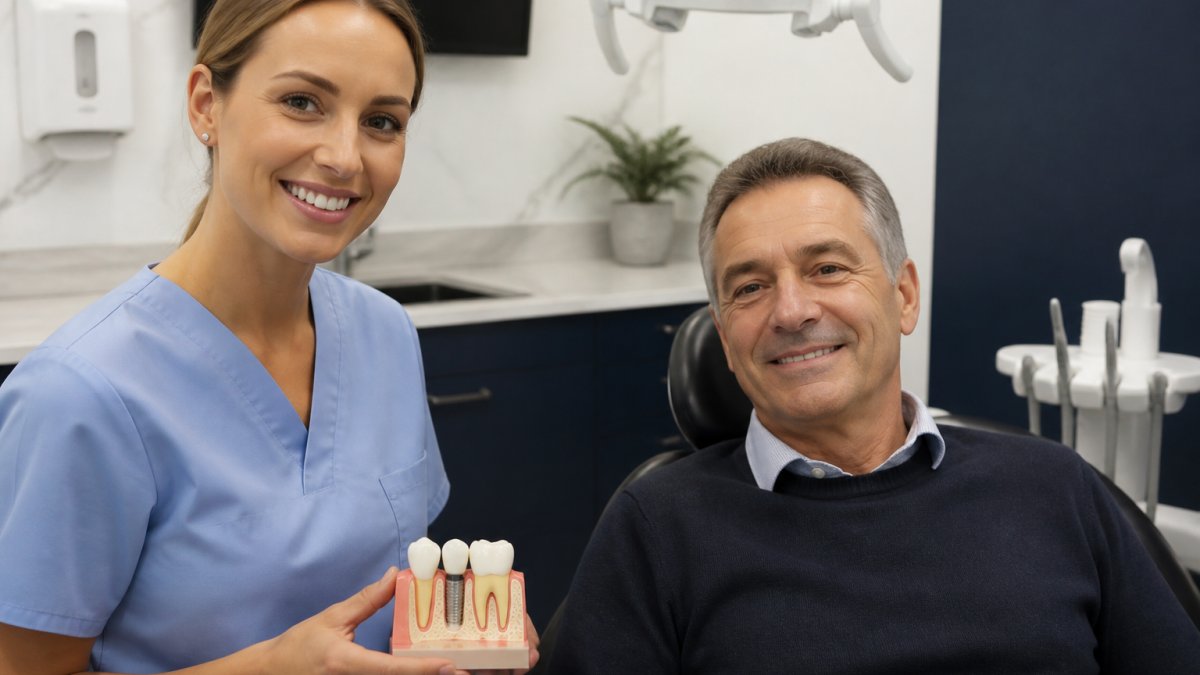
At Rodney Street Dental, we help patients navigate this situation by planning whitening treatments strategically around existing restorations.
Why Whitening Treatments Don't Work on Dental Restorations
Whitening treatments rely on bleaching agents, typically hydrogen peroxide or carbamide peroxide, that penetrate the porous crystalline structure of natural tooth enamel and break down colour-causing molecules (the American Dental Association). Dental crowns, whether made from porcelain, ceramic, composite resin, or porcelain-fused-to-metal (PFM), are non-porous. The material does not absorb bleaching agents, so whitening gels have no chemical effect on them.
Internal versus External Staining on Crowns
External stains from tea, coffee, red wine, or tobacco can sometimes be removed by professional cleaning. However, intrinsic stains are built into the material during fabrication and cannot be bleached away. Most yellowed crowns suffer from intrinsic discolouration, which is why whitening gels fail: they cannot alter the material's inherent colour.
Colour Stability and the Mismatch Problem
Natural teeth and crowns age differently. Your natural teeth gradually yellow over time due to enamel thinning (peer-reviewed research). When you undergo professional whitening, your natural teeth brighten several shades in days. Your crown remains exactly the same shade it was placed, sometimes years earlier. This creates a widening aesthetic gap, with a crown that once matched now looking noticeably darker after whitening.
Material Differences: Porcelain-Fused-to-Metal versus All-Ceramic
All-ceramic and porcelain crowns are tooth-coloured throughout and maintain their shade well. Porcelain-fused-to-metal (PFM) crowns have a metal substructure beneath the porcelain layer. Over time, the porcelain can chip, exposing grey metal underneath, a problem whitening cannot address and that often necessitates replacement.
How to Match Crown Colour to Whitened Teeth
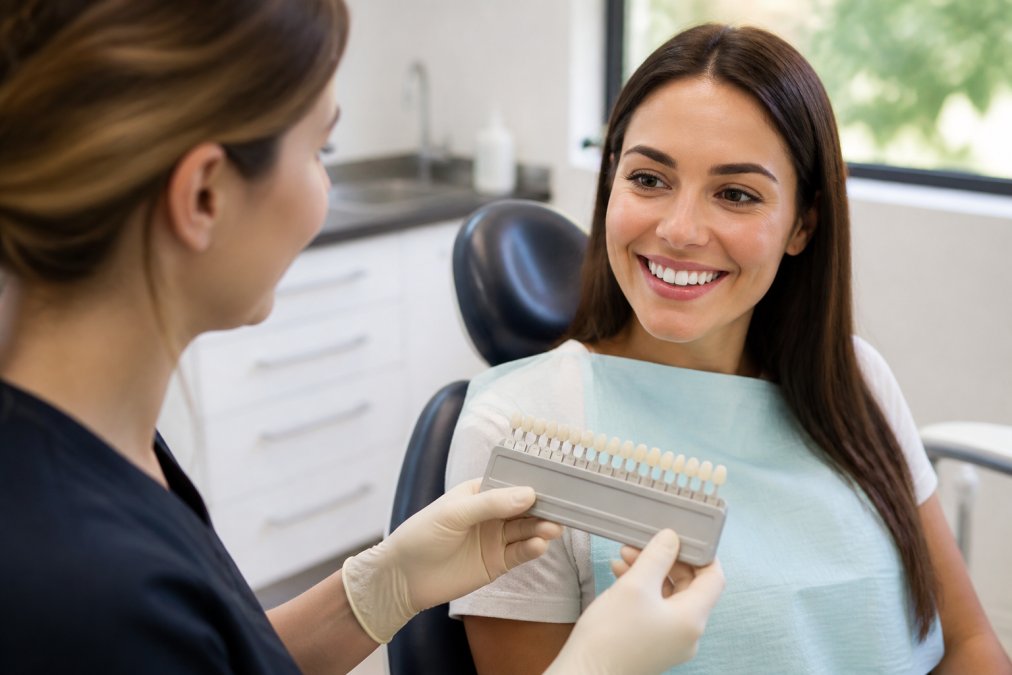
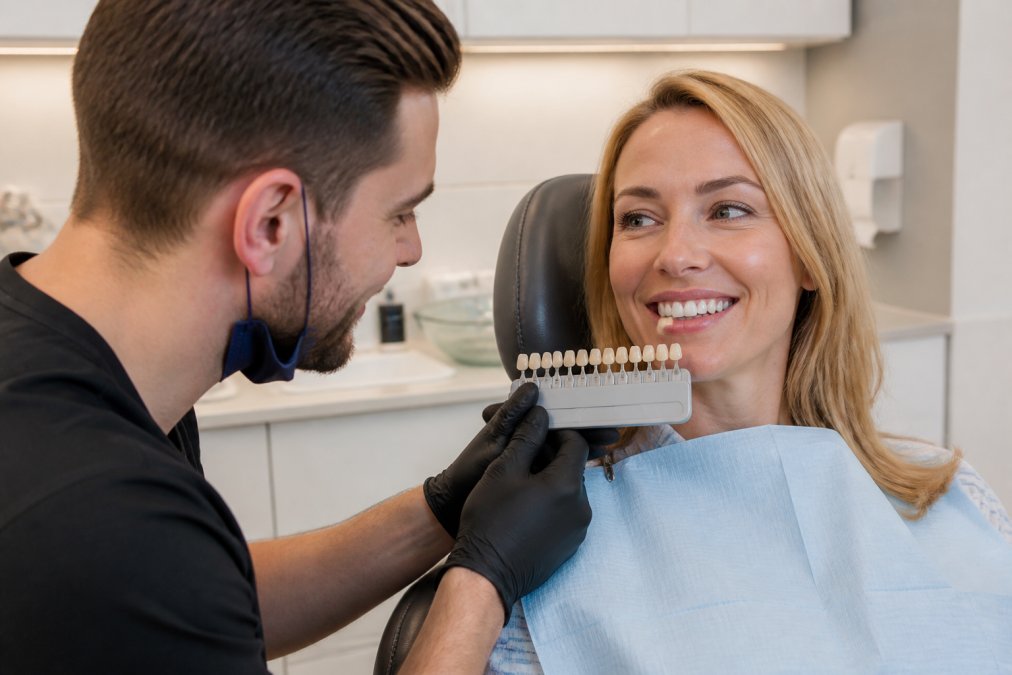
If you've already had professional whitening and your crown looks darker, colour matching becomes the priority. Your dentist uses a shade guide, a set of tooth-coloured reference samples, to identify the exact shade of your whitened teeth. This reading is sent to the dental laboratory where your new crown is fabricated. Modern shade-matching technology, including digital spectrophotometry, has improved accuracy significantly.
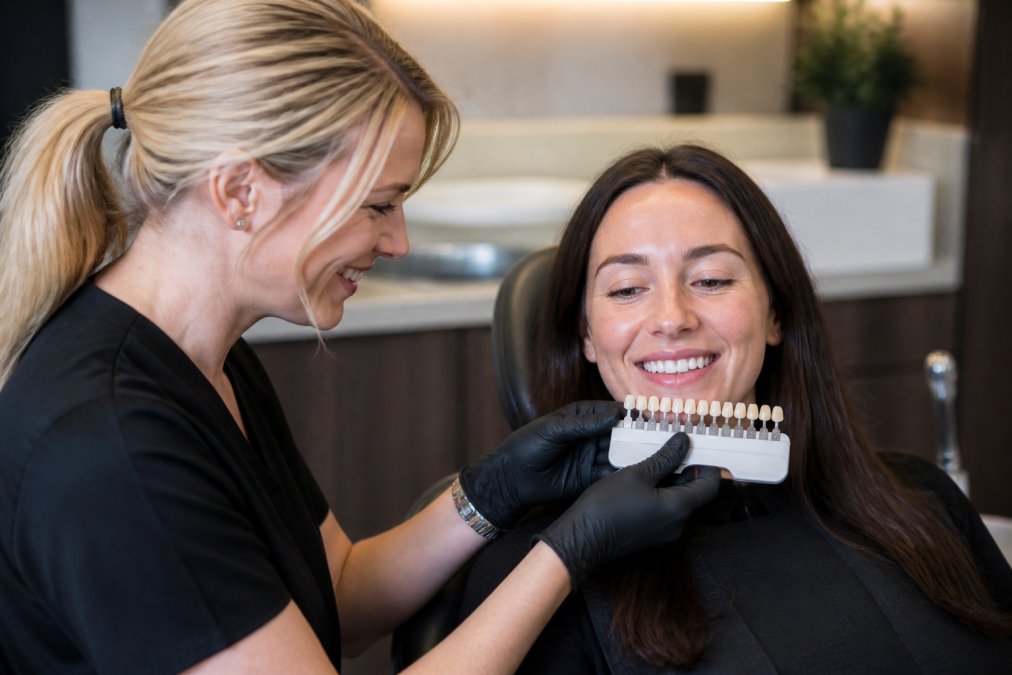
Timing matters. Whitening results stabilise after about 24 hours, so schedule your shade appointment after this window to ensure an accurate match (the American Dental Association).
Replacing Old Dental Crowns After Professional Whitening
The most effective solution for patients with existing crowns who want a brighter smile is to whiten first, then replace the crown. This ensures your restoration matches your newly whitened natural teeth.
The Recommended Sequence
The standard treatment sequence is:
- Professional whitening consultation - Your dentist assesses your natural tooth shade and reviews existing restorations.
- Professional whitening treatment - In-chair whitening using stronger bleaching agents than over-the-counter products. Results stabilise after 24-48 hours.
- Shade assessment window - Wait at least 24 hours after whitening before scheduling your crown shade appointment.
- Crown replacement - Your dentist takes a precise shade reading of your whitened teeth and sends specifications to the dental laboratory.
This sequence is critical. If you replace your crown before whitening, your new restoration will not match your brightened natural teeth.
Shade Matching Accuracy and Realistic Expectations
Modern shade-matching technology has improved accuracy significantly. However, perfect matches are not guaranteed. Factors affecting the final result include lighting conditions, translucency and characterisation of natural teeth, and individual variation in colour perception. Discuss realistic expectations with your dentist before treatment.
Cost-Benefit Analysis: When Replacement Makes Sense
Before committing to replacement, consider crown age and condition, visibility of the mismatch, your whitening goals, and long-term smile objectives. If your crown is less than 5 years old and in good condition, replacement may feel premature. If it is 10+ years old, replacement may be overdue regardless of whitening.
Living with Shade Difference: When It Is Acceptable
Not every patient chooses replacement. If your crown is in good structural condition, the mismatch is subtle, and cost is prohibitive, living with a slight shade difference is valid. However, if the mismatch is obvious and affects your confidence, replacement is worth considering.
At Rodney Street Dental, we offer professional teeth whitening and crown replacement services to help you achieve a cohesive, bright smile. Contact us to discuss your options and find the best solution for your needs.
Frequently Asked Questions
Can crowned teeth be whitened?
No, dental crowns cannot be whitened with bleaching agents. Crowns are made from porcelain, ceramic, or composite materials that don't respond to whitening gel the way natural enamel does. If you have existing crowns and want a brighter smile, professional whitening will only affect your natural teeth, potentially creating a shade mismatch. Your dentist can discuss replacing the crown after whitening to achieve a uniform colour.
What happens if you use whitening gel on a dental crown?
Whitening gel has no effect on porcelain or ceramic crowns. The bleaching agents (hydrogen peroxide or carbamide peroxide) work by penetrating natural tooth enamel and breaking down stain molecules. Since crowns are non-porous restorations, the gel simply sits on the surface without creating any colour change. This is why planning the timing of whitening relative to crown replacement is important for aesthetic results.
Can you use whitening toothpaste if you have crowns?
Whitening toothpaste is safe to use alongside crowns, but it will only whiten your natural teeth. The abrasive particles in whitening toothpaste won't damage the crown itself, though gentle brushing is always recommended around restorations. For best results, discuss with your dentist whether professional whitening or crown replacement is the right choice for your smile goals.
This article was written using GrandRanker