 ultimate-guide
Benefits of Invisalign for Adults: A 2026 Guide
Table of Contents
- Why Adults Choose Invisalign Over Traditional Braces
- Invisalign Treatment Duration for Adults
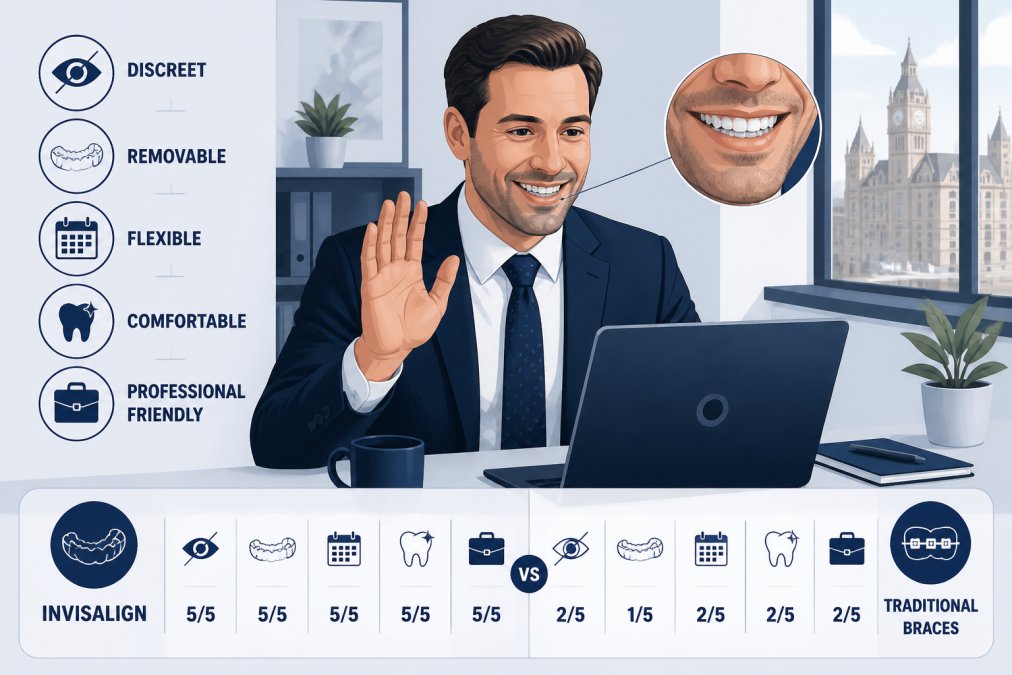
- Invisalign vs Fixed Braces for Adults: Key Differences
- Is Invisalign Painful for Adults and How to Manage Discomfort
- How to Clean Invisalign Aligners Properly
- Frequently Asked Questions
Last Updated: August 6, 2026
Why Adults Choose Invisalign Over Traditional Braces
Invisalign has become the preferred orthodontic choice for UK professionals, parents, and working individuals seeking a discreet way to straighten teeth without drawing attention in professional or social settings. Unlike fixed braces, clear aligners are virtually invisible, removable for eating and cleaning, and fit seamlessly into busy adult lives.
Adults often hesitate about traditional metal braces because they're visible, uncomfortable, and require significant lifestyle adjustments. Invisalign eliminates these concerns. The psychological impact matters significantly, professionals can attend client meetings without self-consciousness, and parents can pursue treatment without competing with their teenagers for the orthodontist's chair.
From an oral hygiene perspective, removable aligners eliminate the trapped food and plaque accumulation that plagues traditional braces. You brush and floss normally, and your gum health typically improves during treatment rather than deteriorating. The treatment also offers predictable results through digital scanning technology, which creates a precise 3D map of your teeth and shows exactly how your smile will look before treatment begins.
Invisalign Treatment Duration for Adults
Most adults complete Invisalign treatment in 12 to 18 months, though some cases resolve in as little as six months and complex cases may extend to 24 months or beyond.
The timeline depends on the severity of crowding, gaps, bite misalignment, and how consistently you wear the aligners. Adults who wear their aligners 20-22 hours daily typically progress faster than those who remove them frequently. Your compliance with the wear schedule matters more than your age, a 45-year-old wearing aligners diligently will see results faster than a 25-year-old who removes them constantly. Teeth move at roughly the same rate regardless of age, though adult bone density means movement is sometimes slightly slower than in younger patients.
Treatment milestones typically follow this pattern: initial crowding reduces within 2-3 months, major alignment shifts occur between months 3-9, and fine-tuning happens in the final months.
Invisalign vs Fixed Braces for Adults: Key Differences
Both systems move teeth effectively, but the experience and lifestyle impact differ significantly.
Aesthetics and discretion favour Invisalign decisively. Metal brackets and wires are visible; clear aligners are not. For adults in client-facing roles, this distinction is often the deciding factor.
Oral hygiene is substantially easier with Invisalign. You remove the trays to eat and clean your teeth normally. Fixed braces trap food around brackets and wires, requiring special brushes and careful technique.
Comfort and irritation present a trade-off. Invisalign causes mild pressure and occasional soreness as teeth move, but no sharp wires or bracket edges irritate your mouth. Traditional braces cause bracket abrasion and mouth sores requiring wax and frequent adjustments.
Dietary freedom belongs entirely to Invisalign. You remove the trays to eat anything you want. Fixed braces require avoiding hard, sticky, or chewy foods. For adults accustomed to eating what they choose, this restriction feels genuinely limiting.
Treatment visibility differs too. Your dentist monitors Invisalign progress through periodic check-ups and digital scans. Fixed braces require monthly adjustments where the orthodontist tightens wires and replaces brackets.
Is Invisalign Painful for Adults and How to Manage Discomfort
Most adults experience mild discomfort rather than pain, a pressure sensation as teeth gradually shift. This typically peaks for 24-48 hours after switching to a new aligner tray, then subsides.
The sensation differs from traditional braces discomfort. Instead of sharp irritation from brackets and wires, you feel gentle, sustained pressure. Many adults describe it as a dull ache similar to the feeling after a dental cleaning.
Managing discomfort is straightforward. Over-the-counter pain relief like paracetamol or ibuprofen addresses soreness effectively. Eating soft foods for the first few days after switching trays reduces pressure sensation. Some people find that wearing the new tray in the evening minimises daytime discomfort.
Gum irritation occasionally occurs if aligners don't fit perfectly, but unlike fixed braces, Invisalign irritation is usually temporary.
How to Clean Invisalign Aligners Properly
Keeping your aligners clean is essential for maintaining oral health and preventing staining or odour.
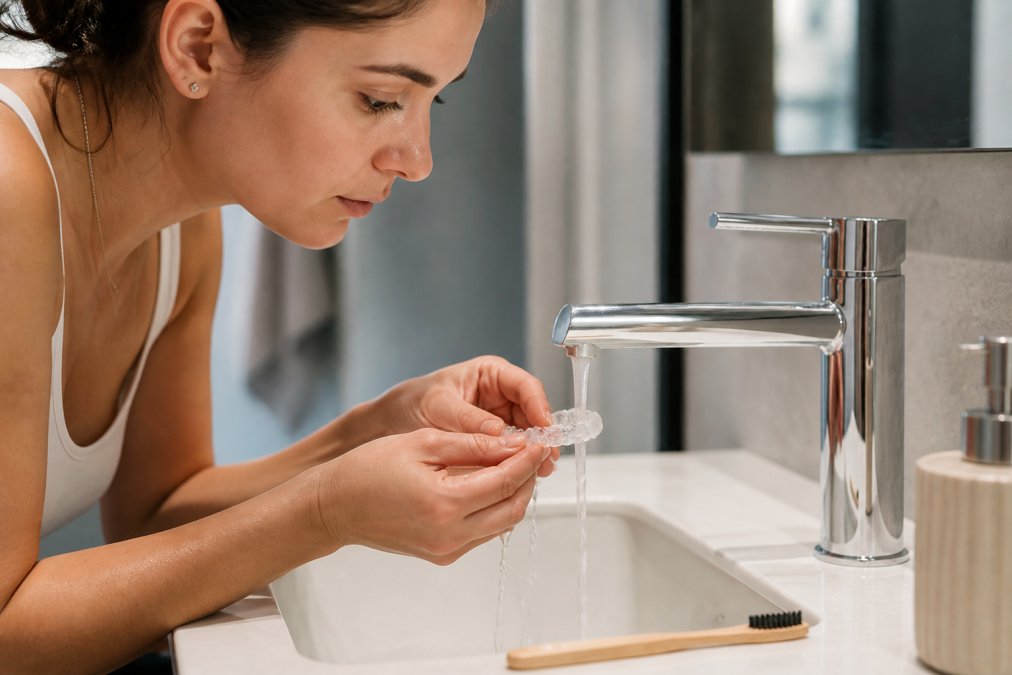
Rinse your aligners every time you remove them using lukewarm water, hot water can warp the plastic. A soft toothbrush gently removes plaque buildup. Avoid toothpaste, which is abrasive and can scratch the trays.
Daily soaking extends aligner life and maintains clarity. Soak your trays in Invisalign cleaning crystals or denture-cleaning solution once daily for 15-30 minutes. Never use bleach or harsh chemicals, which damage the material.
Store aligners in the provided case rather than leaving them exposed on countertops. Keep them away from direct sunlight and heat, which can warp the plastic.
Maintain excellent oral hygiene yourself. Brush and floss thoroughly before reinserting your aligners. Food particles trapped between your teeth and the aligner create an ideal environment for decay and gum disease. Replace aligners on schedule to ensure consistent tooth movement.
The benefits of Invisalign for adults extend far beyond cosmetic improvement. You gain the confidence of a straighter smile, maintain superior oral health throughout treatment, and enjoy the freedom to eat normally and clean your teeth properly.
At Rodney Street Dental in Liverpool, we specialise in creating bespoke treatment plans tailored to your specific needs and timeline. Our team uses advanced digital scanning technology to show you exactly how your smile will transform before treatment begins. We also offer professional teeth whitening to complement your new smile once treatment is complete. Contact us for a consultation and discover how Invisalign can work for your lifestyle.
Frequently Asked Questions
Is it worth getting Invisalign as an adult?
Yes, for many adults. Invisalign offers discreet teeth straightening without the visibility of metal brackets, making it ideal for professionals. The removable trays mean better oral hygiene during treatment, and you can eat what you want by taking them out. Results typically appear within 12-18 months for most alignment issues. However, success depends on consistent wear (20-22 hours daily) and your specific dental needs. A consultation with a qualified orthodontist can determine whether Invisalign suits your teeth and lifestyle.
What should I know before starting Invisalign treatment?
Invisalign requires discipline: you must wear the aligners 20-22 hours daily for results. Remove them to eat and drink anything except water, then clean both your teeth and the trays before reinserting. You'll visit your dentist every 6-8 weeks for progress checks and new trays. Some people experience mild discomfort for a few days when starting each new tray, but this is normal and temporary. Digital scanning creates a detailed treatment plan showing your expected smile transformation, so you'll know the end goal before you start.
How does Invisalign affect my daily routine as an adult?
Invisalign fits into adult life well. You remove the trays to eat, drink, and brush your teeth normally, so there's no dietary restriction or complicated cleaning routines. You'll need to carry a small case for the trays when you're away from home. Most people find the aligners don't affect speech noticeably. The main commitment is remembering to wear them 20-22 hours daily and attending orthodontic appointments every 6-8 weeks. Many working professionals choose Invisalign specifically because it doesn't interfere with their careers or social life.
Are clear aligners as effective as traditional metal braces for adults?
Clear aligners like Invisalign are highly effective for most common alignment issues: crowding, gaps, overbites, and underbites. They work through consistent, gentle pressure to move teeth predictably. However, for very severe or complex cases, fixed braces may offer more precise control. Invisalign's effectiveness depends entirely on compliance, wearing them the required 20-22 hours daily is non-negotiable. When worn correctly, clear aligners deliver results comparable to traditional braces, typically in a similar timeframe, with the added benefit of discretion and easier oral hygiene.
This article was written using GrandRanker