 blog
blog
Are Fastbraces Suitable for Adults? A 2026 Guide
Table of Contents
- What Are Fastbraces?
- Fastbraces vs Traditional Braces for Adults
- Fastbraces Treatment Time for Adults in the UK
- Fastbraces Pain and Discomfort for Adults
- Are Fastbraces Suitable for Adults? Key Considerations
- Long-Term Stability and Relapse Rates
- Fastbraces vs Invisalign and Other Alternatives
- Psychological Impact and Confidence
- Your Next Step: Professional Assessment
- Frequently Asked Questions
Are Fastbraces Suitable for Adults? A 2026 Guide
Last Updated: July 30, 2026
Are fastbraces suitable for adults? Many people in their 30s, 40s, and beyond ask this when considering orthodontic treatment. At Rodney Street Dental, we've worked with countless adult patients exploring whether fastbraces offer a practical path to straighter teeth without lengthy commitment. The short answer is yes, for many adults, fastbraces can be effective. But suitability depends on your specific dental situation, lifestyle, and expectations.
What Are Fastbraces?
Fastbraces use a triangular bracket design and unique wire system that moves both the root and crown of the tooth simultaneously, rather than in two stages like conventional braces. This parallel movement allows treatment to progress faster than traditional methods. The brackets are smaller and more discreet than older designs, applying consistent, gentle pressure from day one. Treatment typically takes months rather than years, a significant appeal for busy adults who've delayed care.
Fastbraces vs Traditional Braces for Adults
Traditional braces move teeth in two distinct phases: first the root tilts into position, then the crown follows. This takes typically 24-36 months for moderate cases.
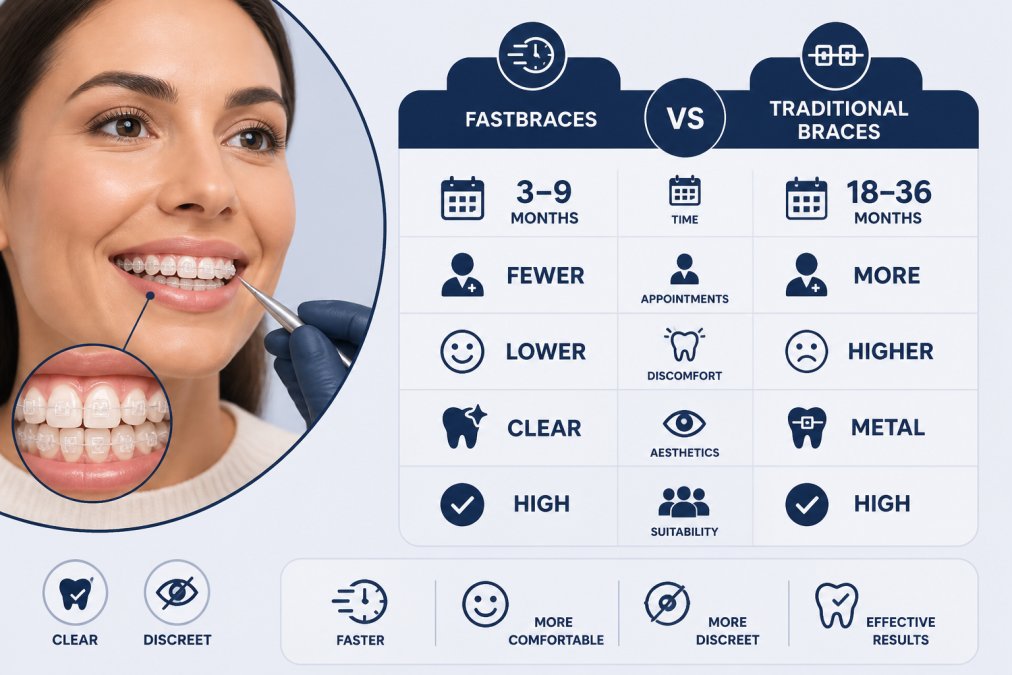
Fastbraces compress that timeline significantly. Most adult cases finish in 3-12 months, depending on complexity. The triangular bracket design engages the wire differently, creating simultaneous root and crown movement. Traditional braces use square brackets and may offer more precise control for severe malocclusion or major bite issues. Both systems cause initial soreness as teeth move, though fastbraces sometimes produce slightly more discomfort in the first few days. Maintenance is similar: both require careful dental hygiene and regular adjustments every 4-6 weeks.
Fastbraces Treatment Time for Adults in the UK
One of the most compelling reasons adults choose fastbraces is the dramatically shortened treatment duration. Where traditional braces might take 24-36 months, fastbraces typically complete in 3-12 months for straightforward cases. More complex situations might extend to 18 months, but this still beats the conventional timeline. This speed matters psychologically, adults often delay orthodontic treatment because they can't face years of visible brackets. A 6-month commitment feels manageable; a 3-year one often doesn't. The exact duration depends on how much movement your teeth need, your age, and your compliance with care instructions. Regular adjustments happen every 4-6 weeks.
Fastbraces Pain and Discomfort for Adults
The first 3-7 days after fitting are typically the most uncomfortable. Your teeth ache as they begin moving, a dull, persistent soreness rather than sharp pain. Over-the-counter pain relief (paracetamol or ibuprofen) handles this effectively. Soft foods help: porridge, soup, yoghurt, mashed vegetables. Fastbraces sometimes produce slightly more initial discomfort than traditional braces because of simultaneous root and crown movement, though this typically settles by day 7-10. Bracket irritation can occur in the first few weeks; orthodontic wax provides relief.
Are Fastbraces Suitable for Adults? Key Considerations
Not every adult is a good candidate for fastbraces. Your suitability depends on your dental health, case complexity, and lifestyle needs. Adults with good periodontal health are ideal candidates. If you have gum disease, bone loss, or significant decay, these must be addressed before orthodontics begins. Crowded teeth, gaps, and mild bite problems respond well to fastbraces. More severe cases might be better suited to traditional braces or clear aligners. Your commitment to care matters, fastbraces require excellent dental hygiene throughout treatment and regular attendance at appointments. If your work involves close client interaction or public speaking, visible brackets might affect your confidence.
Long-Term Stability and Relapse Rates
Teeth moved by fastbraces are just as stable as those moved by traditional braces, provided you wear your retainer consistently. The speed of movement doesn't affect the permanence of the result. Retainers are non-negotiable. Your orthodontist will prescribe either a fixed retainer (a thin wire bonded to the back of your teeth) or a removable retainer (a clear plastic tray). Many patients wear both. The fixed retainer stays in place indefinitely; the removable one should be worn nightly for at least the first year, then several nights per week long-term.
Fastbraces vs Invisalign and Other Alternatives
For adults, fastbraces aren't the only option. Clear aligners like Invisalign and Spark Aligners have become increasingly popular, and traditional braces remain effective. Invisalign uses custom-made, nearly invisible trays that gradually shift your teeth over 12-18 months. The main advantage is discretion; you can remove them to eat and clean your teeth. The downside is the discipline required, if you don't wear them 20+ hours daily, treatment stalls. Spark Aligners work similarly but with some material and technology differences. Traditional fixed braces offer the most precise control for complex cases. Fastbraces occupy a middle ground: faster than aligners, more visible than aligners but less visible than traditional braces.
| Treatment Type | Duration | Visibility | Best For |
|---|---|---|---|
| Fastbraces | 3-12 months | Visible brackets | Speed-focused adults |
| Invisalign | 12-18 months | Nearly invisible | Discretion priority |
| Spark Aligners | 12-18 months | Slightly visible | Balance of discretion and cost |
| Traditional Braces | 24-36 months | Visible | Complex cases |
Psychological Impact and Confidence
Adults often delay orthodontics because of embarrassment or concern about how visible braces will affect their confidence and professional image. Most adults report that the short-term discomfort of visible brackets is outweighed by the long-term benefit of a straighter smile. Fastbraces accelerate this payoff. Within 6-12 months, you'll see dramatic improvement. If visible brackets genuinely affect your mental wellbeing or career, clear aligners might be worth considering. Once your orthodontic treatment is complete, many patients also explore teeth whitening to enhance their newly straightened smile and achieve the bright, confident look they've been working towards.
Your Next Step: Professional Assessment
Whether fastbraces are suitable for you depends on your specific dental situation, health status, and personal priorities. A consultation with a qualified orthodontist is the only way to know for certain.
At Rodney Street Dental, we offer comprehensive orthodontic consultations including fastbraces, Invisalign, and other tooth straightening solutions. Our team takes time to understand your goals, explain your options clearly, and create a bespoke treatment plan tailored to your needs. We prioritise patient comfort and confidence throughout treatment, with regular support and transparent communication about progress. We also provide teeth whitening services to complement your orthodontic results once treatment is complete. Contact Rodney Street Dental to book your consultation and explore which orthodontic solution is right for you.
Frequently Asked Questions
How long do Fastbraces typically take for adults in the UK?
Fastbraces treatment duration for adults varies depending on the complexity of your bite and tooth alignment issues. Most adult patients see results within 3-12 months, though some may require longer treatment. Your orthodontist will provide a personalised timeline during your initial consultation, as factors like crowded teeth severity, gaps between teeth, and overall malocclusion all influence treatment length.
Are Fastbraces painful for adults?
Fastbraces pain and discomfort levels vary between individuals. Many adults report mild soreness or pressure in the first few days after activation, similar to traditional braces. However, because Fastbraces use a different bracket technology and gentler forces, some patients experience less discomfort overall. Managing sensitivity with over-the-counter pain relief and soft-food diets can help during adjustment periods.
What are the main alternatives to Fastbraces for adults?
Several alternatives to Fastbraces exist for adult orthodontic treatment. Clear aligners like Invisalign offer a discreet option for mild-to-moderate misalignment. Ceramic braces provide aesthetic appeal with tooth-coloured brackets. Lingual braces sit behind teeth for maximum discretion. Your choice depends on your bite complexity, lifestyle, and cosmetic preferences. A consultation with an orthodontist can help determine which option suits your specific needs.
Are Fastbraces suitable for all types of adult dental problems?
Fastbraces work well for many common issues, crowded teeth, gaps between teeth, and bite correction, but may not suit severe malocclusion or complex orthodontic cases. Adults with significant bone loss, advanced periodontal disease, or certain bite patterns may need alternative treatments. A thorough dental consultation is essential to assess whether Fastbraces align with your oral health status and treatment goals.
This article was written using GrandRanker