 ultimate-guide
What Is the Newest Procedure for Dental Implants?
Table of Contents
- What Is the Newest Procedure for Dental Implants?
- Guided Dental Implant Surgery Explained
- Immediate Load Dental Implants: Same-Day Teeth
- Where Digital Dentistry Has Changed the Planning Stage
- What to Expect During Recovery
- Frequently Asked Questions
Last Updated: September 25, 2026
What Is the Newest Procedure for Dental Implants?
The newest procedure for [dental implants](/dental-implants-vs-bridges-pros-cons) combines guided surgery with immediate loading, letting a dentist place a precisely positioned implant and fit a provisional tooth the same day. What has shifted is the front end: digital scanning, CBCT imaging and guided placement have removed much of the guesswork.
Guided Dental Implant Surgery Explained
Guided dental implant surgery plans the implant position digitally in advance, then transfers it to the mouth using a custom surgical guide or robotic-assisted system, controlling angle, depth and position so the surgeon works to a plan.
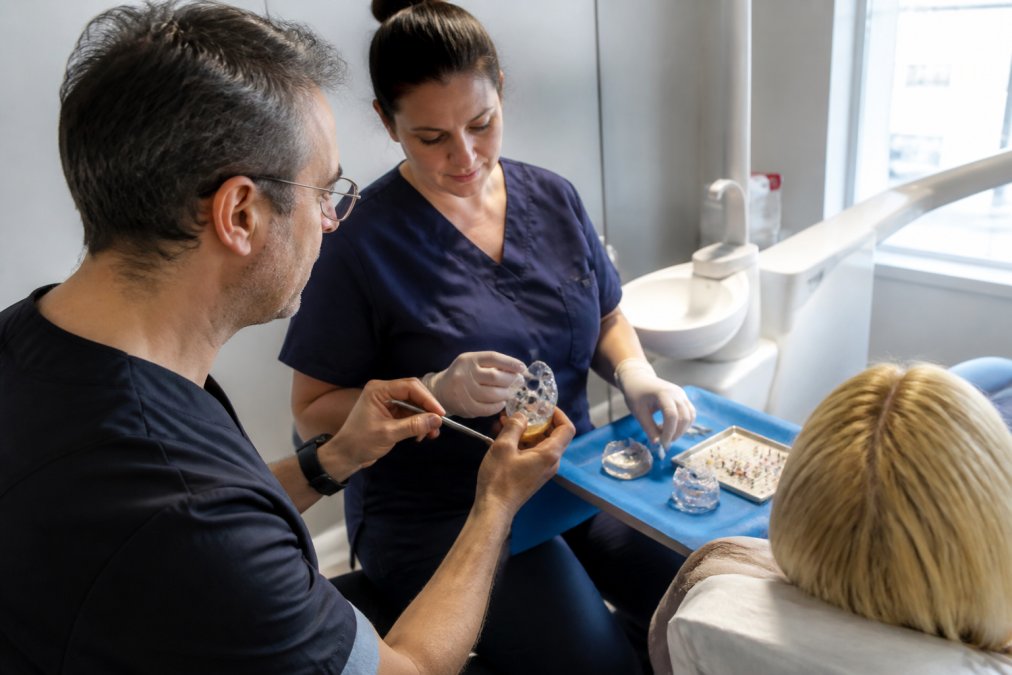
The workflow runs in four stages: a CBCT scan and intraoral scan map bone and soft tissue; the clinician positions the implant virtually, checking bone density, nerve proximity and the planned crown; a surgical guide is printed with sleeves that steer the drill to the planned depth and angle; and the implant is seated through the guide, often via a smaller opening than freehand placement needs.
The benefit is predictability: a smaller surgical site, less time in the chair and a more minimally invasive recovery. The trade-off is preparation, a CBCT scan, a planning appointment and time for the guide to be made.
Immediate Load Dental Implants: Same-Day Teeth
Immediate load dental implants receive a temporary crown the same day they are placed. The implant still needs to osseointegrate, so immediate loading changes what the patient wears during healing, not how long healing takes. Suitability depends on implant stability at placement and the bite, since a same-day tooth must stay out of heavy contact while the implant settles.
Where the two approaches differ in practice:
| Factor | Guided surgery | Immediate load |
|---|---|---|
| Main change | How the implant is positioned | When the temporary crown is fitted |
| Planning time | Extra appointment for scan and guide | Depends on stability at placement |
| Healing period | Unchanged | Unchanged, typically several months |
| Best suited to | Tight anatomy, nerve or sinus proximity | Good stability, favourable bite position |
| Main limitation | Requires imaging and guide fabrication | Not suitable where stability is marginal |
Where Digital Dentistry Has Changed the Planning Stage
Digital dentistry has moved most of the risk in implant treatment from surgery to the planning appointment. An intraoral scanner, CBCT scan and 3D imaging software let the clinician see bone volume, sinus position and nerve pathways before committing to a site. Bone grafting and sinus augmentation address insufficient bone, both adding healing time before placement.
What to Expect During Recovery
Recovery after guided placement is often quieter than patients expect because the surgical site is smaller. Swelling and tenderness in the first few days are normal, and soft tissue healing settles within a couple of weeks.
Long-term maintenance matters most and gets the least attention. Peri-implantitis, the inflammatory condition affecting tissue around an implant, is the leading reason implants are lost years after placement, with risk factors overlapping periodontal disease: smoking, uncontrolled blood sugar and inconsistent cleaning.
A practical maintenance routine looks like this:
- Clean around the implant daily with interdental brushes or floss designed for the job
- Attend hygiene appointments at your clinician's recommended interval
- Report any bleeding, tenderness or mobility immediately
Frequently Asked Questions
What are the latest innovations in dental implant procedures?
The newest dental implants use digital planning, guided surgery and immediate loading. A CBCT scan and intraoral scanner build a 3D model of your jaw, and a surgical guide holds the titanium post at the exact angle planned. Some patients can receive a temporary prosthetic tooth on the same day.
Are immediate load dental implants suitable for everyone?
No. Immediate load dental implants need good jawbone density and stable implant stability at placement. Patients with low bone volume, active periodontal disease or certain health conditions may need bone grafting and a healing period first. A consultation with 3D imaging is the only way to confirm whether same-day loading suits your case.
How does guided dental implant surgery improve patient outcomes?
Guided dental implant surgery uses a custom-made surgical guide based on your CBCT scan. It positions the implant body precisely, which protects nerves and avoids unnecessary bone removal. The result is a minimally invasive procedure with less swelling, faster soft tissue healing and a more predictable fit for the final dental crown or customized abutment.