 listicle
Professional Teeth Whitening Results: What to Expect
Table of Contents
- Understanding Professional Teeth Whitening Results
- How Professional Whitening Works
- Expected Shade Improvement
- In-Office vs. At-Home Whitening: Which Delivers Better Results
- How Long Does Professional Teeth Whitening Last
- Before and After: Real Expectations for Professional Teeth Whitening Results
- Safety, Sensitivity, and Long-Term Enamel Health
- Best Foods to Avoid After Teeth Whitening
- Teeth Whitening Maintenance Tips for Long-Lasting Results
- Choosing the Right Professional Whitening System
- Frequently Asked Questions
Last Updated: July 11, 2026
Understanding Professional Teeth Whitening Results
Professional teeth whitening results depend on your starting point, the system used, and maintenance afterward. Professional-grade formulas reach deeper discoloration than over-the-counter strips. Clinical studies show in-office treatments typically lighten teeth by 2-8 shades on the standard shade guide, while professional take-home systems deliver 1-5 shades over several weeks.
How Professional Whitening Works
Professional-strength whitening gel contains either hydrogen peroxide (faster acting, used in-office) or carbamide peroxide (slower release, used in custom trays). These agents break down into oxygen molecules that penetrate the enamel and attack stain molecules, both extrinsic stains on the surface and intrinsic stains deeper within the tooth structure.
In-office systems like Philips Zoom accelerate this process using LED light activation, allowing the bleaching agent to work more efficiently. Professional-grade gels contain desensitizing agents like potassium nitrate and calcium phosphate, which reduce tooth sensitivity.
The key difference between professional and at-home whitening is concentration and contact time. Professional systems use 25-35% hydrogen peroxide applied by a trained dental professional for 15-45 minutes, compared to 3-10% peroxide in over-the-counter strips. That higher concentration is why professional teeth whitening results are consistently more dramatic.
Expected Shade Improvement
Professional teeth whitening results typically range from 2-8 shades lighter on the standard 16-shade guide used in dental offices. If you're starting with moderately yellowed teeth, expect 4-6 shades of improvement from in-office treatment in a single appointment.
Extrinsic stains (surface stains from coffee, wine, smoking) respond fastest to whitening, with results visible within the first week. Intrinsic stains (discoloration inside the tooth from aging, medications, or trauma) take longer to lighten and may require 2-3 weeks of professional take-home treatment to see full results.
When your dentist shows you the shade guide, the whitest shade (typically labeled B1 or 0M1) represents the absolute lightest shade achievable. Most people can reach 1-2 shades lighter than their natural starting point, which looks dramatic in photos but feels natural in person.
In-Office vs. At-Home Whitening: Which Delivers Better Results
The choice between in-office and professional take-home systems affects both the timeline and intensity of professional teeth whitening results.
In-Office Whitening Advantages
In-office whitening with systems like Philips Zoom takes 45-60 minutes total and produces visible results immediately. Your dentist applies a higher-concentration gel (25-35% hydrogen peroxide) directly to each tooth, controls contact time precisely, and monitors for sensitivity. Results are typically 4-6 shades lighter after a single session.
The tradeoff is cost and sensitivity risk. In-office treatments cost more because they require chair time and professional application. Sensitivity is also more common because the higher concentration works faster and more aggressively, with most people experiencing mild sensitivity for 24-48 hours after treatment.
Professional Take-Home Systems
Professional take-home systems use custom-fitted trays filled with professional-strength gel (typically 10-22% carbamide peroxide). You wear the trays for 30 minutes to several hours daily for 2-3 weeks. The advantage is gradual whitening with less sensitivity and more flexibility. Results build over time, with noticeable improvement after 3-5 days and maximum results after 2-3 weeks.
Professional teeth whitening results from take-home systems are typically 3-5 shades lighter. The slower pace means less sensitivity for most people, and you can space out treatments to maintain results longer-term.
Over-the-Counter Options: Limitations and Reality
Over-the-counter whitening strips, gels, and trays use lower-concentration peroxide (3-10%) and generic trays that don't fit your teeth precisely. Results are modest, typically 1-2 shades lighter after several weeks of use. Over-the-counter strips also don't stay in contact with your teeth evenly, creating uneven results.
How Long Does Professional Teeth Whitening Last
Professional teeth whitening results are not permanent. Teeth naturally re-stain over time as you consume pigmented foods and beverages and as natural yellowing from aging continues.
Factors Affecting Longevity
Your diet is the biggest variable. If you regularly drink coffee, tea, red wine, or dark sodas, your teeth will re-stain faster than someone who avoids these beverages. Smoking also accelerates re-staining significantly. Your natural tooth color and enamel thickness also matter; people with naturally yellower enamel or thinner enamel see results fade faster.
Teeth grinding (bruxism) can accelerate staining because it exposes more porous dentin, which stains more easily than enamel. Certain medications and health conditions also affect longevity. People taking medications that cause dry mouth often see faster re-staining because saliva helps protect against stains.
In-office whitening typically lasts 6-12 months before noticeable re-staining occurs. Professional take-home systems often last slightly longer (8-12 months) because you can do touch-up treatments more easily.
Timeline for Results to Fade
Most people notice their teeth starting to re-stain around month 3-4 after professional in-office whitening. By month 6, the change is usually visible enough that you'll want a touch-up treatment. By month 12, most people are back to 1-2 shades darker than their whitened state, though still lighter than their pre-treatment baseline.
Before and After: Real Expectations for Professional Teeth Whitening Results
Surface Stains vs. Deep Discoloration
The before-and-after difference depends heavily on what type of staining you have. Extrinsic stains (surface stains from coffee, wine, or tobacco) whiten dramatically and quickly. Intrinsic stains (discoloration from inside the tooth caused by aging, medications, or trauma) whiten more slowly and less dramatically. Even after professional treatment, some gray or brown undertone may remain if the staining is severe.
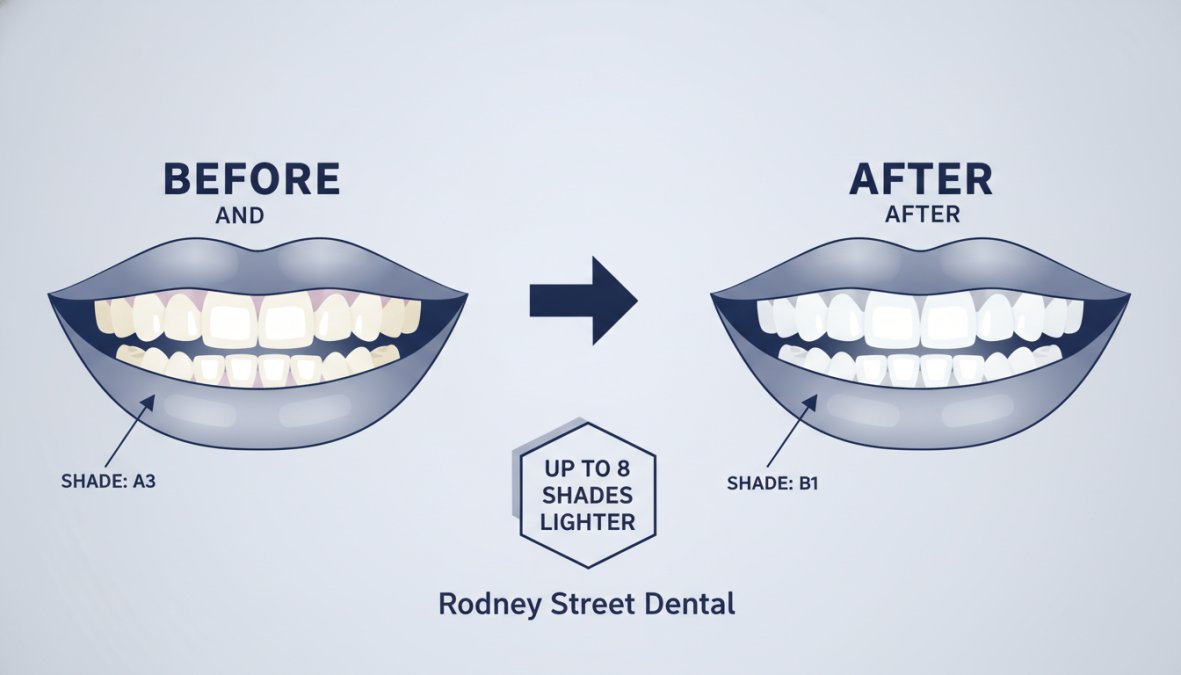
Age-related yellowing responds well to whitening in people under 50, but becomes more resistant in older adults because the underlying dentin (which is naturally more yellow) becomes more visible as enamel thins with age.
Natural-Looking Results and Shade Guides
Professional teeth whitening results look best when they're not overdone. The whitest shade on the dental shade guide is actually uncommon in nature and looks artificial on most people. The most natural-looking professional teeth whitening results land 1-3 shades lighter than your starting point, which creates a noticeable improvement without the "too white" appearance.
A good dentist will recommend a shade that's lighter than your current teeth but still harmonizes with your skin tone and facial features. Many patients also notice that their teeth appear whiter in photos than in person, especially with flash photography.
Safety, Sensitivity, and Long-Term Enamel Health
Professional teeth whitening is safe when done correctly, but it does carry real risks if not managed properly.
Managing Tooth Sensitivity During Treatment
Tooth sensitivity during whitening happens because the bleaching agents temporarily open micro-channels in the enamel, allowing them to penetrate to the dentin underneath. Most sensitivity is mild and temporary, lasting 24-48 hours after treatment.
Pre-treatment sensitivity management makes a big difference. Using a desensitizing toothpaste (containing potassium nitrate) for 2 weeks before whitening reduces sensitivity during and after treatment. During professional whitening, your dentist should apply a desensitizing agent before and after treatment.
Avoid acidic foods and beverages for 48 hours after whitening, as acidic conditions open enamel pores further and intensify sensitivity.
Enamel Protection and Clinical Safety
Clinical research shows that professional whitening, when done correctly, does not permanently damage healthy enamel. However, repeated whitening over many years can theoretically cause cumulative enamel thinning, especially if you're already predisposed to enamel wear from acidic diet, grinding, or aggressive brushing. Whitening 2-3 times per year is safer long-term than whitening monthly.
The real risk is gum irritation and recession if bleaching gel contacts soft tissue repeatedly. This is why professional application (either in-office with a professional barrier or custom take-home trays that seal properly) is safer than over-the-counter strips.
Best Foods to Avoid After Teeth Whitening
The 48 hours immediately after professional whitening are critical for maintaining results. During this window, your enamel is more porous and vulnerable to staining.
The 48-Hour Critical Window
Right after whitening treatment, your teeth are in a heightened state of permeability. The bleaching agents have opened micro-channels in the enamel, and these channels take 24-48 hours to fully close. During this window, stain molecules penetrate more easily.
Avoid dark-colored foods and drinks: coffee, tea, red wine, dark cola, soy sauce, balsamic vinegar, berries, and dark chocolate. These contain chromogens, pigment molecules that easily stain open enamel pores. Also avoid acidic foods and drinks during this period because acid opens enamel pores further and intensifies sensitivity.
Beverages That Cause Staining
Beyond the 48-hour window, coffee and tea are the top offenders for re-staining over weeks and months. Red wine is also highly staining and acidic. Dark sodas and colas stain and erode enamel.
If you can't give up these beverages long-term, use a straw to minimize contact with your front teeth, and rinse your mouth with water immediately after drinking.
Teeth Whitening Maintenance Tips for Long-Lasting Results
Professional teeth whitening results fade over time, but you can extend their longevity significantly with smart maintenance habits.
Daily Habits to Preserve Whiteness
Brush twice daily with a whitening toothpaste that contains mild abrasives and polishing agents. Floss daily to remove stains between teeth where your toothbrush can't reach. Limit staining beverages and use a straw when you do consume them. Rinse your mouth with water after meals and after consuming staining foods or beverages.
Touch-Up Treatments and Professional Monitoring
Most people benefit from touch-up treatments every 6-12 months to maintain their whitening results. A single in-office touch-up session takes 20-30 minutes and costs less than a full initial treatment.
Professional take-home systems are excellent for touch-ups because you already have custom trays. A single week of touch-up treatment can restore results that have faded over months. Your dentist should monitor your teeth during regular check-ups to assess enamel health and gum recession.
Choosing the Right Professional Whitening System
Several professional whitening systems are available, and each has different strengths.
Philips Zoom vs. Opalescence: System Comparison
Philips Zoom is an in-office system using 25% hydrogen peroxide with LED light activation. Results appear in a single 45-minute appointment, typically delivering 4-6 shades of improvement. Zoom is ideal if you want immediate results, though higher sensitivity risk is a tradeoff.
Opalescence offers both in-office (35% hydrogen peroxide) and professional take-home (10-22% carbamide peroxide) options. The take-home system uses custom trays and is gentler, making it ideal for people with sensitive teeth.
| System | Concentration | Format | Timeline | Results | Best For |
|---|---|---|---|---|---|
| Philips Zoom | 25% H₂O₂ | In-office | Single 45-min session | 4-6 shades | Immediate results, event prep |
| Opalescence In-Office | 35% H₂O₂ | In-office | Single 45-min session | 5-7 shades | Maximum dramatic results |
| Opalescence Take-Home | 10-22% CP | Custom trays | 2-3 weeks | 3-5 shades | Sensitive teeth, flexibility |
| Crest 3D Whitestrips | 6% H₂O₂ | Strips | 20 days | 1-2 shades | Budget option, maintenance |
Professional Assessment and Customisation
Before any whitening treatment, your dentist should conduct a thorough assessment. This includes evaluating your current shade, identifying the type of stains you have, checking for enamel thinning or gum recession, and assessing your sensitivity level.
A good dentist will discuss your timeline expectations, recommend a realistic target shade, and explain the sensitivity management plan specific to your situation. They should also discuss your diet and habits to predict how long results will last and what maintenance you'll need.
Professional teeth whitening results transform your smile, but only when you choose the right system and maintain them properly. The difference between a dramatic smile upgrade and disappointment often comes down to realistic expectations and smart maintenance. If you're ready to explore professional teeth whitening and want a dentist who takes a customized, patient-centered approach, Rodney Street Dental offers comprehensive whitening consultations where our team assesses your specific situation and recommends the best treatment path.
Frequently Asked Questions
How long do professional teeth whitening results last?
Professional teeth whitening results typically last 6 months to 2 years, depending on lifestyle and maintenance habits. In-office treatments using high-concentration hydrogen peroxide or carbamide peroxide generally provide longer-lasting results than at-home kits. Factors like diet, smoking, and coffee consumption significantly affect longevity. Most patients benefit from touch-up treatments annually to maintain their desired shade.
What shade improvement can I expect from professional teeth whitening?
Professional whitening can typically lighten teeth by 2-8 shades on a dental shade guide, with in-office treatments offering the most dramatic results. The actual improvement depends on your starting shade, enamel thickness, and the concentration of bleaching agents used. Extrinsic stains (surface discoloration) respond better than intrinsic stains (deep discoloration within the dentin). Your dentist can use a shade guide during your dental appointment to set realistic expectations.
Is professional teeth whitening safe for long-term enamel health?
When administered by a qualified dental professional, professional teeth whitening is safe for enamel. ADA-approved systems use carefully controlled concentrations of hydrogen peroxide or carbamide peroxide that minimise damage. However, overuse or improper application can cause enamel thinning and increased sensitivity. Professional supervision ensures proper technique, protective barriers, and desensitising treatments to protect your oral health during the bleaching process.
What foods should I avoid after professional teeth whitening?
For 48 hours after whitening, avoid dark-coloured foods and beverages including coffee, red wine, berries, and tomato-based sauces. Acidic foods like citrus fruits and vinegar can temporarily soften enamel, making teeth more susceptible to staining. Stick to white foods, clear beverages, and room-temperature options. This critical window allows oxygen molecules from the bleaching agents to complete the whitening process before stains can re-adhere to the tooth surface.
How often do I need touch-up treatments to maintain professional whitening results?
Most patients benefit from touch-up treatments every 6-12 months, though frequency depends on lifestyle and diet. Those who consume staining beverages regularly may need more frequent maintenance. Professional touch-ups are more effective than at-home maintenance alone and help preserve the results achieved during your initial in-office whitening. Your dental team can recommend a personalised maintenance schedule based on your specific needs.
This article was written using GrandRanker