 how-to
Mini Dental Implants & Jawbone Density: What to Know
Table of Contents
- How Jawbone Density Affects Mini Dental Implants
- Jawbone Density Test for Dental Implants: What to Expect
- Mini Dental Implants for Low Bone Density: Who Qualifies?
- What Affects Bone Loss and Long-Term Stability
- Our Services
- Frequently Asked Questions
Last Updated: October 11, 2026
How Jawbone Density Affects Mini Dental Implants
Mini dental implants rely on the jawbone to hold them steady, so jawbone density sits at the centre of every treatment decision. They are narrower than standard implants, so they need less bone, which is why they suit low jawbone density.
Jawbone density is how solid and mineral-rich the bone in your jaw is. Mini dental implants are narrow-diameter implants, usually placed to stabilise dentures or replace single teeth. Osseointegration is where bone grows around the implant and locks it in place.
NHS overview of dental implants
Jawbone Density Test for Dental Implants: What to Expect
A jawbone density test for dental implants is a set of assessments your dentist uses to judge whether an implant will hold.
Step 1: Clinical examination. Your dentist checks your gums, looks for loose teeth, and feels the shape of your jaw.
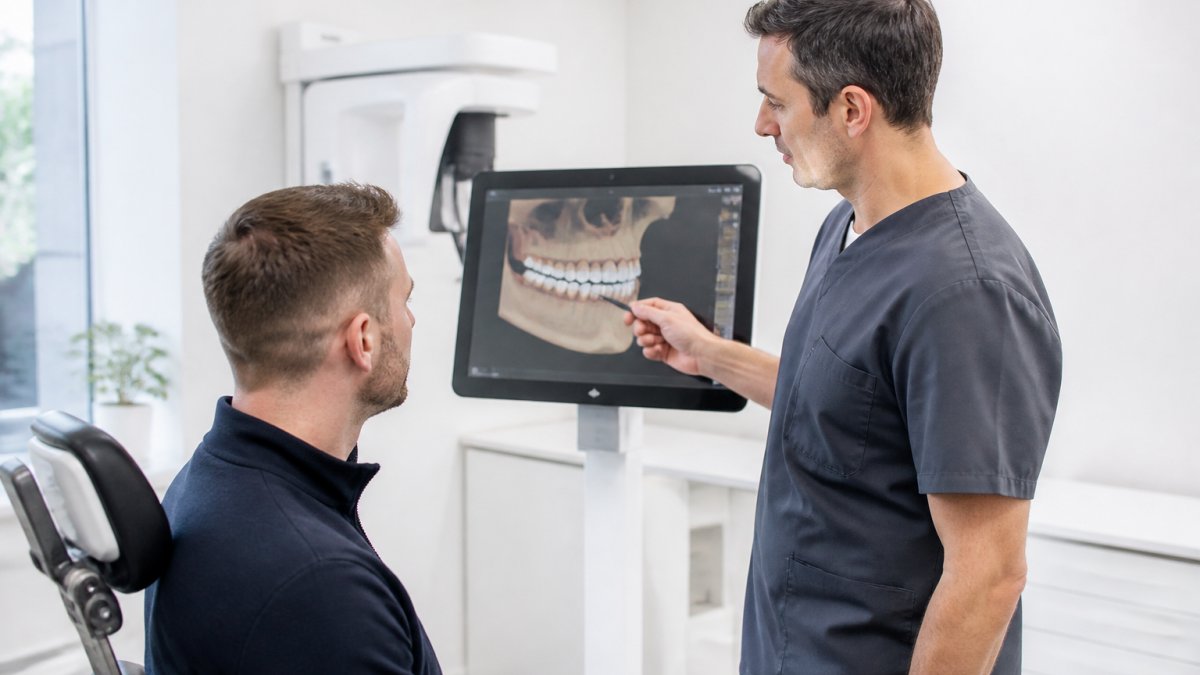
Step 2: Dental imaging. A standard X-ray shows bone height; a 3D scan (CBCT) shows depth and volume too, because a jaw can look fine from the front and be thin from the side.
Step 3: Bone assessment and planning. Your dentist measures bone height and width, notes nerve positions, and decides whether a standard implant, a narrow-diameter implant, or a graft makes most sense.
Step 4: Treatment planning. You get a plan setting out the implant type, number of visits, and expected healing time.
| Stage | What Happens | Why It Matters |
|---|---|---|
| Examination | Gums and jaw checked by hand | Spots obvious bone loss |
| X-ray | Height of bone measured | Rules out clear problems |
| 3D scan | Depth and volume measured | Shows if bone is truly thin |
| Planning | Implant type chosen | Sets healing time and visits |
One honest limitation: no scan can predict exactly how your bone will respond. Imaging gives a strong guide, not a guarantee.
Mini Dental Implants for Low Bone Density: Who Qualifies?
Mini dental implants for low bone density suit some patients well and not others; your dentist weighs several factors together.
You may be a good candidate if: you have a thin jawbone but enough bone to hold a narrow implant, you wear a loose denture and want it stabilised, you want a less invasive option than a full graft and standard implant, or you are in reasonable general health and do not smoke heavily.
You may need more assessment if: you have severe bone loss across a wide area, take medication that affects bone healing, have uncontrolled diabetes or another condition that slows recovery, or grind your teeth heavily.
Bone grafting before dental implants is the other route: a graft adds bone to the area, then a standard implant is placed once it heals. It takes longer and involves more visits, but opens up options mini implants cannot.
The decision pathway is simple: adequate bone volume usually favours a standard implant; thin but present bone may suit a mini implant and avoid grafting; severely reduced bone often means grafting plus a standard implant.
Mini dental implants vs standard implants comes down to trade-offs. Minis need less bone and heal faster. Standards carry more load and tend to last longer under heavy chewing forces.
General Dental Council standards for dental professionals
What Affects Bone Loss and Long-Term Stability
Osteoporosis and osteopenia reduce bone strength throughout the body, including the jaw, and some medications for these conditions affect how bone heals after placement. Tell your dentist about every medication you take.
Aftercare protects the result. Brush and floss around the implant daily. Keep regular check-ups. Avoid biting hard objects. With good care, mini implants can stay stable for years.
Our Services
At Rodney Street Dental, we provide dental implants, orthodontics including Invisalign and Fastbraces, and professional teeth whitening. Every plan is bespoke, with video walkthroughs so you know exactly what to expect.
We are CQC and GDC registered, and we use trusted brands like Straumann, BioHorizons, Boutique Whitening, and Philips Zoom.
Frequently Asked Questions
Do mini dental implants require less jawbone density than standard implants?
Mini dental implants are narrower than standard implants, so they can sometimes be placed where bone volume is reduced. However, they still need adequate bone support for stability and osseointegration. A dentist will assess your jawbone density using imaging before recommending mini implants. If bone loss is significant, grafting or other options may be discussed. Mini implants are not automatically suitable for everyone with low bone density.
Can you get mini dental implants if you have low bone density?
Some patients with low bone density may be candidates for mini dental implants, but it depends on the degree of bone loss and its location. A thorough assessment, including 3D imaging, helps your dentist judge whether mini implants can achieve stable fixation. Factors like osteoporosis, medications, and smoking also affect healing and long-term success. A consultation is essential to determine if mini implants are appropriate for your situation.
How is jawbone density assessed before dental implants?
Dentists use dental imaging, often 3D scans such as CBCT, to evaluate bone volume, height, and density at the implant site. This helps identify whether there is enough bone support for implant placement. The assessment also guides treatment planning, including whether mini implants, standard implants, or bone grafting may be suitable. Your dentist will discuss the findings and explain the recommended approach for your case.
Bone loss can feel like a dead end, but it rarely is. A proper assessment usually opens up more than one route forward. At Rodney Street Dental, we offer bespoke treatment plans, video walkthroughs of your options, and a calm, consultative approach built for anxious patients. Get started with Rodney Street Dental and find the implant plan that fits your jaw and your life.