 how-to
Is Professional Whitening Safe? A Complete Guide
Table of Contents
- Is Professional Whitening Safe? What the Evidence Shows
- Teeth Sensitivity After Whitening: Causes and Management
- How Long Does Professional Teeth Whitening Last?
- Professional vs. At-Home Teeth Whitening: Safety Comparison
- Our Professional Whitening Service
- Frequently Asked Questions
Last Updated: July 12, 2026
Is Professional Whitening Safe? What the Evidence Shows
Professional teeth whitening is significantly safer than DIY approaches when delivered by qualified dental professionals. Professional treatments use bleaching agents, typically hydrogen peroxide or carbamide peroxide, at carefully controlled concentrations, with a dentist protecting your gums and monitoring sensitivity throughout. The British Dental Association recognises professional whitening as a safe cosmetic procedure when performed by registered practitioners. Research shows temporary tooth sensitivity affects roughly 40% of patients but resolves within days or weeks, whilst gingival irritation occurs in only a small percentage and is easily managed with proper technique.
Teeth Sensitivity After Whitening: Causes and Management
Tooth sensitivity following professional whitening is temporary and manageable. When bleaching agents penetrate tooth structure, they temporarily expose the dentin layer beneath your enamel, which contains microscopic tubules connected to the nerve. This causes sharp sensations when consuming hot, cold, or sweet foods.
Sensitivity typically appears within 24 hours and resolves within 3-7 days for most patients. Those with naturally thin enamel, existing gum recession, or a history of tooth grinding experience it more frequently.
Managing sensitivity during and after whitening:
- Use sensitivity-reducing toothpaste containing potassium nitrate for 2 weeks before treatment
- Apply fluoride gel or calcium phosphate remineralisation products after whitening
- Avoid acidic foods and drinks for 48 hours post-treatment
- Wear a custom tray fitted by your dentist rather than generic strips
- Take ibuprofen 30 minutes before treatment if you have a history of sensitivity
Professional whitening systems often include desensitising gel applied during treatment. Your dentist may recommend delaying additional sessions if sensitivity persists.
How Long Does Professional Teeth Whitening Last?
Professional teeth whitening results typically last between 6 and 12 months, depending on your diet, lifestyle, and natural tooth structure. Some patients maintain results for up to 18 months with proper care.
Extrinsic stains, those on the tooth surface from coffee, red wine, or tobacco, respond exceptionally well and fade more slowly. Intrinsic stains, those within the tooth structure from medication, age, or trauma, whiten effectively but may return more quickly.
Factors that shorten whitening results:
- Consuming dark-coloured beverages daily (coffee, tea, red wine)
- Smoking or using tobacco products
- Acidic foods and drinks that soften enamel
- Poor oral hygiene allowing plaque buildup
To extend results, use a custom take-home maintenance tray provided by your dentist. A single touch-up session every 6-12 months maintains brightness without the cost of a full repeat treatment.
| Duration | Result Quality | Maintenance Required |
|---|---|---|
| 0-3 months | Peak whiteness | None |
| 3-6 months | Noticeable fade | Avoid staining foods |
| 6-12 months | Gradual darkening | Consider touch-up |
| 12+ months | Return to baseline | Full treatment recommended |
Professional vs. At-Home Teeth Whitening: Safety Comparison
The safety difference between professional and at-home whitening centres on three critical factors: bleaching agent concentration, application control, and clinical supervision. Professional systems use hydrogen peroxide at 15-35% concentration under dental supervision, whilst over-the-counter strips contain 3-10% peroxide.
Professional whitening advantages:
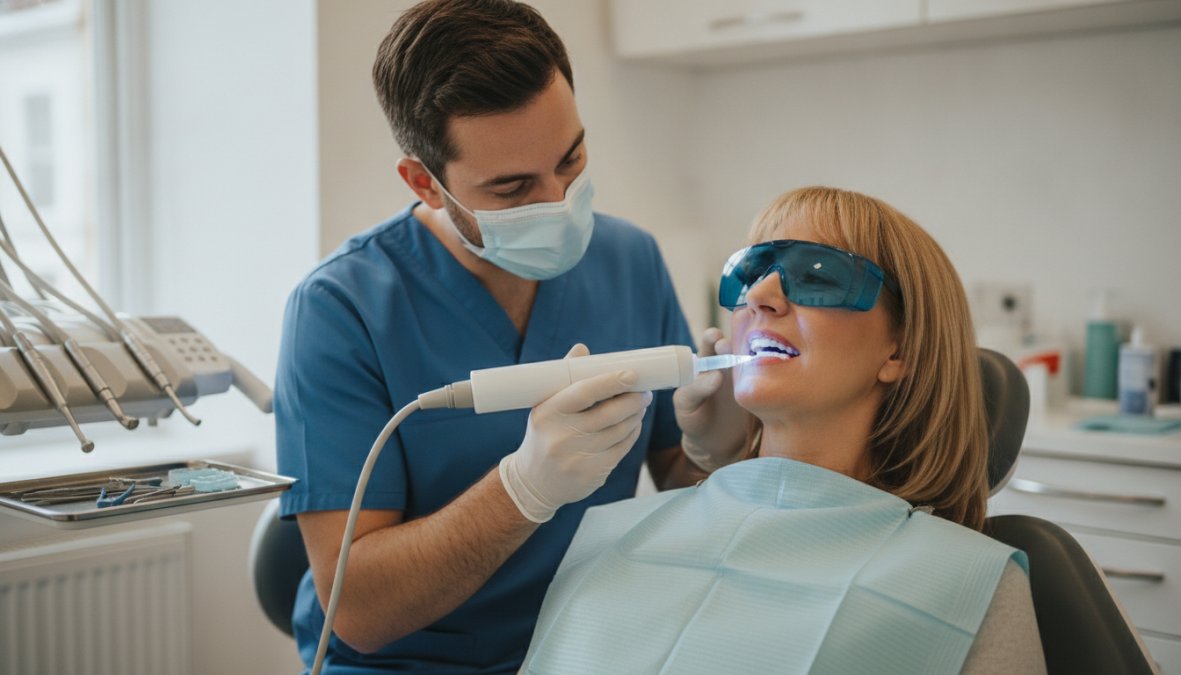
Your dentist applies protective barriers to your gums before treatment, preventing irritation. Custom-fitted trays ensure gel contacts only tooth surfaces. The dentist monitors sensitivity in real-time and can adjust treatment immediately. Professional systems often include fluoride or calcium phosphate to strengthen enamel. Your dentist reviews your dental history, identifying existing cavities or gum disease before proceeding.
At-home whitening risks:
Over-the-counter strips fit poorly, allowing bleaching gel to contact gums and cause irritation. Generic trays may be too large or small, leading to uneven whitening. Without professional guidance, patients with underlying dental problems may experience significant discomfort. Bleaching agent concentration is often unregulated, creating unpredictable results and higher sensitivity risk.
| Factor | Professional | At-Home Strips | Generic Trays |
|---|---|---|---|
| Bleaching concentration | Controlled, 15-35% | Fixed, 3-10% | Unregulated |
| Gum protection | Professional barriers | Minimal | None |
| Sensitivity management | Real-time monitoring | Self-managed | No support |
| Enamel assessment | Pre-treatment exam | Not assessed | Not assessed |
| Results consistency | Predictable | Variable | Highly variable |
| Side effect risk | Low (2-5%) | Moderate (10-15%) | High (20%+) |
The ADA Seal of Acceptance marks professional-grade whitening systems that meet safety and efficacy standards. When you choose professional whitening through a registered dental practice, you receive evidence-based treatment with accountability.
Our Professional Whitening Service
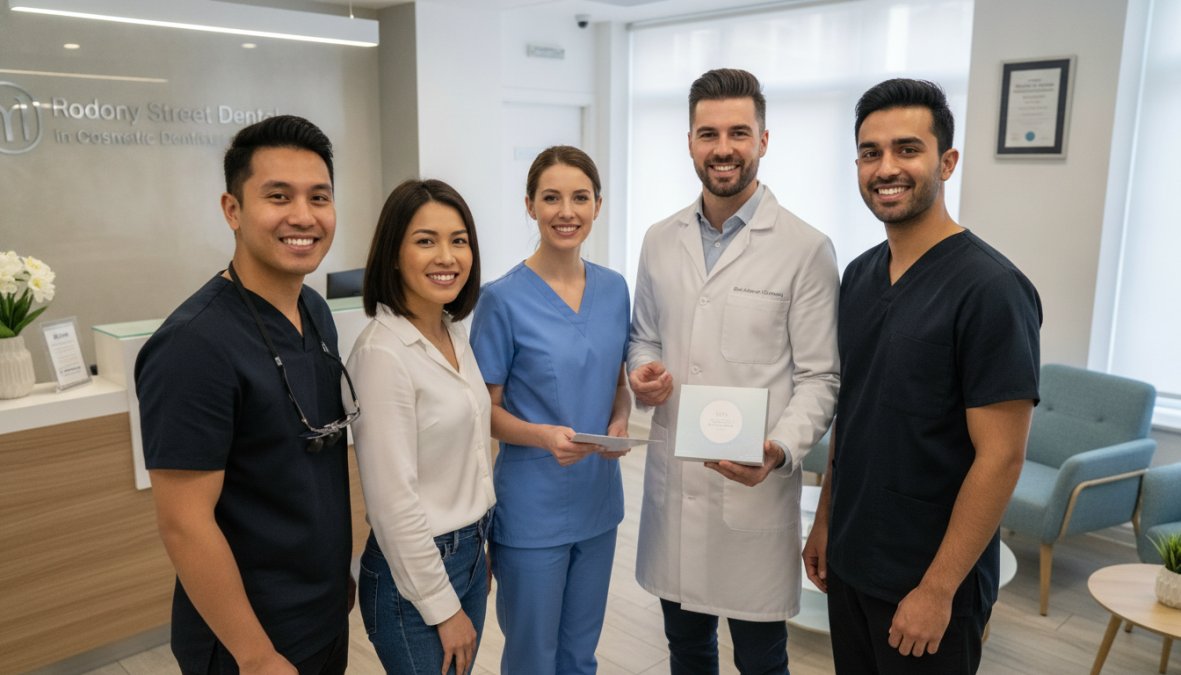
At Rodney Street Dental, we deliver professional teeth whitening using trusted systems like Philips Zoom and Boutique Whitening. Our approach begins with a thorough dental examination to identify any underlying issues that require treatment before whitening. We customise your treatment based on your baseline tooth shade, sensitivity history, and desired outcome. Our team applies protective barriers to your gums, applies professional-grade bleaching gel, and monitors your comfort throughout. We provide take-home maintenance trays and sensitivity management products to maintain your results safely between visits.
Contact us today to schedule your consultation and discover how professional whitening can transform your smile.
Frequently Asked Questions
Is professional whitening safe for tooth enamel?
Yes, professional whitening is safe when administered by a qualified dental professional. Dentists use controlled concentrations of bleaching agents (hydrogen peroxide or carbamide peroxide) and apply protective barriers to safeguard your gums and enamel. Professional supervision ensures the manufacturer's protocol is followed precisely, minimising risk to pulp health and enamel integrity. Unlike DIY methods, professional treatments include enamel assessment beforehand and remineralisation support afterwards.
What are the common side effects of professional teeth whitening?
The most common side effect is temporary tooth sensitivity, which typically subsides within a few days. Some patients experience mild gum irritation or gingival sensitivity if bleaching gel contacts soft tissue. These effects are generally short-lived and manageable. Serious complications are rare when treatments follow clinical research guidelines and are supervised by a dental professional. Your dentist can recommend fluoride treatments or desensitising agents to minimise discomfort.
How long does professional teeth whitening last compared to at-home treatments?
Professional whitening typically lasts 6-12 months, depending on lifestyle and dietary habits. Results generally persist longer than over-the-counter strips or trays because professionals use higher concentrations of bleaching agents in a controlled setting. Maintenance is key: avoiding staining foods and beverages, maintaining good dental hygiene, and scheduling touch-ups as recommended by your dentist will extend longevity. At-home treatments often fade more quickly due to lower chemical concentrations and less precise application.
Should I choose professional whitening over at-home kits for safety?
Professional whitening is the safer choice. Dental professionals conduct a thorough dental exam before treatment, identify contraindications, and use custom trays or supervised application methods. They monitor for gum protection, control chemical concentration, and provide aftercare guidance. Over-the-counter kits lack this supervision, carry higher risks of enamel damage and gum irritation, and may be unsafe for those with existing dental work, decay, or sensitivity. Professional treatment offers ADA Seal confidence and clinical research backing.
This article was written using GrandRanker