 comparison
Is Dentist-Prescribed Whitening Worth It?
Table of Contents
- Understanding Dentist-Prescribed Whitening and How It Works
- Dentist Whitening vs Home Kits: What Sets Them Apart
- How Long Does Professional Teeth Whitening Last?
- Teeth Whitening Safety Regulations and What You Should Know
- The Real Value: Is Professional Whitening Worth the Investment?
- Frequently Asked Questions
Last Updated: August 26, 2026
Understanding Dentist-Prescribed Whitening and How It Works
Professional teeth whitening prescribed by a dentist uses bleaching agents, typically hydrogen peroxide or carbamide peroxide, to lighten tooth discolouration. Unlike over-the-counter products, dentist-prescribed whitening relies on higher concentrations applied under professional supervision, delivering more dramatic results in a shorter timeframe.
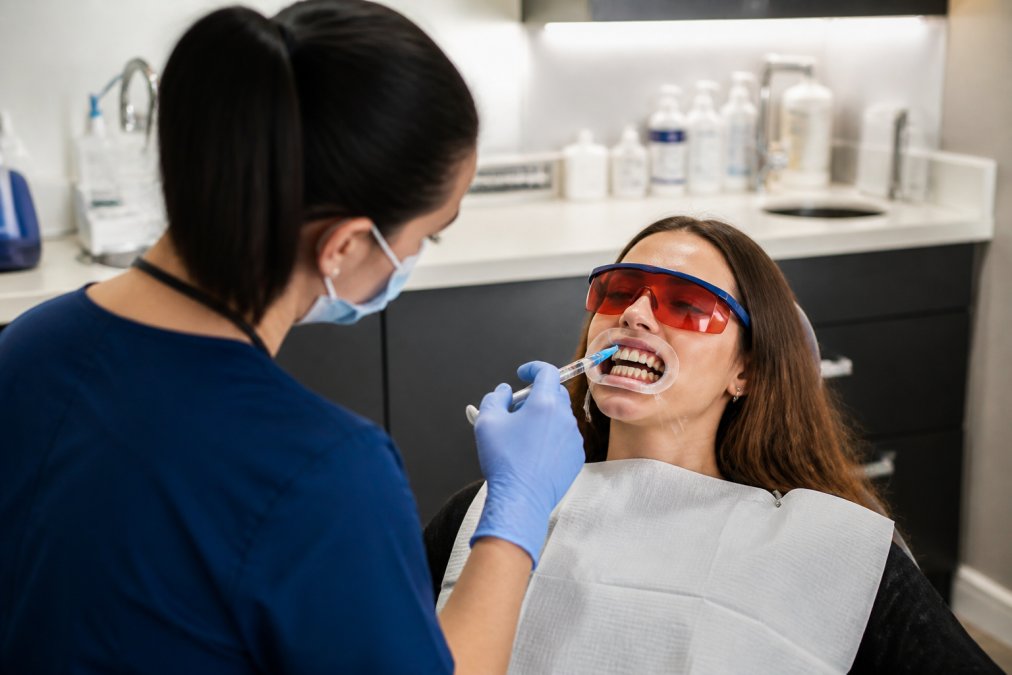
Your dentist evaluates your teeth for existing damage, cracks, or exposed dentin that could cause sensitivity, and determines whether discolouration is extrinsic (surface stains) or intrinsic (stains within the tooth structure). Custom-fitted trays are created from impressions of your teeth, ensuring even gel distribution and minimal gum contact. Professional-grade bleaching gels, formulated with lower pH levels and sensitivity-reducing agents like fluoride and potassium nitrate, are applied to the trays (peer-reviewed research). You'll either wear them nightly for 2-3 weeks or attend in-chair sessions where gel is activated with light. Professional oversight minimises enamel damage and gingival irritation compared to unsupervised treatments.
Dentist Whitening vs Home Kits: What Sets Them Apart
Professional systems use carbamide peroxide or hydrogen peroxide at 15-35% strength, whilst shop-bought products typically contain 3-10% (the American Dental Association). Custom-fitted trays represent a critical advantage, over-the-counter strips are one-size-fits-all and often leave gaps where gel pools against gums, causing irritation. Professional trays are moulded to your exact dental anatomy, ensuring precise gel placement and protecting soft tissues.
Professional systems include sensitivity management built into their formulations, incorporating amorphous calcium phosphate, fluoride, and potassium nitrate to strengthen enamel and reduce dentinal hypersensitivity. A dentist assesses whether your teeth are suitable for whitening and monitors progress, whilst home users lack this clinical oversight.
| Aspect | Professional (Dentist-Prescribed) | Over-the-Counter Home Kits |
|---|---|---|
| Bleaching agent strength | 15-35% carbamide or hydrogen peroxide | 3-10% hydrogen peroxide |
| Tray fit | Custom-fitted to individual teeth | One-size-fits-all strips or trays |
| Sensitivity protection | Formulated with desensitising agents | Minimal or absent |
| Clinical oversight | Dentist monitors progress and adjusts | No professional supervision |
| Typical timeframe | 2-3 weeks for visible results | 1-2 months for modest improvement |
How Long Does Professional Teeth Whitening Last?
Most patients see results lasting 6-12 months before noticeable fading occurs (the American Academy of Dermatology). Extrinsic stains from coffee, tea, red wine, or smoking fade faster than intrinsic stains because they're surface-level and easily re-accumulated. Patients who adopt a post-whitening diet and maintain excellent oral hygiene often retain results for 12-18 months. Many dentists provide take-home trays and gel syringes for maintenance, allowing you to refresh results every 3-6 months.
Teeth Whitening Safety Regulations and What You Should Know
Professional teeth whitening in the UK is regulated under dental practice standards set by the General Dental Council (GDC). Only registered dentists and dental therapists are legally permitted to apply high-concentration bleaching agents (above 6% hydrogen peroxide).
Professional formulations are buffered to maintain neutral pH levels, reducing the risk of acid-induced enamel demineralisation. Common side effects include temporary tooth sensitivity and mild gingival irritation, typically subsiding within 24-48 hours. Contraindications exist for pregnant women, children under 16, and individuals with severe enamel erosion or untreated cavities. Patients with composite resin fillings or crowns should understand that bleaching agents don't lighten these materials, potentially creating shade mismatches.

The Real Value: Is Professional Whitening Worth the Investment?
Professional whitening delivers predictable results within weeks rather than months. If you're preparing for a significant life event, a wedding, job interview, or important presentation, professional treatment offers measurable shade improvements of 6-8 levels on the VITA shade guide, compared to 2-3 levels typical of home kits.
For patients with intrinsic staining from ageing, medications, or previous trauma, professional whitening may be the only option that produces satisfactory results. Long-term value emerges through maintenance protocols, where touch-up treatments using provided trays and gel can be a cost-effective way to maintain results.
Professional teeth whitening is worth considering if you want reliable, dramatic results within a defined timeframe and value enamel protection. At Rodney Street Dental, we use trusted systems like Boutique Whitening and Philips Zoom, combined with bespoke treatment plans tailored to your teeth's specific needs. Our team assesses your suitability for whitening, manages sensitivity, and provides maintenance protocols to extend your results. Contact us to discuss whether professional whitening aligns with your smile goals.
Frequently Asked Questions
Q: Is dentist-prescribed whitening worth the cost compared to over-the-counter kits?
A: Dentist-prescribed whitening delivers superior results because it uses higher concentrations of bleaching agents under professional supervision. Professional systems employ custom-fitted trays and professional-grade carbamide peroxide or hydrogen peroxide, ensuring even application and reduced gum irritation. Over-the-counter kits often produce inconsistent results and carry greater risks of sensitivity and tissue damage. The investment in dentist-prescribed whitening typically yields more dramatic, longer-lasting shade improvements and includes professional assessment of your suitability for treatment.
Q: How long do results from professional teeth whitening last?
A: Results from professional whitening typically last between six months and two years, depending on your lifestyle and maintenance habits. Factors affecting longevity include diet, smoking, consumption of staining beverages like tea and coffee, and your natural tooth colour. Many patients maintain results through periodic touch-up treatments prescribed by their dentist. Professional systems are designed for durability, but because whitening is not permanent, a maintenance plan ensures your smile remains bright over time.
Q: What safety regulations govern teeth whitening in the UK?
A: Teeth whitening in the UK is regulated by the General Dental Council (GDC) and the Care Quality Commission (CQC). Only registered dental professionals can legally supply and apply professional-strength whitening treatments containing bleaching agents above certain concentrations. This regulation ensures that treatments meet safety standards and minimise risks such as enamel damage and gingival irritation. Over-the-counter products are subject to different rules and typically contain lower concentrations of active ingredients. Always seek treatment from a GDC-registered dental practice to ensure compliance with safety protocols.
This article was written using GrandRanker