 comparison
Invisalign vs Traditional Metal Braces: A 2026 UK Guide
Table of Contents
- Invisalign vs Traditional Metal Braces: Key Differences Explained
- Comfort, Aesthetics and Daily Life: How They Compare
- Treatment Duration and Effectiveness for Complex Cases
- Adult Braces UK: Invisalign and Metal Braces for Grown-Ups
- Making Your Decision: What Rodney Street Dental Recommends
- Frequently Asked Questions
Last Updated: July 27, 2026
Invisalign vs Traditional Metal Braces: Key Differences Explained
When deciding between orthodontic treatment options, the choice between Invisalign and traditional metal braces affects your smile, confidence, and daily life for 18-36 months. The answer depends far more on your lifestyle and specific dental needs than most guides suggest.
Traditional metal braces use fixed brackets bonded to your teeth with connecting wires that an orthodontist tightens periodically. Invisalign relies on custom-made clear aligners you swap every one to two weeks. Metal braces apply continuous force through rigid wires, making them exceptionally effective for severe crowding, complex bite problems, and precise three-dimensional tooth movement. Invisalign works through incremental adjustments, each aligner applying pressure before you transition to the next one. This approach works brilliantly for mild to moderate spacing and crowding, but it demands your active participation every single day.

Comfort, Aesthetics and Daily Life: How They Compare
Invisalign wins decisively on aesthetics. The aligners are virtually invisible during normal conversation, which matters enormously if you're self-conscious about orthodontic treatment. For working professionals and public-facing roles, this advantage alone justifies serious consideration.
However, comfort tells a different story. Invisalign feels more comfortable initially, no sharp brackets or wire poking your gums, but the aligners must stay in your mouth 20-22 hours daily, removed only for eating, drinking anything but water, and cleaning your teeth. Patients who struggle with compliance often wear aligners inconsistently, which slows progress and can derail treatment entirely.
Traditional metal braces are fixed in place, so there's no compliance question. They work whether you're disciplined or not. The pressure is constant and the movement predictable. Yes, they're more visible and require meticulous cleaning around brackets and wires to prevent plaque buildup, but this is entirely manageable with proper technique.
Oral hygiene differs significantly. With metal braces, you must thread floss under the wire and clean carefully around each bracket. Invisalign aligners are removable, making cleaning easier, you brush and floss normally, then pop the aligners back in. For patients with existing gum health concerns or a history of cavities, Invisalign's removability offers a genuine advantage.
Treatment Duration and Effectiveness for Complex Cases
For straightforward cases with mild crowding, small gaps, or minor bite corrections, both systems deliver results in 12-24 months with comparable effectiveness.
But introduce moderate crowding, severe spacing, crossbites, overbites, or underbites, and the picture shifts. Metal braces handle complex cases with precision that Invisalign cannot match. The rigid wire system allows your orthodontist to apply force in multiple directions simultaneously, correcting three-dimensional tooth positions with exacting control. Invisalign excels at moving teeth in the vertical and horizontal planes but struggles with rotations and severe bite corrections.
Attempting complex cases with Invisalign often results in either incomplete correction or extended treatment time, sometimes adding 6-12 months to the process. Treatment duration also depends on how consistently you wear Invisalign. The timeline assumes 20-22 hours daily wear. Metal braces progress on a predictable schedule regardless of patient behaviour.
Adult Braces UK: Invisalign and Metal Braces for Grown-Ups
Adult orthodontics has expanded significantly, and both Invisalign and metal braces serve adult patients effectively. The choice often hinges on professional visibility and lifestyle rather than clinical factors.
Adults choosing Invisalign frequently cite workplace concerns, they don't want colleagues or clients noticing they're undergoing orthodontic treatment. The discretion is valuable in client-facing professions. However, many adult patients choose metal braces deliberately, finding the commitment of fixed braces psychologically helpful and prioritising treatment speed and certainty.
Post-treatment retention differs between the two systems. After metal braces are removed, you'll wear a fixed retainer plus a removable retainer at night. After Invisalign, you typically wear a fixed retainer plus custom retainers similar to your treatment aligners. Both require long-term commitment to prevent relapse. Once your orthodontic treatment is complete, many patients explore teeth whitening to enhance their newly straightened smile and achieve the confident, radiant appearance they've been working towards.
For adults with existing gum recession, bone loss, or periodontal disease, metal braces may be riskier. Invisalign's removability makes it gentler on vulnerable gums, though you must maintain excellent oral hygiene.
| Factor | Invisalign | Traditional Metal Braces |
|---|---|---|
| Aesthetic appeal | Virtually invisible | Highly visible |
| Compliance required | High (20-22 hours daily) | None (fixed in place) |
| Effectiveness for complex cases | Limited | Excellent |
| Treatment duration (mild cases) | 12-18 months | 12-24 months |
| Comfort level | High initially | Moderate, improves quickly |
| Oral hygiene difficulty | Easy (removable) | Moderate (requires technique) |
| Best for | Adults, mild-moderate cases, professionals | Complex cases, teenagers, compliance-challenged patients |
Making Your Decision: What Rodney Street Dental Recommends
Choose Invisalign if you're an adult concerned about professional appearance, have mild to moderate orthodontic needs, maintain strong discipline with daily routines, and can commit to wearing aligners consistently. Choose metal braces if your case involves significant bite problems, severe crowding, or complex misalignment, or if you've historically struggled with consistency.
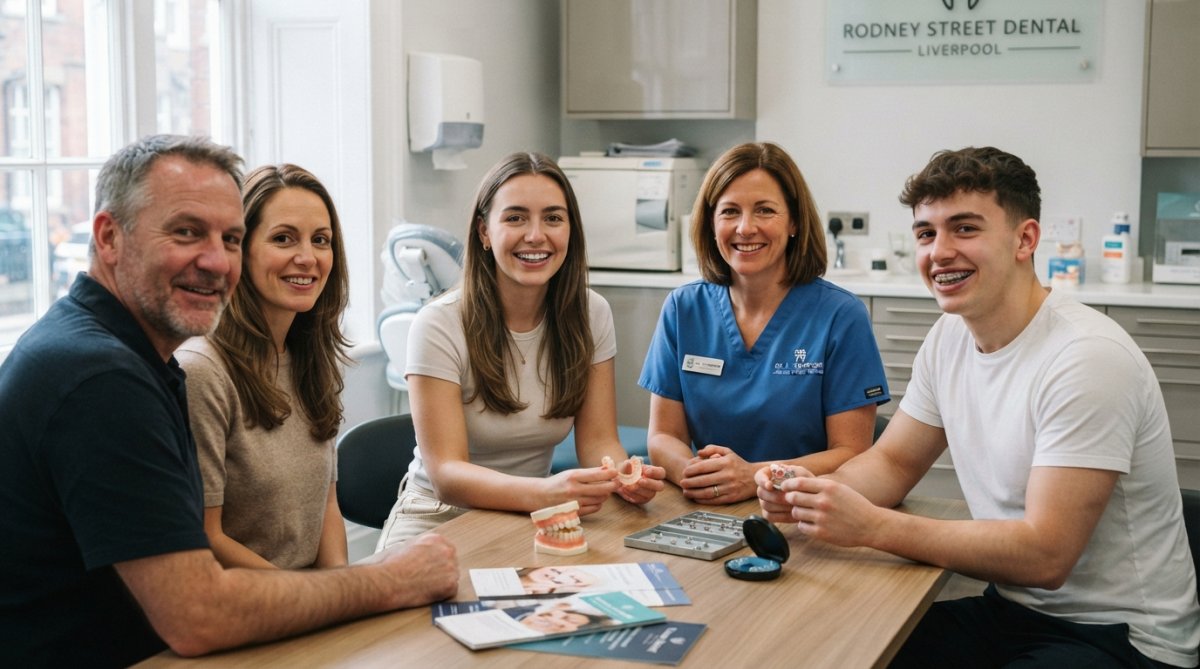
At Rodney Street Dental, we offer both Invisalign and Fastbraces (an accelerated fixed-brace system) because no single solution suits everyone. Our bespoke treatment plans begin with a thorough assessment of your specific dental needs, lifestyle, and goals. We use 3D digital scans and video walkthroughs to show you exactly what to expect, removing guesswork from the decision.
The choice between Invisalign and traditional metal braces isn't about which is objectively better, it's about which aligns with your priorities, discipline, and clinical needs.
Ready to transform your smile? Rodney Street Dental combines clinical excellence with compassionate care. We're CQC and GDC registered, and our team specialises in bespoke orthodontic treatment plans tailored to your specific needs. Whether you choose Invisalign for discretion or metal braces for certainty, we guide you through every step with video walkthroughs and transparent communication. Learn more about orthodontic treatment options or contact us today for a consultation. Your confident smile is just one decision away.
Frequently Asked Questions
Is Invisalign better than traditional braces for adults in the UK?
Neither is universally 'better', it depends on your needs. Invisalign offers discreet aesthetics and easier oral hygiene, making it popular with adults concerned about appearance. Traditional metal braces are more effective for complex cases and severe bite problems. Adults often prefer Invisalign for work visibility, but compliance is critical: aligners must be worn 20-22 hours daily. Consult an orthodontist to assess whether your specific malocclusion suits Invisalign or requires fixed braces for optimal results.
What are the main cost differences between Invisalign and traditional metal braces in the UK?
Traditional metal braces are typically the most affordable option, especially for eligible under-18s on the NHS at no cost. Private metal braces generally cost less than Invisalign. Invisalign pricing depends on case complexity and provider. For precise pricing tailored to your treatment plan, contact Rodney Street Dental for a bespoke consultation and quote. Financing options and payment plans may be available to spread costs over your treatment duration.
How does treatment duration compare between Invisalign and traditional braces?
Traditional metal braces typically take 18-24 months for most cases, whilst Invisalign often ranges from 12-18 months for mild to moderate issues. However, treatment length varies significantly based on your specific dental needs, severity of crowding or spacing, and bite correction required. Complex cases may take longer with either method. Compliance is crucial with Invisalign, inconsistent wear extends treatment time. Your orthodontist will provide a detailed treatment timeline during your initial consultation.
Can I get Invisalign or traditional braces on the NHS in the UK?
Traditional metal braces are available free on the NHS for eligible under-18s with significant orthodontic need. Adults and those with mild cases typically cannot access NHS orthodontics due to long waiting lists and eligibility criteria. Invisalign is not routinely available on the NHS and is primarily a private treatment. If you've been on an NHS waiting list, private options like those at Rodney Street Dental offer faster access to bespoke treatment plans with transparent pricing and professional guidance.
Which option is more effective for severe crowding and complex bite problems?
Traditional metal braces remain the gold standard for complex orthodontic cases, including severe crowding, significant spacing, overbites, underbites, and crossbites. Their fixed brackets and continuous wire pressure provide precise control over tooth movement and jaw alignment. Whilst Invisalign works well for mild to moderate issues, complex cases often require the reliability and predictability of fixed braces. Your orthodontist will assess your specific malocclusion during consultation to recommend whether braces for complex cases would serve you better than clear aligners.
This article was written using GrandRanker