 how-to
How to Speed Up Clear Aligner Treatment
Table of Contents
- How Clear Aligners Move Teeth and Why Speed Matters
- Invisalign Wear Time Requirements: The Foundation of Faster Results
- Benefits of Using Aligner Chewies and Tracking Your Progress
- Optimising Oral Hygiene and Tray Changes for Faster Orthodontic Treatment Duration UK
- Frequently Asked Questions
Last Updated: August 10, 2026
How Clear Aligners Move Teeth and Why Speed Matters
Clear aligners work by applying consistent, controlled pressure to teeth, gradually shifting them into position through bone remodelling, the body's natural response where old bone dissolves on one side of the tooth root whilst new bone forms on the other. This remodelling happens at a predictable pace, typically 0.25mm per tray, because moving faster risks damaging the tooth root or causing permanent gingival recession. Treatment duration matters because rushing the process either stalls progress or creates complications that extend it further.
Compliance is where most treatment delays occur. A tray worn inconsistently sends conflicting signals to your bone, slowing remodelling and causing tracking issues where teeth don't follow the planned path. Aligners are passive, they can only move teeth if they're in your mouth applying pressure, which is why wear time requirements are non-negotiable for results.
Invisalign Wear Time Requirements: The Foundation of Faster Results
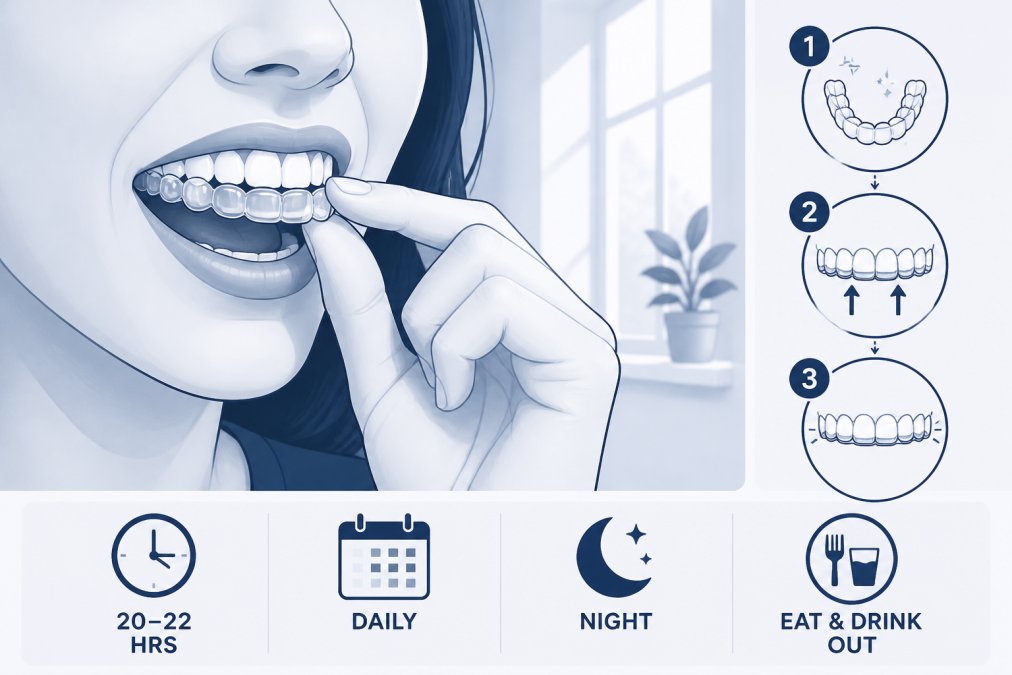
The standard recommendation is 20-22 hours per day, meaning your aligners stay in except during meals and oral hygiene routines. Most people complete treatment faster when hitting the upper end of this range consistently.
Your teeth need continuous pressure to trigger bone remodelling. Wearing aligners for only 16 hours gives your bone 8 hours daily to reverse changes. At 20-22 hours, you're applying pressure for most of the day, and brief breaks for eating and cleaning don't interrupt the biological process significantly.
Most people underestimate actual removal time. Breakfast, lunch, dinner, snacks, oral hygiene, and social situations add up quickly, someone thinking they're at 20 hours might actually be at 18. Tracking actual wear time through compliance indicators or apps reveals your true bottleneck. Increasing wear time by just two hours daily can measurably accelerate progress.
Benefits of Using Aligner Chewies and Tracking Your Progress
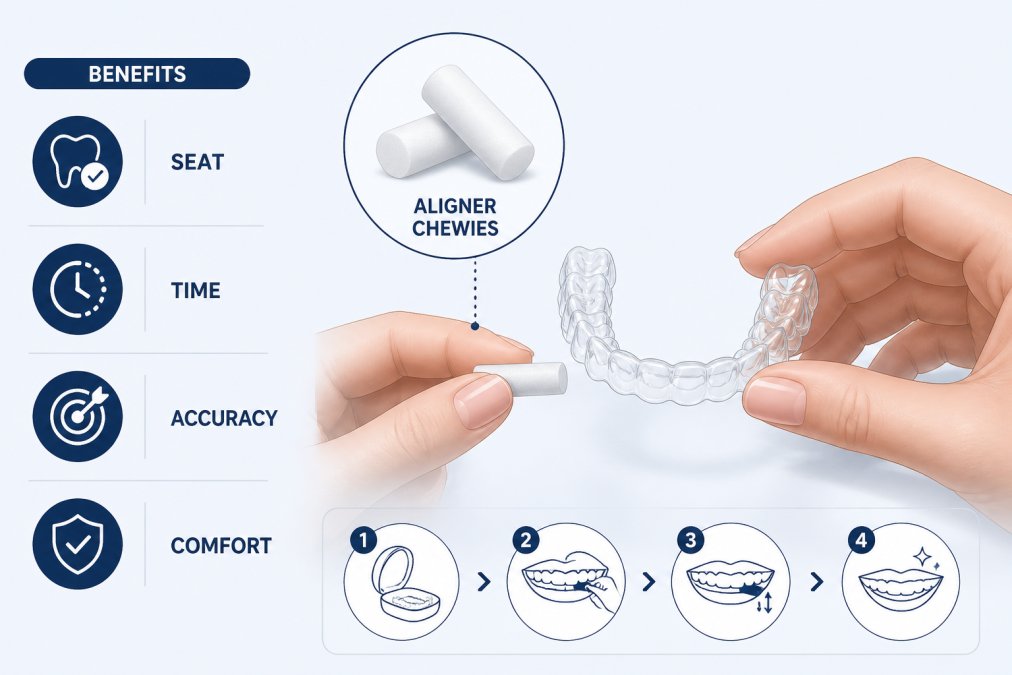
Aligner chewies are small, firm cylinders you bite down on whilst wearing your aligners. They seat the aligner fully against your teeth, ensuring complete contact and consistent pressure. Without proper seating, teeth don't track the planned movement.
An aligner that sits loose against your back molars whilst fitting snugly on your front teeth applies uneven pressure, creating tracking issues. Your orthodontist then issues refinement trays to correct the deviation, extending treatment by months. Using chewies for 30 seconds after inserting a new tray prevents these problems and avoids refinement trays altogether, even one set adds 8-12 weeks to treatment.
Digital monitoring systems allow your orthodontist to check progress remotely through photos or scans, catching tracking issues within days rather than waiting for appointments. Early detection prevents major refinement phases.
Optimising Oral Hygiene and Tray Changes for Faster Orthodontic Treatment Duration UK
Your aligners are in your mouth 20-22 hours daily, and plaque accumulates on your teeth and inside the trays. Neglecting oral hygiene creates gingival inflammation and periodontal deterioration, triggering an inflammatory response that slows bone remodelling.
Brush and floss after every meal and before reinserting your aligners. Rinse aligners under lukewarm water (not hot, which warps them) and clean with a soft toothbrush. Denture tablets or aligner cleaning solutions help, but mechanical cleaning is more effective. Visible plaque, calculus buildup, and gum inflammation signal your body that something is wrong, interfering with bone remodelling.
Your orthodontist prescribes a specific tray change schedule, typically every 7-10 days, calculated on bone remodelling speed. Changing too early overstresses teeth and roots; changing too late wastes time because teeth have finished moving. Sticking to your prescribed schedule allows your orthodontist to predict progress accurately and plan refinement phases with precision.
At Rodney Street Dental, we provide detailed guidance on wear time, chewie use, and tray changes because these factors genuinely determine whether your treatment finishes on time. Our bespoke treatment plans include specific timelines based on your compliance, and we track your progress throughout to catch issues early.
Faster clear aligner treatment comes down to three factors: consistent wear time, proper aligner seating with chewies, and rigorous oral hygiene. You cannot speed up bone remodelling, that's fixed biologically. But you can avoid delays from poor compliance, tracking issues, and gingival inflammation. Most people who complete treatment on schedule do so because they committed to these fundamentals.
At Rodney Street Dental, we specialise in Invisalign and other clear aligner systems, working with patients to optimise every aspect of their treatment. Our team provides personalised guidance on wear time strategies, proper aligner care, and oral hygiene protocols tailored to your lifestyle. We also offer professional teeth whitening to complement your smile transformation once your aligners are complete. Contact us for a consultation to discuss how clear aligner treatment could work for you and what timeline is realistic for your specific case.
Frequently Asked Questions
What is the 22-hour wear rule for clear aligners?
Clear aligners must be worn for a minimum of 20-22 hours daily to achieve optimal tooth movement. The remaining 2-4 hours allows time for eating, drinking, and cleaning your teeth and aligners. Consistent wear at this level ensures your teeth track properly to the planned position. Even small reductions in wear time can delay treatment progress significantly, as teeth require sustained pressure to move gradually and safely.
Do aligner chewies actually help speed up treatment?
Yes, aligner chewies improve the fit of your trays by helping them seat fully against your teeth. When aligners are not fully seated, they cannot apply the correct pressure needed for tooth movement, which slows progress. Using chewies for 5-10 minutes after inserting a new tray ensures maximum contact and effectiveness. This is one of the most practical ways to optimise your clear aligner treatment without additional appointments.
How can poor oral hygiene delay my orthodontic treatment?
Plaque buildup and gum disease compromise periodontal health, which directly affects how quickly teeth can move safely. When gums are inflamed or infected, bone remodeling, the biological process that allows teeth to shift, is compromised. Regular brushing, flossing, and professional cleanings maintain healthy gums and ensure your teeth can move at the planned rate. Neglecting oral hygiene can add weeks or months to your overall treatment duration.
What happens if my clear aligner tracking issues aren't addressed?
If your aligners are not tracking properly (not fitting snugly to your teeth), tooth movement slows or stops entirely. Common causes include insufficient wear time, poor tray seating, or biological limits of how quickly teeth can move. If you notice gaps between your aligner and teeth, contact your orthodontist for a digital scan and refinement plan. Addressing tracking issues early prevents derailment of your entire treatment timeline.
This article was written using GrandRanker