How to Fix Crooked Teeth as an Adult: Options & Guide
Table of Contents
- Why Adults Seek Treatment for Crooked Teeth
- How to Fix Crooked Teeth Adults: Main Treatment Options
- Adult Braces Cost UK and Financial Considerations
- NHS Orthodontics Adults UK: What You Need to Know
- Benefits of Straightening Teeth as an Adult
- Post-Treatment Maintenance and Relapse Prevention
- Is It Too Late for Adult Orthodontics?
- Frequently Asked Questions
Last Updated: August 1, 2026
Why Adults Seek Treatment for Crooked Teeth
Adults increasingly prioritise teeth straightening, recognising that orthodontic care isn't limited to teenagers. Modern solutions offer discreet options that fit seamlessly into adult lifestyles, whether due to missed opportunities in youth, workplace concerns, or simply wanting to feel better about their reflection.
Beyond aesthetics, crooked teeth often cause social anxiety, avoiding photographs, limiting eye contact, or feeling self-conscious professionally. Addressing misalignment frequently improves confidence that extends into personal and professional relationships.
How to Fix Crooked Teeth Adults: Main Treatment Options
Several evidence-based approaches exist for fixing crooked teeth in adults, each with distinct advantages depending on lifestyle, budget, and clinical needs.
Traditional Metal Braces
Metal braces remain most effective for severe malocclusion and complex bite problems. Modern brackets are smaller and less noticeable than older designs. Treatment typically takes 18-24 months and requires no patient compliance, they cannot be removed, so treatment proceeds predictably. The primary drawback is visibility, and careful oral hygiene is essential to prevent decay and gum disease.
Clear Aligner Therapy
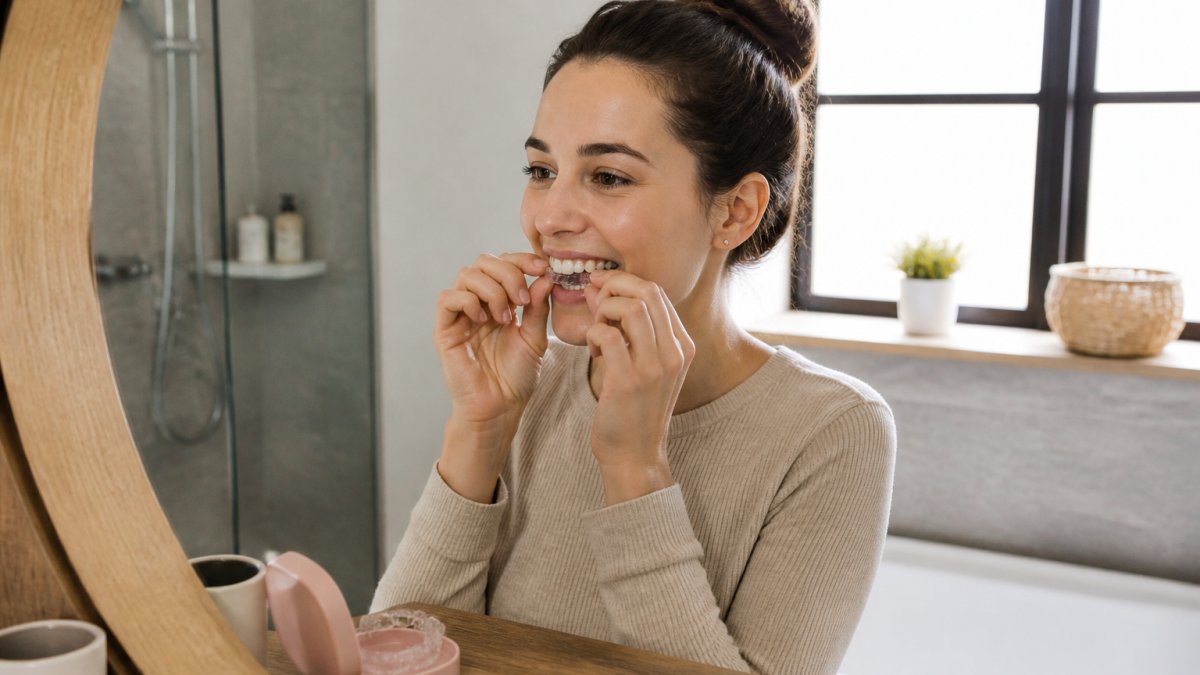
Clear aligners like Invisalign offer custom-made, removable trays that gradually move teeth through incremental adjustments. The primary appeal is discretion, aligners are nearly invisible, ideal for professionals. They're removable for eating and cleaning, simplifying oral hygiene and eliminating dietary restrictions. However, clear aligners require discipline: 20-22 hours daily wear for treatment to progress on schedule. They're less effective for severe crowding or complex bite problems. Treatment typically takes 12-18 months.
Ceramic Braces
Ceramic braces function identically to metal braces but use tooth-coloured or clear brackets that blend with natural teeth. Overall appearance is far less noticeable than traditional metal braces, though the archwire remains visible. Treatment duration matches metal braces: typically 18-24 months.
Lingual Braces
Lingual orthodontics places brackets and wires on the inside surface of teeth, making them completely invisible. This offers the clinical power of fixed appliances with maximum discretion, ideal for client-facing professionals. Disadvantages include higher cost, requirement for a specialist orthodontist, potential speech effects during initial adjustment, and meticulous cleaning demands. Treatment may take slightly longer, typically 20-26 months.
Veneers as a Cosmetic Alternative
Veneers are thin porcelain shells bonded to tooth fronts that mask mild misalignment and create the appearance of straighter teeth without moving them. However, veneers are cosmetic only, they don't correct underlying bite or address functional problems. They also require permanent alteration of natural tooth structure.
| Treatment Option | Duration | Visibility | Best For | Key Consideration |
|---|---|---|---|---|
| Metal braces | 18-24 months | Visible | Severe crowding, complex bites | Highly effective but noticeable |
| Clear aligners | 12-18 months | Nearly invisible | Mild to moderate spacing | Requires discipline and compliance |
| Ceramic braces | 18-24 months | Discreet | Moderate crowding, aesthetic concerns | Discreet alternative to metal |
| Lingual braces | 20-26 months | Completely invisible | Severe crowding, maximum discretion needed | Specialist treatment required |
| Veneers | N/A (cosmetic only) | Invisible | Minor aesthetic concerns only | Does not correct bite or function |
Adult Braces Cost UK and Financial Considerations
Cost is often the primary concern for adults considering orthodontic treatment. Private orthodontics in the UK vary significantly based on treatment type, complexity, and location. Contact practices directly for detailed quotes, as costs depend on individual case assessment. Complex cases requiring longer treatment typically cost more than straightforward alignment. Many practices offer payment plans that spread costs over the treatment period, and most offer free initial consultations where they provide transparent pricing.
Most private dental insurance plans exclude orthodontics entirely or cover only a small percentage. Check your policy documents or contact your provider.
NHS Orthodontics Adults UK: What You Need to Know
The NHS provides orthodontic treatment for adults, but availability is extremely limited. NHS orthodontics prioritises children and young people up to age 18. Adult cases are typically only accepted when there are significant functional or health concerns, severe bite problems affecting eating or speech, rather than purely cosmetic concerns. Waiting lists are lengthy in many regions, often extending 12-24 months or longer.
For most adults, private treatment is the realistic option, offering choice of treatment approach and quick access rather than lengthy waiting periods.
Benefits of Straightening Teeth as an Adult
Beyond aesthetic improvement, orthodontic treatment offers substantial functional and health benefits. Properly aligned teeth are significantly easier to clean. Crowded teeth create tight spaces where toothbrushes cannot reach, leading to plaque accumulation and increased decay and gum disease risk. Straightening eliminates these inaccessible areas, improving long-term oral health.
Bite correction addresses functional problems many adults don't realise they have. Misaligned bites cause uneven tooth wear, jaw joint pain, and chewing difficulty. The psychological benefits are profound, adults frequently report increased confidence, improved social interactions, and greater willingness to smile in photographs and public settings. Once your teeth are straightened, many patients also explore cosmetic enhancements such as teeth whitening to further brighten their new smile.
Post-Treatment Maintenance and Relapse Prevention
After braces are removed or final aligners are worn, teeth have a natural tendency to shift back toward original positions. Retention typically involves wearing a retainer to hold teeth in their new positions. Fixed retainers, thin wires bonded to tooth backs, are often recommended for front teeth. Removable retainers, worn nightly or several nights weekly, provide additional support.
Many adults neglect retainer wear after treatment, assuming teeth are now permanently straight. Consistent retainer use for at least the first 5-10 years after treatment significantly reduces relapse risk.
Is It Too Late for Adult Orthodontics?
Teeth can be moved at virtually any age, provided your gums and underlying bone are healthy. What matters is the health of your periodontal tissues. If you have untreated gum disease, advanced bone loss, or significant decay, these must be addressed before orthodontic treatment begins. Your dentist will conduct a thorough assessment, including X-rays and periodontal evaluation, to determine whether your mouth is ready for treatment.
Straightening your teeth as an adult is an investment in both your appearance and long-term oral health. Modern treatment options mean there's an approach suited to nearly every lifestyle and budget. At Rodney Street Dental, we specialise in bespoke orthodontic treatment plans tailored to your individual needs, whether that's discreet clear aligners like Invisalign, efficient Fastbraces, or traditional metal braces. Our team also offers teeth whitening to complement your newly straightened smile. We understand your goals, explain your options clearly, and guide you through treatment with compassionate, expert care. Contact Rodney Street Dental to discuss which approach is right for you and begin your journey toward the confident smile you deserve.
Frequently Asked Questions
What are the main options for how to fix crooked teeth as an adult?
Adults have several effective options: traditional metal braces, clear aligners, ceramic braces, lingual braces (fitted behind teeth), and cosmetic alternatives like veneers. The best choice depends on your specific needs, budget, aesthetic preferences, and the severity of misalignment. A consultation with an orthodontist will help determine which treatment suits your situation.
How much do adult braces cost in the UK, and what does NHS orthodontics cover?
Pricing for adult braces varies significantly based on treatment type and complexity. NHS orthodontics for adults has strict eligibility criteria and focuses on functional bite correction rather than cosmetic improvement. Private treatment typically offers more flexibility and faster results. For current pricing and available options, contact a qualified dental practice directly to discuss your individual needs and receive a personalised quote.
How long does it take to fix crooked teeth as an adult?
Treatment duration typically ranges from 18 to 36 months, depending on the severity of misalignment, the treatment method chosen, and how well you follow care instructions. Clear aligners may work faster for mild cases, whilst more complex bite corrections take longer. Your orthodontist will provide a realistic timeline during your initial assessment based on your specific situation.
Can I get free or subsidised braces on the NHS as an adult in the UK?
NHS orthodontics for adults is limited and typically available only when there are significant functional or health concerns affecting bite and oral function. Cosmetic straightening is rarely covered. Eligibility varies by region and local commissioning decisions. Contact your NHS dentist or local orthodontic services to check whether you qualify for treatment on the NHS.
What are the alternatives to traditional braces for straightening teeth?
Alternatives include clear aligner systems, ceramic braces (tooth-coloured), lingual braces (hidden behind teeth), and cosmetic solutions like veneers or bonding. Each has distinct advantages: aligners offer discretion, ceramic braces blend with teeth, lingual braces remain completely hidden, and veneers provide immediate cosmetic results. Your orthodontist can advise which suits your needs, lifestyle, and budget best.
Is it too late to get braces or straighten teeth as an adult?
It is never too late. Adult teeth can be moved effectively at any age, provided your gums and bone structure are healthy. Many adults successfully complete orthodontic treatment in their 40s, 50s, and beyond. A thorough clinical assessment by an orthodontist will confirm whether you are a suitable candidate and which treatment option will deliver the best results for your smile.
What happens after braces are removed? Will my teeth stay straight?
After treatment, retainers are essential to prevent relapse, teeth naturally shifting back to their original position. Most patients wear a fixed retainer behind the teeth and a removable retainer nightly for several years, then periodically long-term. Consistent retainer use is crucial for maintaining your straightened smile. Your orthodontist will provide detailed post-treatment maintenance instructions.
This article was written using GrandRanker