 how-to
How to Clean Clear Aligners Properly: A Step-by-Step Guide
Table of Contents
- Why Proper Aligner Cleaning Matters
- Daily Cleaning Routine for Clear Aligners
- Best Cleaning Solutions for Clear Aligners
- How Often to Clean Clear Aligners
- Clear Aligner Hygiene Tips for Long-Term Care
- Frequently Asked Questions
Last Updated: August 13, 2026
Why Proper Aligner Cleaning Matters
Clear aligners are a significant investment in your smile and require consistent care to remain effective and hygienic. Bacteria, saliva residue, and food particles accumulate on the surface throughout the day, leading to discolouration, odours, and potential damage if left unattended. Poor hygiene also increases the risk of tooth decay and gum disease, undermining your orthodontic treatment.
The thermoplastic material used in clear aligners is durable but vulnerable to hot water, harsh chemicals, and abrasive scrubbing, which can cause micro-cracks and warping that compromise fit and effectiveness. Proper cleaning protects your investment whilst maintaining the oral hygiene standards necessary for healthy teeth and gums throughout treatment.
At Rodney Street Dental, we emphasise that how you care for your aligners between appointments directly influences your treatment outcomes. A disciplined cleaning routine prevents complications, keeps your aligners clear and fresh, and ensures consistent pressure on your teeth. This guide covers daily routines, the best cleaning solutions, and optimal cleaning frequency.
Daily Cleaning Routine for Clear Aligners
Your daily cleaning routine should happen at least twice a day: morning after removal and evening before reinsertion. Rinse your aligners under lukewarm water immediately after removal, using your fingers or a soft-bristled toothbrush to gently brush away visible debris. Never use hot water, as high temperatures warp the thermoplastic material and alter the fit.
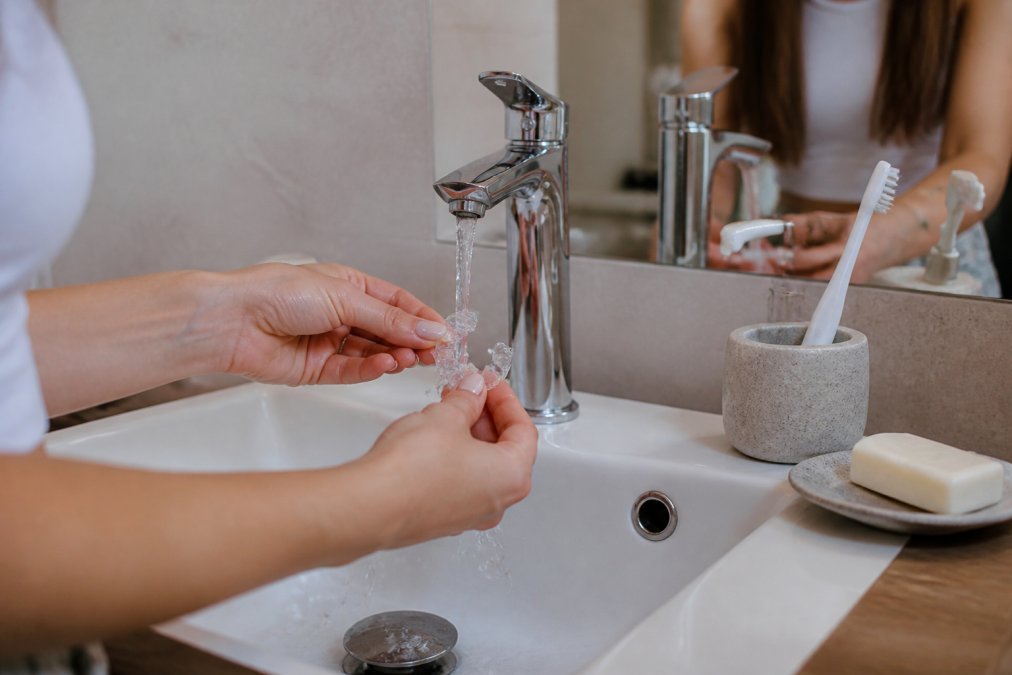
Apply a tiny amount of unscented soap and gently brush all surfaces in circular motions, paying particular attention to inner surfaces where saliva residue accumulates. Rinse thoroughly under lukewarm water until all soap is removed. Never use toothpaste, as abrasive particles scratch the plastic and cause permanent clouding.
Once clean, place your aligners in a designated storage case filled with lukewarm water if removing them for extended periods, or store them dry in a clean case. Keep the case in a cool, dry place away from direct sunlight.
Best Cleaning Solutions for Clear Aligners
Effervescent tablets designed for denture or orthodontic tray cleaning are highly effective. These dissolve in lukewarm water and remove stubborn plaque and discolouration without aggressive scrubbing. Soak your aligners for 15-30 minutes, then rinse thoroughly before wearing.
Antibacterial soap offers another effective daily option. Choose an unscented variety to avoid residual flavours. Apply a small amount to your soft-bristled toothbrush and clean using gentle circular motions.
Baking soda mixed with water creates a mild abrasive paste for stubborn stains, but use sparingly, no more than once weekly, as even mild abrasives gradually dull clarity. Mix one part baking soda with two parts water, apply gently, and rinse thoroughly.
Avoid commercial mouthwash, whitening products, bleach, and harsh chemicals, which damage the material or leave irritating residues. Never use bleach-containing denture cleaner. Lukewarm water is preferable to cold for rinsing, as it removes residue more effectively.
How Often to Clean Clear Aligners
Rinse your aligners every time you remove them, typically morning and evening. A thorough daily cleaning with soap and soft-bristled toothbrush should happen at least once daily, ideally in the evening before reinsertion. If you eat or drink anything other than water whilst wearing aligners, remove them first, then clean both your teeth and aligners before reinserting.
A deeper weekly clean using effervescent tablets prevents buildup that daily cleaning alone might miss. Dedicate 15-30 minutes once weekly to soaking, which removes deeper stains and reduces bacterial growth causing odour.
If you notice visible discolouration, cloudiness, or persistent odour despite regular cleaning, increase soaking frequency to twice weekly. Cloudiness often indicates mineral deposits or bacterial biofilm. If discolouration persists after two weeks of intensified cleaning, contact your orthodontist to rule out damage or material degradation.
Clear Aligner Hygiene Tips for Long-Term Care
Always store your aligners in a clean, designated case when not wearing them. Never wrap them in tissue or paper napkins, as they're easily mistaken for rubbish and discarded. Keep your storage case in a cool, dry place away from direct sunlight, which causes yellowing and material brittleness.
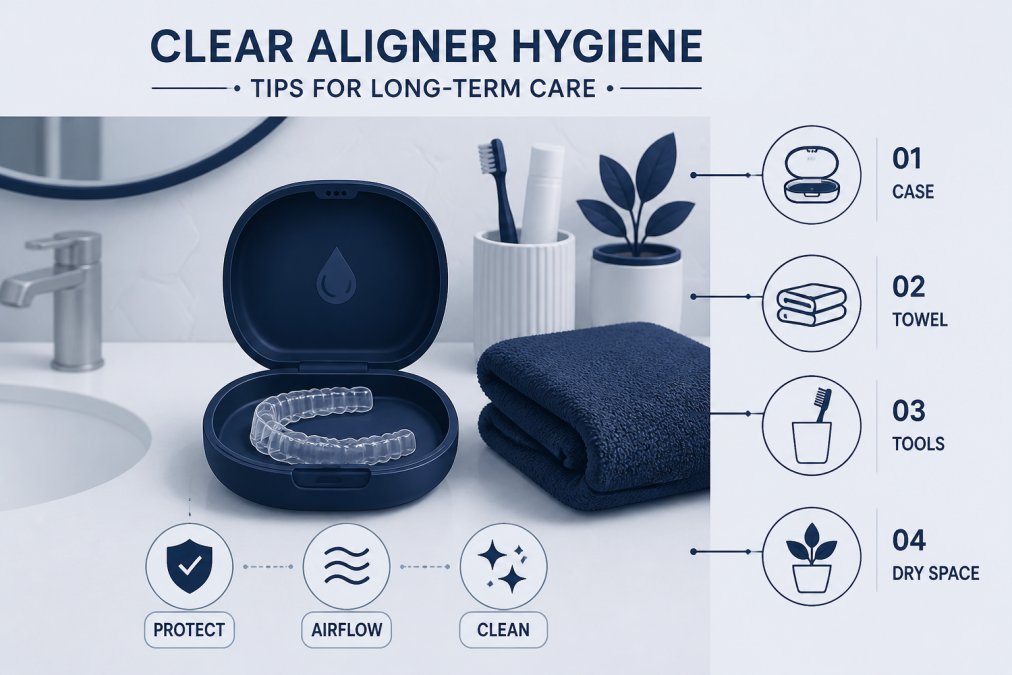
Establish a consistent daily routine so aligner care becomes automatic. Set phone reminders during the first few weeks of treatment. Clean your aligners immediately after removal; don't leave them exposed to air, which allows bacteria to proliferate and saliva to dry on the surface.
Inspect your aligners regularly for damage. Micro-cracks, visible warping, or persistent cloudiness may indicate the need for replacement. Report these issues to your orthodontist promptly, as damaged aligners won't move your teeth effectively.
Maintain excellent oral hygiene with your natural teeth. Brush and floss before reinserting your aligners to prevent food debris from becoming trapped between teeth and trays, reducing decay risk and keeping both aligners and teeth cleaner throughout the day. Once your treatment is complete, you may wish to explore teeth whitening to enhance your newly straightened smile.
Proper aligner care is straightforward once you establish a routine, but it requires consistency and attention to detail. By following these daily and weekly cleaning protocols, you'll keep your aligners clear, hygienic, and effective throughout your entire orthodontic treatment.
If you're considering clear aligners and want professional guidance on caring for them before starting treatment, consult with an orthodontist. At Rodney Street Dental, we provide detailed care instructions and support throughout your treatment journey. Our team offers bespoke treatment plans tailored to your specific needs, ensuring you understand every aspect of your orthodontic care from initial fitting through daily maintenance. We're committed to delivering clinical excellence in a warm, welcoming environment where your comfort and confidence are our priority. Contact us today to discuss how we can help you achieve the smile you've always wanted.
Frequently Asked Questions
What is the best way to clean my clear aligners?
Rinse your aligners with lukewarm water each time you remove them. Use a soft-bristled toothbrush to gently brush away debris and plaque buildup with circular motions. For daily cleaning, unscented antibacterial soap works well. Avoid hot water, as it can cause warping and micro-cracks in the material. For deeper sanitisation, soak them in a solution designed for orthodontic trays 2-3 times weekly.
How often should I clean my clear aligners?
Clean your aligners every time you remove them, typically 4-6 times daily depending on your eating schedule. This prevents saliva residue and debris removal issues. Perform a weekly deep clean using effervescent tablets or a sterilising solution to maintain proper disinfection protocols and keep your orthodontic trays free from bacterial growth.
Can I use toothpaste to clean my clear aligners?
Regular toothpaste is not recommended for clear aligners. Many toothpastes contain abrasive ingredients that can scratch the surface and cause discoloration over time. Instead, use unscented antibacterial soap or a non-abrasive toothpaste specifically formulated for clear aligners. This approach helps maintain clarity and prevents staining whilst supporting your oral hygiene routine.
What should I avoid when cleaning my clear aligners?
Never use hot water, as it can warp the material and create micro-cracks. Avoid abrasive toothpastes, coloured soaps, and mouthwash containing dyes or alcohol, as these cause staining and discoloration. Don't use bleach or harsh chemicals. Skip denture tablets unless specifically approved by your orthodontist, as some formulations may damage the aligner material. Always use lukewarm water and gentle brushing techniques.
This article was written using GrandRanker