 how-to
How to Choose the Right Orthodontist for Adults
Table of Contents
- Check Professional Qualifications and Board Certification
- Assess Experience with Adult Orthodontics
- Key Questions to Ask at an Orthodontic Consultation
- Understand Adult Braces Treatment Duration and Options
- Evaluate Clinic Environment and Patient Care
- Frequently Asked Questions
Last Updated: August 11, 2026
Check Professional Qualifications and Board Certification
Choosing the right orthodontist for adults starts with verifying their credentials. Look for practitioners registered with the General Dental Council specialist list, which maintains the official register of orthodontic specialists in the UK. This registration confirms they've completed specialist training and meet stringent clinical standards.
Board certification signals commitment to ongoing professional development. Ask directly whether your prospective orthodontist has completed postgraduate qualifications in orthodontics and maintains membership with professional bodies like the British Orthodontic Society. When you contact a practice, request confirmation of their registration status, a legitimate specialist will provide this readily.
Assess Experience with Adult Orthodontics
Adult orthodontics differs significantly from treating teenagers. Adult patients often have existing dental work, bone density changes, and specific aesthetic concerns requiring different clinical approaches. Ask about the proportion of adult patients in their practice and whether they've managed cases similar to yours.
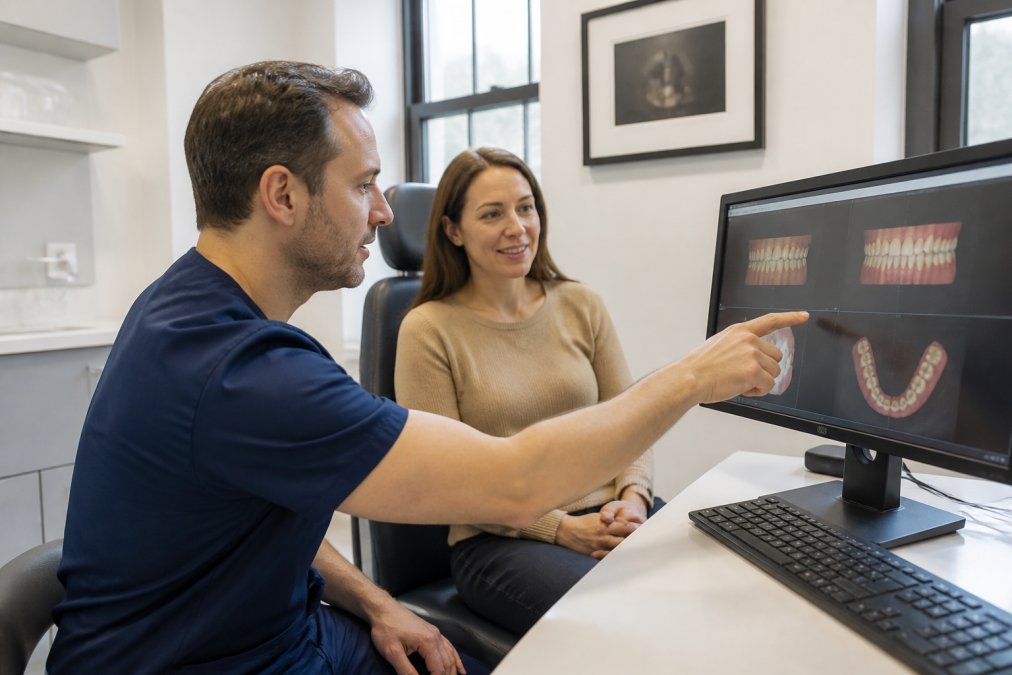
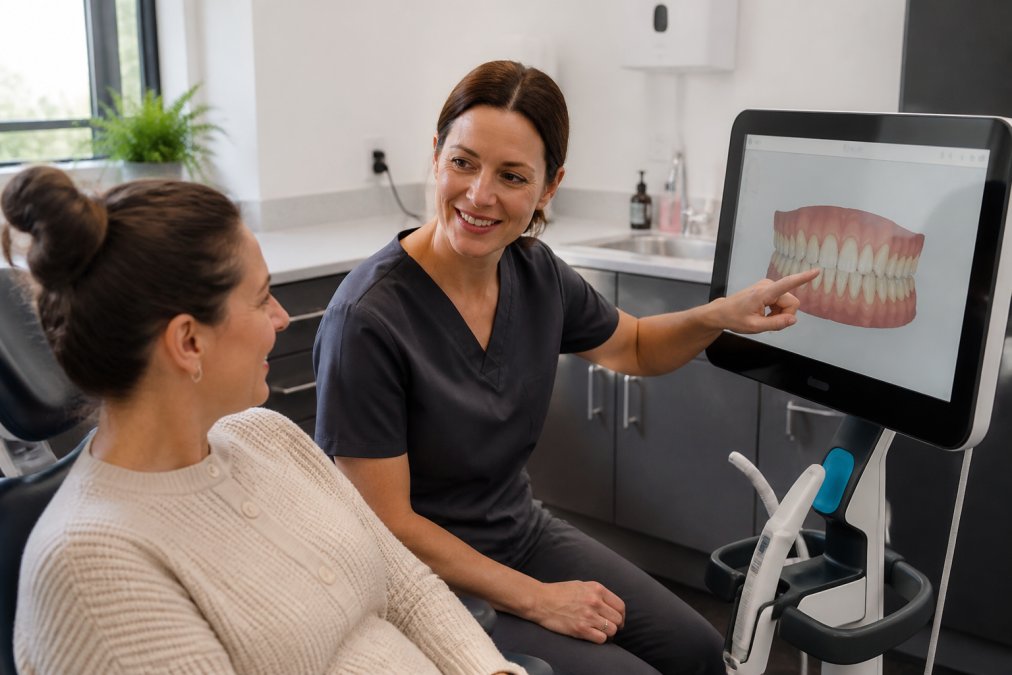
Inquire about their treatment planning approach. Do they use digital scanning and 3D imaging to plan precise outcomes? Can they explain how they'll integrate your treatment with existing dental work? A practitioner experienced with adult cases will discuss your lifestyle, professional commitments, and aesthetic preferences alongside clinical factors.
Key Questions to Ask at an Orthodontic Consultation
Come prepared with specific questions that reveal the orthodontist's clinical approach and communication style.
Ask about treatment duration. Request a realistic timeframe for your situation and ask how different treatment methods might affect it.
Discuss the treatment plan in detail. Request they explain their recommended approach, why they've chosen it over alternatives, and what results you can realistically expect. Ask how they'll monitor progress and handle mid-treatment adjustments.
Explore their experience with your preferred treatment option. If you want Invisalign or Fastbraces, ask how many adult cases they've completed using that system and whether they've encountered complications. Ask about their approach to retention after treatment ends, this reveals whether they think long-term about your outcomes. Many practices also offer complementary services like teeth whitening to enhance your smile once your orthodontic treatment is complete.
Finally, ask about emergency care. What happens if a bracket breaks or an aligner cracks? Can you reach them outside normal hours?
Understand Adult Braces Treatment Duration and Options
Treatment duration varies based on case complexity and method chosen.
Clear aligners like Invisalign offer discretion but typically require consistent wear (20-22 hours daily) for the plan to stay on track.
Ceramic braces blend effectiveness with aesthetics, often through continuous force application. They're more visible than aligners but less noticeable than metal braces.
Lingual braces sit behind your teeth, making them invisible. Ask your orthodontist which option suits your specific malocclusion.
Evaluate Clinic Environment and Patient Care
Visit the practice in person before committing. Notice whether the reception area feels organised and clean, and whether staff members are friendly and thorough in answering questions. Pay attention to how the orthodontist communicates, do they listen to your concerns or focus only on clinical details?
Ask about their approach to patient comfort and whether they offer numbing gel before injections. Inquire about cancellation and rescheduling policies, and whether they maintain regular contact between appointments via phone, email, or a patient portal.
Choosing the right orthodontist for adults requires evaluating credentials, clinical experience with your age group, communication style, and practice environment. The consultation is your opportunity to assess whether a practitioner truly understands your needs.
At Rodney Street Dental, we specialise in orthodontic treatment for adults, offering discreet options like Invisalign and Fastbraces delivered through bespoke treatment plans tailored to your lifestyle and aesthetic goals. Our team is registered with the General Dental Council and committed to creating a calm, welcoming environment where your concerns are heard and your results matter. We also provide teeth whitening to complement your orthodontic journey and help you achieve the confident smile you deserve. Contact us today to schedule your consultation.
Frequently Asked Questions
How can I verify if an orthodontist is registered with the General Dental Council?
Check the General Dental Council's specialist register online to confirm the orthodontist holds specialist registration. This is the official regulatory body in the UK, and specialist registration means they have completed additional training beyond general dentistry. You can search by name or practice location to verify their credentials and check for any complaints or disciplinary history.
What should I look for during an initial orthodontic consultation?
During your consultation, assess whether the orthodontist listens to your concerns and explains treatment options clearly. Ask about their experience with adult patients specifically, request to see before-and-after photographs of similar cases, and discuss realistic timelines for your individual situation. A good orthodontist will create a personalised treatment plan rather than offering a one-size-fits-all approach.
How long does adult braces treatment typically take?
Adult braces treatment duration varies depending on the complexity of your malocclusion and the type of braces used. Clear aligners, lingual braces, and ceramic braces may have different timelines. Most adult orthodontic treatment ranges from 18 months to 3 years, though some cases resolve faster. Your orthodontist will provide a specific estimate after examining your dental history and creating your customised care plan.
Is a private orthodontist better than NHS options?
Private orthodontists often offer greater choice in treatment options, shorter waiting times, and more flexibility in scheduling. They typically provide detailed consultations and customised treatment plans tailored to your aesthetic preferences and lifestyle factors. However, the key is finding a qualified, experienced orthodontist, whether private or NHS, who specialises in adult treatment and communicates clearly about expected outcomes and follow-up care.
This article was written using GrandRanker