 how-to
How Long Do Dental Implants Last? A 2026 Guide
Table of Contents
- Understanding Dental Implant Lifespan
- Factors Affecting Dental Implant Lifespan
- Dental Implant Aftercare and Maintenance
- Signs of Dental Implant Failure to Watch For
- Frequently Asked Questions
How Long Do Dental Implants Last? A 2026 Guide
Last Updated: July 24, 2026
When considering a permanent solution for missing teeth, understanding how long dental implants last is crucial to making an informed decision about your oral health investment. Dental implants can last 20-30 years or longer with proper care, and many patients find they function for a lifetime. Whether your implant lasts two decades or becomes problematic within five years depends on several interconnected factors, some within your control and others less so.
Understanding Dental Implant Lifespan
A dental implant is a three-part system: the titanium post anchored into your jawbone, the abutment that connects the post to the crown, and the crown itself that functions as your replacement tooth. Each part has a different lifespan. The titanium post, once successfully integrated with your bone through osseointegration, typically lasts indefinitely. The crown, however, often requires replacement after 10-15 years due to normal wear and tear.
The titanium material resists corrosion and doesn't decay like natural teeth. However, the crown experiences the same chewing forces as a natural tooth, which means it can crack, chip, or wear down over time. Additionally, the bone surrounding the implant can change, and the gum tissue requires the same attention you'd give to natural teeth.
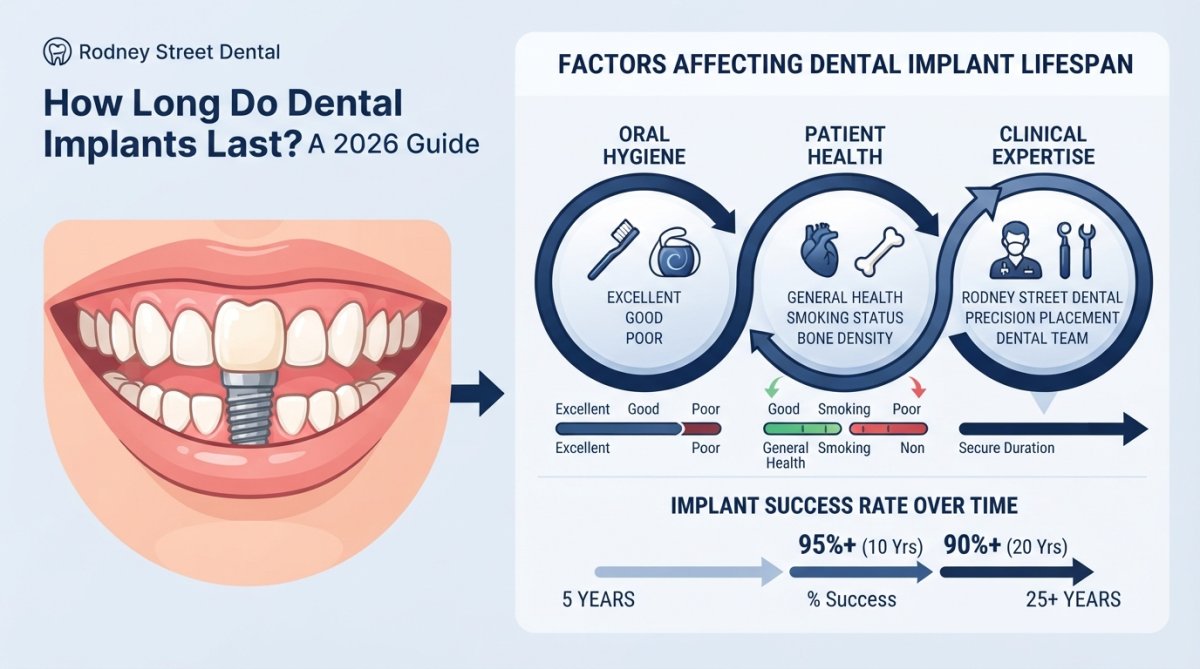
Factors Affecting Dental Implant Lifespan
Several variables determine whether your implant reaches the 30-year mark or encounters problems sooner.
Bone Quality and Density
The foundation of any implant is the jawbone. If your bone density is compromised from years of missing teeth, gum disease, or osteoporosis, the implant has less to grip onto. Some patients with significant bone loss require bone grafting before implant placement.
Oral Hygiene Practices
This is the single most controllable factor affecting implant longevity. Implants don't decay, but the gum tissue around them can develop peri-implantitis, an infection that mimics gum disease around natural teeth. Poor oral hygiene allows bacteria to accumulate, leading to inflammation, bone loss, and eventually implant failure. Daily brushing, flossing around the implant, and regular professional cleanings are essential.
Smoking and Tobacco Use
Smoking significantly reduces implant success rates and accelerates bone loss around the implant. Tobacco restricts blood flow to the gums and bone, slowing healing after placement and weakening the tissues that support the implant long-term.
Bite Force and Grinding (Bruxism)
If you habitually clench or grind your teeth, especially at night, you're placing excessive force on the implant crown. Over time, this can crack the crown, loosen the abutment, or stress the bone around the post. Patients with bruxism often benefit from wearing a night guard.
Material Quality
The type of titanium used in the implant post and the material of the crown both matter. Implants made from medical-grade titanium have extensive clinical track records. Crowns made from zirconia or high-quality ceramic tend to last longer than older porcelain-fused-to-metal options.
| Factor | Impact on Longevity | Your Control |
|---|---|---|
| Bone density | Foundation for stability; poor density = earlier failure | Partial (bone grafting available) |
| Oral hygiene | Prevents infection; critical for 20+ year lifespan | High |
| Smoking | Reduces success rate by up to 50%; accelerates bone loss | High |
| Bite force/grinding | Damages crown; stresses bone around implant | Moderate (night guard helps) |
| Material quality | Affects durability; premium materials = longer lifespan | High (choose carefully at placement) |
Dental Implant Aftercare and Maintenance
The difference between an implant that lasts 10 years and one that lasts 30 often comes down to what happens after placement.
Immediate Post-Placement Care (First 6 Months)
After implant surgery, you'll follow specific protocols to allow the bone to heal properly. This typically includes avoiding hard foods, not smoking, taking prescribed antibiotics, and attending all follow-up appointments. Most implants require 3-6 months before the crown is placed, during which time the bone fuses with the titanium.
Daily Oral Hygiene Routine
Once your crown is in place, treat the implant like a natural tooth, but with extra care. Brush twice daily with a soft-bristled toothbrush, floss daily using implant-specific floss or a water flosser, and rinse with an antimicrobial mouthwash. As your implant matures, you may also wish to explore cosmetic enhancements such as teeth whitening to keep your smile looking bright and uniform alongside your new restoration.
Professional Cleanings and Check-ups
Visit your dentist at least twice yearly, ideally every three months if you have a history of gum disease. Professional cleanings remove tartar buildup that home care can't eliminate. Your dentist will monitor bone levels around the implant using X-rays and check the crown for cracks or wear.
Lifestyle Adjustments
Avoid using your teeth as tools, don't chew on ice or hard candy, and be cautious with very hard foods. If you grind your teeth, wear a night guard.
Signs of Dental Implant Failure to Watch For
Not all implant problems announce themselves dramatically. Catching issues early often means saving the implant rather than requiring removal and replacement.
Mobility or Looseness
A healthy implant is completely stable and shouldn't move at all when you apply gentle pressure. If you notice any movement or feel the crown shift when you bite, contact your dentist immediately.
Pain or Persistent Discomfort
Some discomfort immediately after implant placement is normal and resolves within days. Persistent pain weeks or months later can indicate infection, improper positioning, or excessive bite force.
Swelling, Redness, or Bleeding Gums
The gum tissue around your implant should look and feel similar to your natural gums. Swelling, persistent redness, or bleeding when you brush or floss suggests inflammation or early infection.
Difficulty Chewing or Bite Changes
If your bite feels different or you experience difficulty chewing with the implant, the crown may be cracked, the abutment may be loose, or the implant itself may be compromised.
Visible Gum Recession
Gradual recession of the gum line around the implant can expose the implant post or abutment, indicating bone loss underneath and requiring professional assessment.
Unpleasant Taste or Odour
A persistent bad taste or odour around the implant can signal bacterial infection or food trapped beneath the crown.
Dental implants represent one of the most reliable solutions for missing teeth, but their longevity depends entirely on how you care for them. Whether your implant lasts 15 years or 30 comes down to bone quality at placement, your daily maintenance habits, and your commitment to professional check-ups.
At Rodney Street Dental, we specialise in dental implants using trusted brands like Straumann and BioHorizons, and we provide detailed aftercare guidance to maximise your implant's lifespan. Our team creates bespoke treatment plans tailored to your bone structure, bite, and lifestyle, and we offer video walkthroughs of your personalised care routine to ensure you know exactly how to maintain your implant long-term. We're also here to monitor your implant through regular check-ups, catching any issues early before they become serious problems. If you're considering implants or want to ensure your existing implant lasts as long as possible, contact Rodney Street Dental today for a consultation with our GDC-registered team.
Frequently Asked Questions
How long do dental implants last on average?
With proper care and maintenance, dental implants can last 20+ years or longer. The titanium post typically lasts a lifetime when osseointegration is successful and oral hygiene is maintained. However, the crown or prosthetic may need replacement after 10-15 years due to normal wear. Individual longevity depends on bone density, lifestyle factors, and adherence to aftercare protocols.
What factors affect how long dental implants last?
Several factors influence dental implant lifespan: bone density and successful osseointegration, smoking status, bruxism (teeth grinding), oral hygiene practices, periodontal health, and annual professional check-ups. Patients who smoke, have poor oral hygiene, or experience gum disease face higher risks of implant failure. Material quality, such as titanium posts or zirconia alternatives, also plays a role in longevity.
Can dental implants fail, and what are the warning signs?
Yes, implants can fail, though success rates in the UK are high. Warning signs include persistent pain, swelling, gum recession, loose crowns, or difficulty chewing. Peri-implantitis (inflammation around the implant) is a common cause of failure. If you notice any of these symptoms, contact your dental specialist immediately. Early intervention can sometimes save the implant; otherwise, replacement is possible.
How should I care for my dental implants to make them last longer?
Maintain excellent oral hygiene by brushing twice daily with a soft-bristled toothbrush and flossing around the implant. Avoid smoking and limit alcohol. Attend annual check-ups with your dental specialist for professional cleaning and assessment. If you grind your teeth, ask about a night guard to protect the implant from excessive bite force. Preventative care is crucial for long-term success and avoiding costly replacements.
This article was written using GrandRanker