 how-to
Foods to Avoid With Traditional Braces
Table of Contents
- Foods to Avoid With Traditional Braces
- What Can You Eat With Braces
- How to Eat With Braces: Preparation Tips
- Frequently Asked Questions
Last Updated: October 18, 2026
Foods to Avoid With Traditional Braces
When you get traditional braces fitted, your orthodontist will give you a list of foods to avoid with traditional braces in the UK. Understanding why makes the rules easier to follow.
Traditional fixed braces use brackets bonded to your teeth and connected by wires. Hard, sticky or chewy foods can bend wires, crack brackets or pull them off, setting treatment back by weeks.
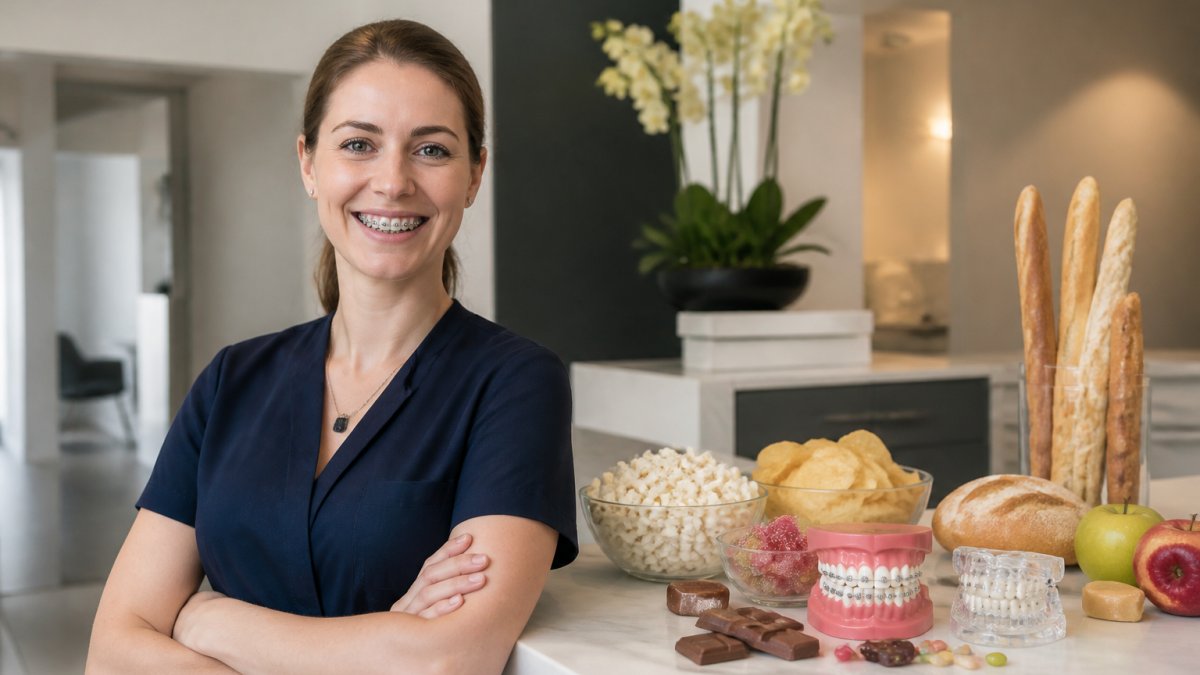
The foods to avoid fall into three categories: hard foods that break brackets, sticky foods that pull them loose, and foods requiring you to bite with your front teeth.
Hard foods that damage brackets:
- Nuts and seeds
- Popcorn and crisps
- Ice and hard sweets
- Hard bread rolls, bagels, and crusty bread
- Pretzels and crackers
- Corn on the cob
Sticky and chewy foods that dislodge brackets:
- Chewing gum
- Toffee and caramel
- Gummy sweets and jelly
- Sticky chocolate
Foods requiring a bite:
- Whole apples, pears, and other hard fruit
- Raw carrots, celery, and tough vegetables
- Pizza crusts and thick bread
What Can You Eat With Braces
The good news: plenty of foods are safe with traditional braces, you're not limited to soup and smoothies.
Soft foods require minimal chewing and pose no risk to your brackets or wires:
- Yoghurt and soft cheese
- Mashed potatoes and sweet potato
- Scrambled or soft-boiled eggs
- Tender fish and chicken
- Beans and lentils
- Ripe bananas, berries, and soft fruit
- Cooked vegetables (carrots, broccoli, green beans)
- Pasta and rice
- Bread (soft varieties, not crusts)
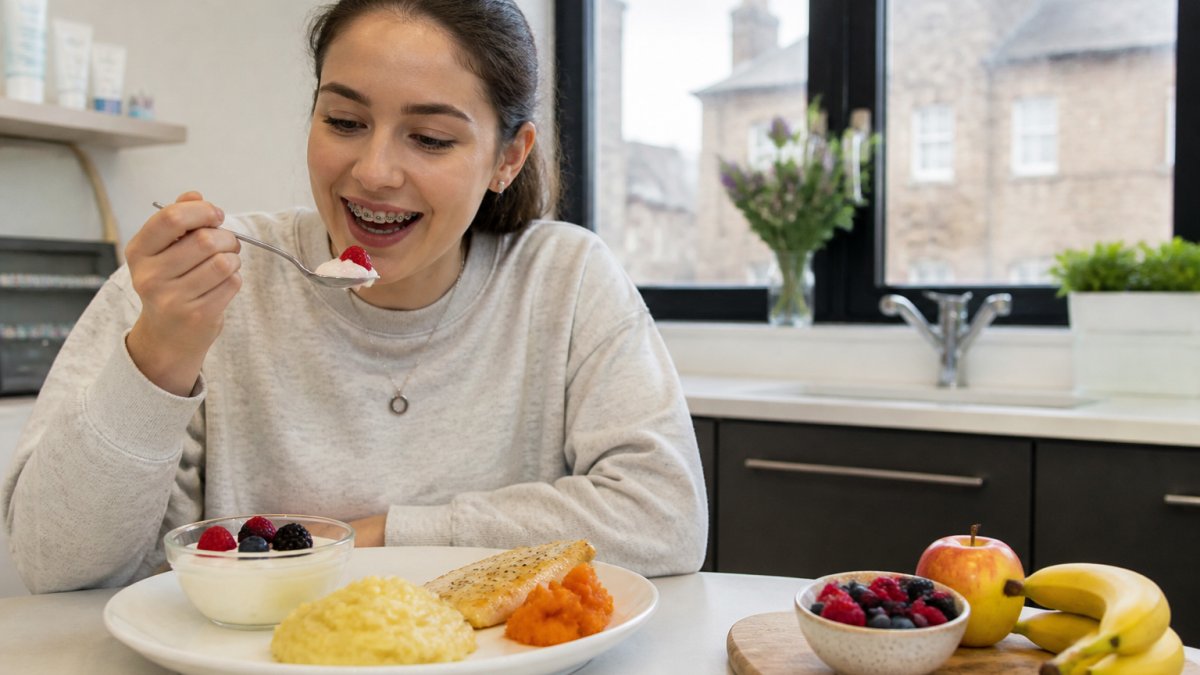
You can still enjoy many foods if you prepare them differently: cut hard fruit and vegetables into small pieces, remove corn kernels from the cob, break bread into bite-sized chunks, and tear pizza rather than biting into it.
How to Eat With Braces: Preparation Tips
Cut everything into small pieces before eating, removing the need to bite forcefully with your front teeth. Slice apples, pears, and carrots into manageable chunks.
Remove corn kernels from the cob using a knife. Don't bite directly into the cob, the force can loosen brackets.
Soften hard bread by toasting it lightly or dunking it briefly in tea or soup. Avoid biting into crusty rolls or bagels.
Eat slowly and chew on your back teeth, avoiding any side with loose brackets or recently adjusted wires.
Rinse your mouth after sticky foods, as residue can damage brackets and cause decay around them.
If a bracket comes loose or a wire bends, contact your orthodontist promptly (the NHS). Waiting can compromise your treatment timeline.
Protecting your braces means protecting your investment in a straighter smile. Discuss specific foods with your orthodontist at each appointment, as restrictions may ease as treatment progresses. At Rodney Street Dental, we provide detailed guidance on eating with braces and offer emergency appointments if damage occurs. Our team supports your orthodontic journey with clear advice and compassionate care, and once your treatment is complete, we offer teeth whitening to help you show off your newly straightened smile. Contact us to discuss your braces care plan or to book an appointment with our experienced dental team.
Frequently Asked Questions
What foods should you avoid with traditional braces?
Avoid hard foods like nuts, popcorn, and ice that can break brackets or wires. Skip sticky foods such as chewing gum, toffee, and caramel that pull brackets off. Steer clear of chewy sweets, bagels, hard bread crusts, and whole fruits or raw vegetables that require biting. When your teeth feel tender after adjustment appointments, soft foods are gentler on your orthodontic appliance and teeth.
Can you eat pizza with braces?
Yes, you can eat pizza with braces if you prepare it correctly. Cut the crust into small, manageable pieces and chew carefully with your back teeth. Avoid thick, hard crusts or overly chewy dough that can loosen brackets. Soft-crust pizza is easier to manage than traditional hard-crust varieties. Remove toppings that are hard or sticky if needed, and always check your braces after eating to remove trapped food.
What soft foods are best for braces?
Safe soft foods include yoghurt, mashed potatoes, scrambled eggs, tender chicken, fish, soup, pasta, beans, ripe bananas, and soft cheese. Cooked vegetables are better than raw ones. Porridge, smoothies, and soft bread without hard crusts work well. These options provide nutrition without risking damage to your fixed braces. Cut any food into small pieces to make chewing easier and safer for your orthodontic treatment.