 comparison
Dental Implants vs Bridges: Pros, Cons & Costs
Table of Contents
- Dental Implants vs Bridges: Key Differences
- Suitability for Dental Implants: Who Can Have Them
- Dental Implant Procedure Duration and Recovery
- How to Care for Dental Bridges and Long-Term Maintenance
- Frequently Asked Questions
Last Updated: August 15, 2026
Dental Implants vs Bridges: Key Differences
When a tooth is missing, the choice between a dental implant and a dental bridge shapes your smile and long-term oral health. A dental implant is a titanium post surgically anchored into your jawbone, topped with a crown that mimics a natural tooth. A dental bridge spans the gap by anchoring to adjacent healthy teeth, with a false tooth suspended between them.
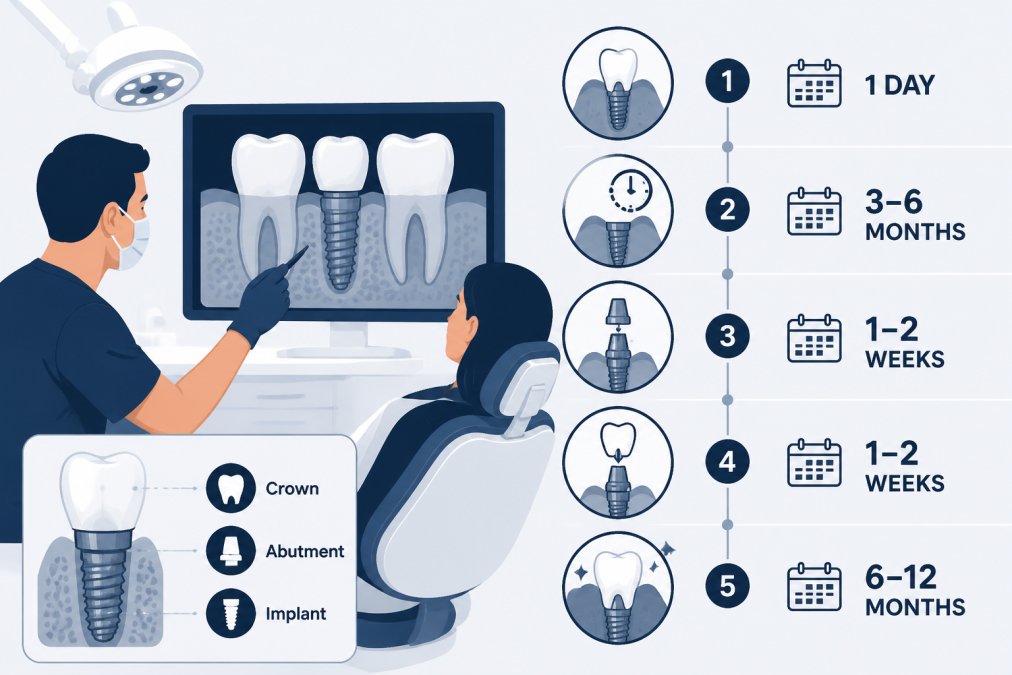
The core difference is architectural. Implants replace the tooth root itself, stimulating the jawbone and preventing bone loss, whilst bridges preserve healthy teeth but require grinding them down to support the restoration. Understanding these distinctions helps you weigh the trade-offs between longevity and impact on surrounding teeth.
Suitability for Dental Implants: Who Can Have Them
Not everyone is a candidate for dental implants, though advances in implant technology have broadened the pool considerably. Your candidacy depends on bone health, systemic health, and local oral conditions.
Bone Density and Volume
The primary requirement is adequate jawbone density to support osseointegration, where bone fuses directly to the titanium implant surface. Your dentist assesses this using cone-beam computed tomography (CBCT), which measures bone height and width. Most implants require a minimum of 10 mm of bone height and 5-6 mm of width.
Bone loss accelerates after tooth extraction. Within the first year, you can lose 25% of bone width; by five years, loss can exceed 50%. Bone augmentation techniques, including guided bone regeneration (GBR), sinus lifts, or block grafts, can restore volume, though these add three to nine months to your treatment timeline.
Systemic Health Conditions
Certain medical conditions significantly reduce implant success rates:
- Uncontrolled diabetes impairs bone healing and increases infection risk.
- Smoking reduces blood flow to the implant site. Smokers have a 2-3 times higher failure rate than non-smokers.
- Bisphosphonate therapy (used for osteoporosis or cancer treatment) can cause osteonecrosis of the jaw.
- Immunosuppression (from HIV, organ transplant, or certain medications) slows healing and raises infection risk.
- Active gum disease must be treated before implant placement.
- Radiation therapy to the head or neck damages blood vessels and bone, making osseointegration unreliable.
Age alone is not a barrier. Implants work well in patients in their 70s, 80s, and beyond, provided bone density is adequate and overall health is sound.
Medications and Healing
Certain medications interfere with bone healing or increase bleeding risk: anticoagulants (warfarin, apixaban, rivaroxaban), long-term corticosteroids, and some psychiatric medications. Discuss all medications and supplements with your dentist before surgery.
Local Oral Factors
- Tooth position: Implants work best where you have at least 7-8 mm of space between the implant and adjacent teeth.
- Bite force and habits: If you grind your teeth (bruxism), implants can fail prematurely.
- Oral hygiene commitment: Implants require daily brushing, flossing, and professional cleanings every six months.
The Assessment Process
A thorough implant consultation includes a CBCT scan, blood work, a detailed medical history, and a periodontal examination. Your dentist will discuss any contraindications candidly and explain whether you're a straightforward candidate, a candidate with additional steps, or not currently suitable.
Dental Implant Procedure Duration and Recovery
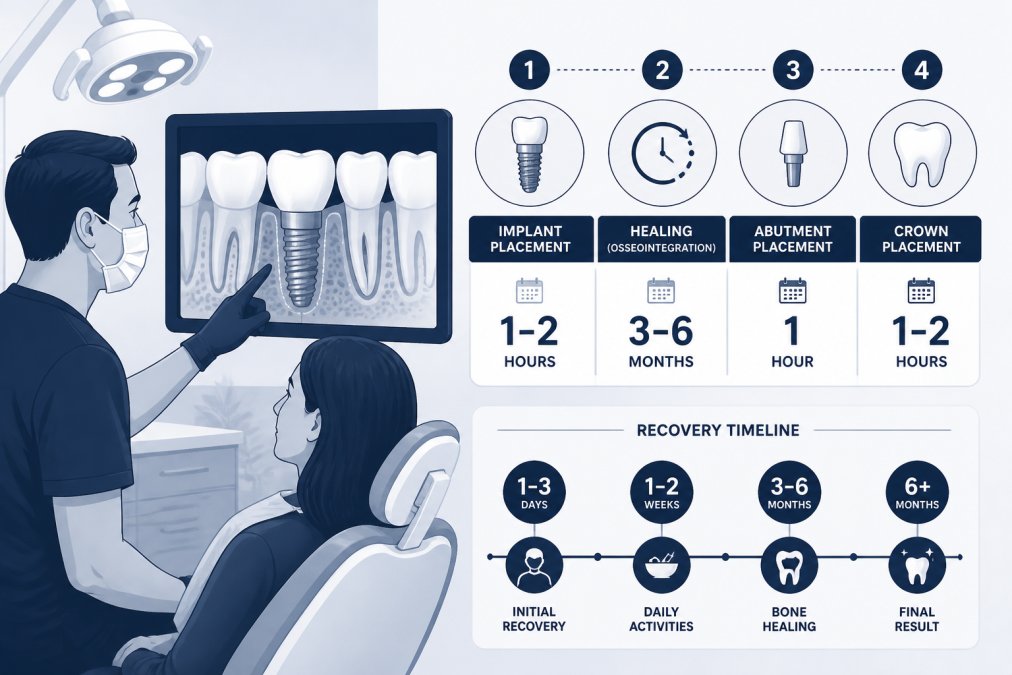
The surgical placement itself takes 30 minutes to two hours depending on complexity and bone condition. You'll feel pressure during the procedure but minimal pain thanks to local anaesthesia.
Swelling and bruising peak within 48 hours, then gradually subside over two weeks. Most patients return to light work within three days. Avoid hard foods, strenuous exercise, and smoking during this window.
The critical phase follows: osseointegration. Your bone must fuse to the titanium post, taking three to six months in the upper jaw and two to three months in the lower jaw. Once osseointegration is confirmed via X-ray, your dentist attaches an abutment and fits the permanent crown. Total time from surgery to finished restoration: four to nine months.
How to Care for Dental Bridges and Long-Term Maintenance
Dental bridges demand meticulous oral hygiene because decay under the bridge can compromise the supporting teeth, ultimately requiring replacement of the entire restoration.
Daily and Weekly Hygiene
Flossing is non-negotiable. A floss threader or water flosser helps clean under the pontic (false tooth). Brush twice daily with a soft-bristled brush, angling at 45 degrees toward the gum line. Avoid chewing hard foods, ice, or sticky sweets directly on the bridge.
Professional Maintenance and Monitoring
Regular dental check-ups every six months are crucial. Your dentist monitors the bridge for loose cement, decay underneath, or damage to the abutment teeth. Professional cleaning twice yearly helps prevent decay at the bridge margins.
Lifespan and Replacement Cycles
A well-maintained bridge typically lasts 5-15 years. However, the abutment teeth, those supporting the bridge, are the limiting factor. Over time, these teeth can weaken from constant load, develop decay at the crown margins, or suffer root damage. When an abutment tooth fails, the entire bridge must be replaced, creating a replacement cycle that eventually may necessitate implants or a partial denture.
Bone Loss and Facial Changes
Unlike implants, bridges do not stimulate the jawbone beneath the pontic. Bone loss continues at approximately 0.5-1 mm per year in the first year after tooth loss, then 0.3-0.4 mm annually thereafter. Over 15-20 years, this can result in significant resorption, altering your facial profile and creating visible gaps that trap food and bacteria.
Psychological and Functional Considerations
Many patients report anxiety about food getting trapped under the bridge or embarrassment during social eating. Implants, once integrated, feel and function like natural teeth, no special care, no dietary restrictions, no worry about cement failure. For some patients, the bridge's simplicity justifies the trade-offs. For others, the long-term burden of maintenance makes an implant the more attractive choice despite the upfront investment and patience required. Once your implant or bridge is complete, maintaining a bright, confident smile is equally important, our teeth whitening service can help keep your restoration looking fresh and radiant alongside your natural teeth.
At Rodney Street Dental, we offer comprehensive implant consultations, bone augmentation procedures, and bridge placement. We also provide teeth whitening to complement your restorative work.
Frequently Asked Questions
Are dental implants better than bridges?
Neither is universally 'better', the right choice depends on your bone density, adjacent tooth health, budget and timeline. Implants last longer (20+ years vs 5-15 years for bridges) and preserve jawbone, but require surgery and a longer healing period. Bridges are faster, less invasive and cheaper upfront, but require grinding healthy teeth and don't stimulate bone. Your dentist can assess which suits your specific situation.
How long do dental bridges last compared to implants?
Dental bridges typically last 5-15 years with proper care, whilst dental implants often function for 20+ years or longer. Implants' longevity stems from osseointegration, the titanium post fuses with your jawbone, creating a stable, durable foundation. Bridges rely on the strength of adjacent teeth and the bonding material, which can degrade over time. Both require good oral hygiene to maximise lifespan.
Do dental implants require more maintenance than bridges?
Both require daily care, but differently. Implants need regular brushing and flossing like natural teeth, no special tools required. Bridges need floss threaders or interdental brushes to clean underneath the pontic (false tooth), which is more fiddly. Once integrated, implants don't require ongoing adjustment. Bridges may need periodic re-cementing if the bond weakens. Overall, implants are simpler to maintain once in place.
Is a dental bridge a permanent solution?
Dental bridges are fixed (non-removable) but not permanent. They typically last 5-15 years before needing replacement due to wear on the supporting teeth, decay underneath, or material degradation. They also don't prevent bone loss in the gap where the tooth is missing. Implants are closer to permanent, lasting 20+ years or longer with proper care, because the titanium post integrates with living bone.
What are the main disadvantages of dental implants?
Implants require sufficient jawbone density, if bone has resorbed, you may need bone grafting first. The procedure is surgical and takes 3-6 months for full osseointegration. Upfront costs are higher than bridges. Some patients experience temporary swelling, discomfort or bruising after placement. Rarely, implants can fail if infection occurs or bone integration doesn't happen. They're also unsuitable if you have uncontrolled diabetes or take certain medications.
This article was written using GrandRanker