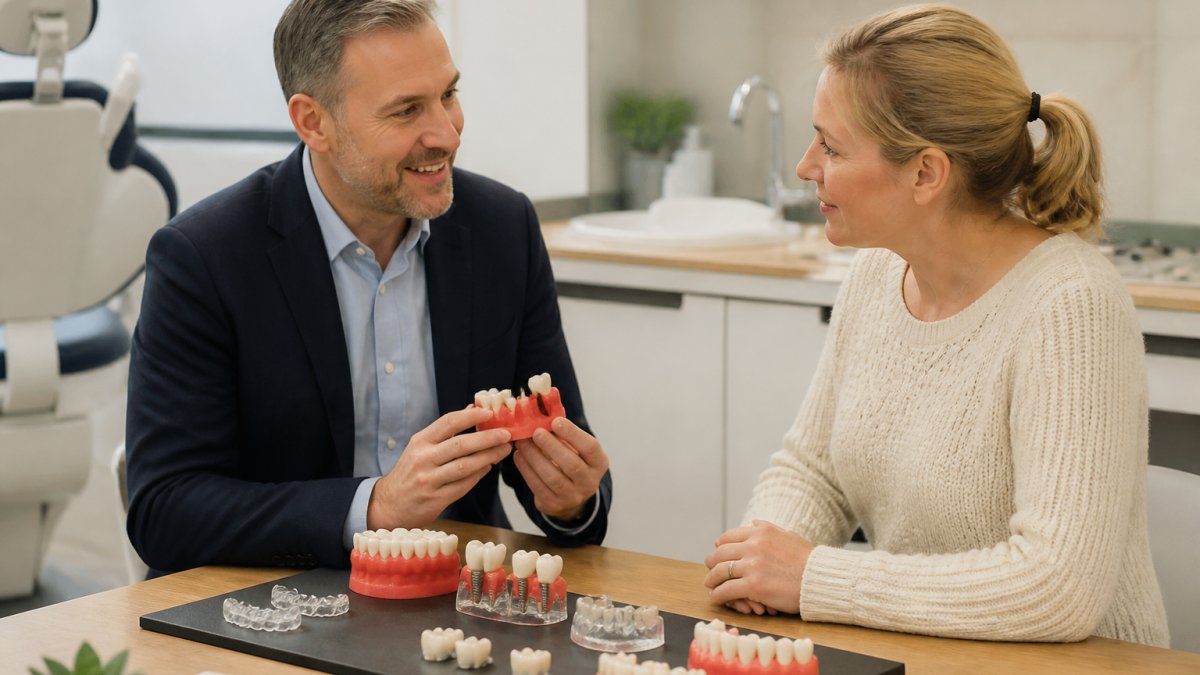
 comparison
Dental Implants vs Bridges: Which Replacement Suits You
Quick Summary
Dental implants vs bridges differ mainly in how they are held in place: an implant is a titanium post fixed into the jawbone with a crown on top, while a bridge is a false tooth attached to the teeth either side of the gap. Implants leave neighbouring teeth untouched, whereas bridges usually require those teeth to be reduced and fitted with crowns.
- Implants stand alone and leave healthy neighbouring teeth untouched.
- Bridges usually require neighbouring teeth to be reduced and fitted with crowns.
- Bridges generally need replacing sooner, partly due to decay or gum problems under the crowns.
- Implants carry risks of gum disease around the implant and crown wear.
- Daily brushing and regular check-ups make a real difference to both treatments.
Table of Contents
- How Dental Implants and Bridges Differ
- Dental Implant Lifespan and Bridge Lifespan Compared
- Choosing Between Implants and Bridges for a Single Tooth Replacement
- Our Services and Products
- Frequently Asked Questions
How Dental Implants and Bridges Differ
Dental implants and bridges both replace missing teeth, but the two treatments work in fundamentally different ways when you compare dental implants vs bridges. Our side-by-side comparison of implants and bridges sets out how each one is fitted and what it involves. An implant is a titanium post placed into the jawbone, topped with a crown; a bridge is a false tooth held in place by crowns fixed to the teeth either side of the gap.
Implants stand alone, leaving healthy neighbouring teeth untouched. Bridges usually require those teeth to be reduced and fitted with crowns.
Our team at Rodney Street Dental reviews both options with each patient, because the right choice depends on the individual.
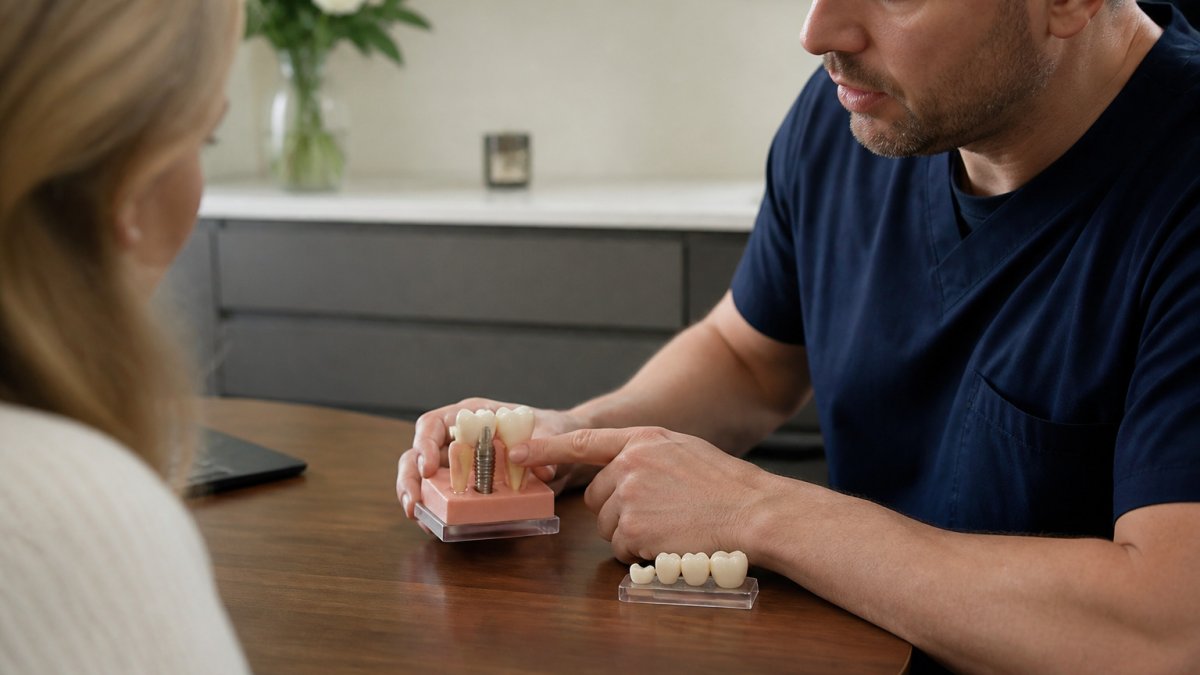
The two treatments differ in several practical ways, summarised below.
| Feature | Dental implant | Bridge |
|---|---|---|
| How it is held | Titanium post placed into the jawbone | False tooth fixed to neighbouring teeth |
| Top layer | Crown | False tooth held by crowns |
| Neighbouring teeth | Left untouched | Usually reduced and fitted with crowns |
Dental Implant Lifespan and Bridge Lifespan Compared
Lifespan is often the deciding factor. NHS clinical guidance describes both treatments as durable when well looked after, though timescales depend on oral hygiene, bite forces and general health.
Bridges generally need replacing sooner, partly because supporting teeth can develop decay or gum problems beneath the crowns. Our guide to the best dental implant systems explains which implant systems are designed to last the longest. Implants carry risks of gum disease around the implant and crown wear (Dental implants in restorative dentistry). Daily brushing and regular check-ups make a real difference to both (LSC Integrated Care Board).
Choosing Between Implants and Bridges for a Single Tooth Replacement
For a single missing tooth, the choice comes down to how much you are willing to change the neighbouring teeth and how much you value long-term stability. Implants keep adjacent teeth intact but require surgery and a healing period; bridges involve reshaping healthy teeth.
If you are weighing up the full treatment journey, our page on private dental implants explains what to expect. When you are ready to talk through your options, you can book a consultation with our team or explore the treatments we offer.
Our Services and Products
- Teeth Whitening
- Dental Implants
- Book a Consultation
Frequently Asked Questions
Is a bridge a better option than an implant?
Neither option is better in every case. A bridge relies on the neighbouring teeth for support. An implant replaces the root as well as the crown and does not depend on adjacent teeth. Your suitability depends on bone density, gum health, the condition of nearby teeth and your overall health. A consultation with a dentist at Rodney Street Dental will help you weigh these factors for your own mouth.
Which lasts longer, a dental implant or a bridge?
Implants generally last longer than bridges, often many years with good oral hygiene and regular check-ups. Bridges commonly need replacing sooner, particularly if the supporting teeth develop decay or gum problems. Lifespan varies with brushing and flossing habits, diet and how well the restoration is maintained, so no outcome can be guaranteed. Your dentist can explain what to expect for your specific situation.
Do dental bridges damage the neighbouring teeth?
A traditional bridge requires the adjacent teeth to be reduced so they can support the replacement tooth. This removes some natural tooth structure, which may affect those teeth over time. An implant does not require work on neighbouring teeth. Your dentist can assess whether a bridge is appropriate for you and discuss the trade-offs before any treatment begins.
Rodney Street Dental offers dental implants, orthodontics including Invisalign and Fastbraces, and professional teeth whitening, all delivered through bespoke treatment plans in a calm, welcoming setting. Our team is CQC and GDC registered, and we work with trusted brands including Straumann and BioHorizons. To find out which replacement suits you, get in touch with us today.