 comparison
Clear Aligners vs Fastbraces for Adults: 2026 Comparison
Table of Contents
- Clear Aligners vs Fastbraces: Key Differences at a Glance
- How Long Does Orthodontic Treatment Take for Adults
- Pros and Cons of Fastbraces
- Adult Teeth Straightening Options in the UK
- Frequently Asked Questions
Last Updated: August 7, 2026
Clear Aligners vs Fastbraces: Key Differences at a Glance
Clear aligners and Fastbraces represent two fundamentally different approaches to straightening teeth for adults. Clear aligners use a series of removable, custom-made trays that gradually shift teeth into position, whilst Fastbraces employ a fixed bracket system with a unique triangular design that aims to move both the crown and root of the tooth simultaneously. The choice hinges on what matters most to you: discretion and convenience, or speed and fixed mechanics.
At Rodney Street Dental, we work with both systems to help patients understand which suits their lifestyle, budget, and clinical needs.
| Feature | Clear Aligners | Fastbraces |
|---|---|---|
| Visibility | Nearly invisible | Visible (metal or ceramic options) |
| Removability | Fully removable | Fixed to teeth |
| Treatment Duration | 12-24 months typically | 3-12 months typically |
| Eating & Hygiene | Unrestricted | More challenging |
| Comfort | Minimal irritation | Wire and bracket pressure |
| Suitability | Mild to complex cases | Mild to moderate cases |
| Cost Range | Pricing depends on individual needs and treatment complexity. | Pricing depends on individual needs and treatment complexity. |
How Long Does Orthodontic Treatment Take for Adults
The duration of orthodontic treatment for adults depends heavily on the complexity of your bite and which system you choose. Clear aligners typically take 12 to 24 months, whilst Fastbraces often complete treatment in 3 to 12 months.
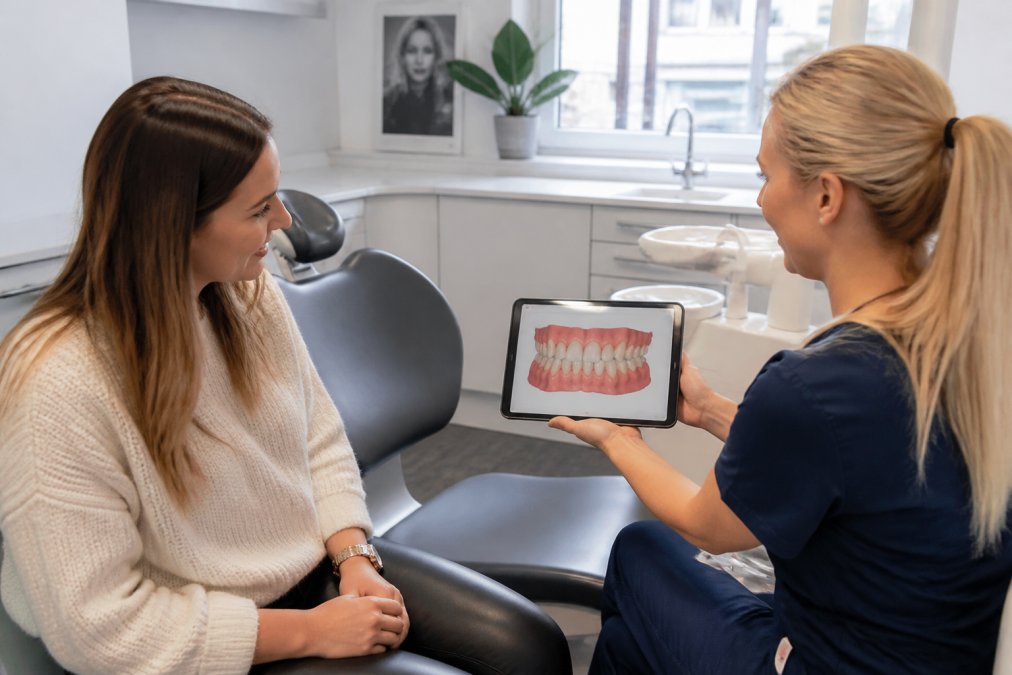
The severity of crowding, spacing, bite problems, and whether your teeth require extractions all play a role. Mild cases move faster; complex cases involving significant malocclusion may extend toward the upper end of these ranges. Clear aligners require consistent wear, 20 to 22 hours daily, to stay on schedule. Fastbraces, being fixed, don't depend on patient compliance in the same way, which is why they often deliver results faster. According to the British Orthodontic Society guidance on treatment planning, adult cases should be individualised based on clinical assessment rather than system choice alone.
Pros and Cons of Fastbraces
Fastbraces appeal to adults who want results quickly and don't mind a fixed appliance. The triangular bracket design is engineered to reduce friction and move teeth more efficiently than traditional braces.
Pros of Fastbraces:
- Significantly faster treatment, often 3 to 12 months versus 12-24 months with aligners
- Fixed system means no reliance on patient compliance
- Often avoids the need for tooth extractions
- Available in clear ceramic brackets for reduced visibility
- Can be a more affordable option than some premium clear aligner systems
Cons of Fastbraces:
- Fixed to your teeth, making eating and oral hygiene more complex
- Still visible, even with ceramic options
- Wire and bracket pressure can cause initial discomfort
- Requires careful dietary adjustments; hard, sticky, or crunchy foods must be avoided
- Adjustment appointments may be more frequent than with aligners
Adults preparing for a major event or significant milestone often find the shorter timeline worth the temporary inconvenience. However, if you prefer minimal disruption to your routine, the discretion of clear aligners may outweigh the time savings.
Adult Teeth Straightening Options in the UK
Adults in the UK have several teeth straightening options beyond Fastbraces and clear aligners, each suited to different priorities and clinical situations.
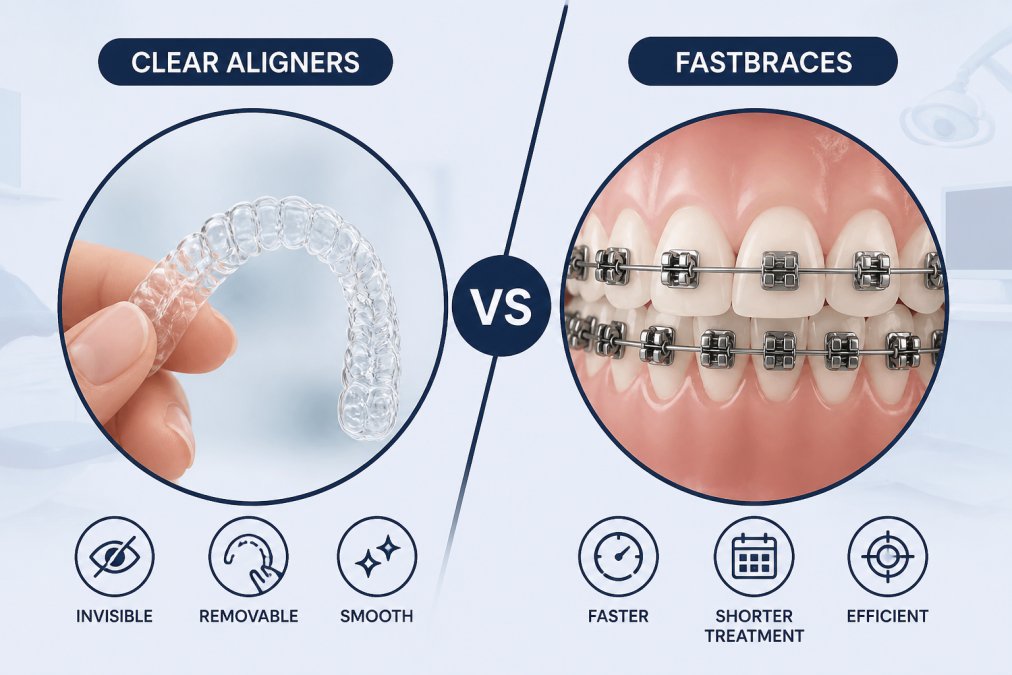
Clear Aligners: Clear aligners dominate the discretion market. Invisalign, made from SmartTrack material, offers a customised treatment plan developed using 3D imaging technology. ClearCorrect, from Straumann, is often positioned as a more affordable alternative. Both systems allow you to remove aligners for eating, drinking, brushing, and flossing, a major advantage for oral hygiene and lifestyle flexibility. Treatment typically spans 12 to 24 months. The trade-off is discipline: you must wear aligners 20 to 22 hours daily.
Fixed Appliances (Traditional Braces): Metal braces remain the gold standard for complex cases. They offer precise control over tooth movement and can handle severe crowding, bite problems, and situations requiring extractions. Treatment takes 18 to 36 months depending on complexity. Ceramic and lingual (behind-the-teeth) variants offer increased discretion. The drawback is visibility and the daily challenge of keeping teeth clean around brackets and wires.
Lingual Braces: These are fixed braces placed on the back of your teeth, making them invisible from the front. They're ideal for adults who want the precision of fixed appliances without the cosmetic impact. Treatment duration is similar to traditional braces (18-36 months), but they require a specialist orthodontist.
Combination Approaches: Some adults benefit from a hybrid approach, perhaps fixed braces for the first phase to handle severe crowding, then clear aligners for refinement. This can be effective for complex cases.
The decision between these options hinges on three factors: how visible your misalignment is, how much time you have, and your budget. For adults with mild to moderate issues who prioritise discretion, clear aligners win. For those with complex cases or tight timelines, fixed systems may be necessary.
Choosing between clear aligners and Fastbraces requires understanding your clinical situation, lifestyle constraints, and what outcome matters most. At Rodney Street Dental, we specialise in both systems and offer bespoke treatment plans tailored to your specific needs. Our team uses advanced 3D imaging and takes time to explain your options in detail, ensuring you understand what to expect at every stage. Whether you're seeking discreet Invisalign treatment, faster results with Fastbraces, or professional teeth whitening to complement your new smile, we're here to deliver clinical excellence with compassionate care. Get in touch to book a consultation and discover which approach is right for you.
Frequently Asked Questions
What is the main difference between clear aligners and Fastbraces?
Clear aligners are removable trays that gradually shift teeth using gentle pressure, whilst Fastbraces are fixed appliances with triangular brackets that move the tooth crown and root simultaneously. Clear aligners offer greater discretion and easier oral hygiene, whereas Fastbraces typically deliver faster results in 3 to 12 months. Your choice depends on whether you prioritise flexibility and aesthetics or speed and fixed stability.
How long does orthodontic treatment take for adults with clear aligners versus Fastbraces?
Clear aligner treatment typically takes 12 to 24 months, depending on case complexity and patient compliance. Fastbraces often achieve results in 3 to 12 months due to their unique bracket design. However, treatment duration varies based on the severity of crowding, spacing, bite issues, and your individual tooth movement response. A qualified dental professional can give you a more precise timeline after assessing your specific needs.
What are the main pros and cons of Fastbraces?
Fastbraces offer significantly faster treatment times and often avoid the need for tooth extractions, making them an efficient choice for adults. They can also be more affordable than premium clear aligners. However, they are fixed appliances, which can make eating and oral hygiene more challenging. Even clear bracket options remain more visible than clear aligners, and some patients experience initial discomfort as teeth adjust to the fixed mechanics.
Are there other adult teeth straightening options available in the UK besides these two?
Yes. Beyond clear aligners and Fastbraces, you can explore traditional fixed braces, lingual braces (fitted behind teeth), and other clear aligner brands such as ClearCorrect. Each option has different treatment timelines, visibility levels, and suitability for complex cases. A GDC-registered dental professional can review your malocclusion and recommend the best-fit option based on your clinical needs and lifestyle preferences.
Is it too late to start orthodontic treatment as an adult?
No. Adults of any age can pursue orthodontic treatment provided their periodontal health is good and they have healthy bone supporting their teeth. Many adults choose clear aligners or Fastbraces for professional, social, or personal reasons. Your orthodontist will assess your gingival health, existing dental work, and bite to determine the most appropriate treatment plan and whether any preparatory work is needed before starting.
This article was written using GrandRanker