 how-to
Book Same Day Dental Emergency Appointment: A Guide
Table of Contents
- How to Book a Same Day Dental Emergency Appointment
- Recognising Dental Emergency Symptoms
- What to Do in a Dental Emergency Before Your Appointment
- Finding an Emergency Dentist Near You
- Frequently Asked Questions
Book Same Day Dental Emergency Appointment: A Guide
Last Updated: July 18, 2026
When a tooth cracks or severe pain strikes without warning, knowing how to book same day dental emergency appointment can mean the difference between hours of agony and swift relief. This guide walks you through securing urgent care, recognising warning signs, and managing pain before arrival.
How to Book a Same Day Dental Emergency Appointment
Call your dental practice directly and explain your symptoms clearly: severe pain, swelling, bleeding, or trauma. This helps the receptionist assess urgency and locate the quickest available slot. Many practices reserve emergency slots specifically for same-day cases.
If calling is difficult, use online booking systems that flag emergency cases for immediate processing. Some practices also accept text or WhatsApp inquiries for faster response.
Be specific about symptoms. "Sharp pain when biting down on the left side" or "swelling and throbbing in my lower jaw" gives the dentist critical information before you arrive.
| Step | Action | Expected Duration |
|---|---|---|
| 1 | Call practice or use online booking | 2-5 minutes |
| 2 | Describe symptoms clearly | 1 minute |
| 3 | Confirm appointment time | 1 minute |
| 4 | Travel to clinic | varies |
| 5 | Complete registration (if new patient) | 5-10 minutes |
Recognising Dental Emergency Symptoms
Severe pain unresponsive to over-the-counter painkillers demands urgent care. If paracetamol or ibuprofen don't work after a few hours, professional intervention is needed. Throbbing pain that wakes you at night or prevents eating suggests infection or deep decay.
Visible swelling in your face, jaw, or gums indicates spreading infection. Swelling combined with fever or difficulty swallowing requires same-day treatment to prevent serious complications.
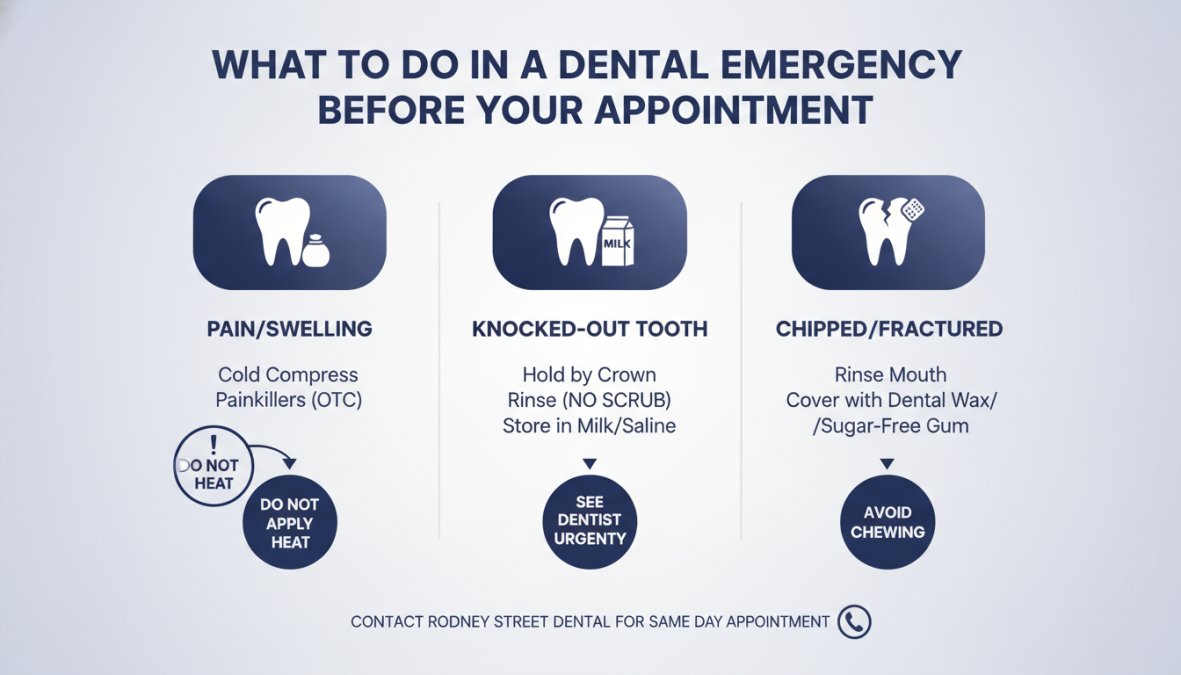
Trauma to a tooth, whether chipped, cracked, or knocked loose, needs urgent assessment. A completely knocked-out tooth can sometimes be saved if treated within hours. Rinse it gently without scrubbing, try to place it back in the socket, or keep it in milk or saliva until you reach the dentist.
Bleeding from the gums that won't stop after 10 minutes of gentle pressure warrants urgent evaluation. Persistent bad breath paired with pain or swelling suggests abscess formation, a bacterial infection that worsens without prompt treatment.
A tooth that feels loose or has shifted position needs same-day assessment.
What to Do in a Dental Emergency Before Your Appointment
Proper self-care can manage pain and prevent complications before you reach the dentist.
For severe pain, take paracetamol or ibuprofen as directed. If one doesn't work after 30 minutes, you can alternate them: ibuprofen, then paracetamol two hours later, then ibuprofen again. Never exceed the maximum daily dose.
Apply a cold compress to your cheek for 15 minutes at a time. Cold reduces inflammation and numbs pain temporarily. Wrap ice in a clean cloth rather than applying directly to skin. Repeat every few hours as needed. Avoid heat, which increases pain by promoting blood flow to the inflamed area.
Rinse your mouth gently with warm salt water several times daily. Mix half a teaspoon of salt in a cup of warm water and swish gently for 30 seconds. This reduces bacteria and soothes irritated tissue.
Avoid chewing on the affected side. Eat soft foods like soup, yoghurt, mashed vegetables, or scrambled eggs.
If a tooth has been knocked out, rinse it gently under cool running water without touching the root. Try to place it back into the socket, or keep it in milk or saliva. Get to the dentist within 30 minutes if possible.
For a cracked or chipped tooth, collect any fragments and bring them to your appointment. Avoid using that tooth for chewing.
Stay calm and avoid rinsing repeatedly with water or mouthwash, which can wash away protective clots. Rest as much as possible before your appointment.
Finding an Emergency Dentist Near You
Start with your current dental practice if you have one. Call and ask for their emergency line or out-of-hours contact. Many practices reserve same-day slots for existing patients.
If you don't have a regular dentist, search "emergency dentist near me" plus your postcode. Most areas have practices that advertise emergency availability. Check their websites for hours, some operate extended evening or weekend schedules for urgent cases.
Rodney Street Dental in Liverpool offers emergency dental services for patients requiring urgent care. Our team assesses symptoms and prioritises appointments based on clinical need.
Look for practices that clearly state same-day availability and have online booking systems flagged for emergencies. Practices with dedicated emergency lines typically have faster response times.
If you can't reach your dentist, NHS 111 can provide guidance and may direct you to an emergency dental service in your area.
Dental emergencies are stressful, but knowing how to book same day dental emergency appointment removes uncertainty. When pain strikes, recognise the emergency, apply immediate self-care, contact your dentist, and get professional treatment the same day. Most dental emergencies respond well to prompt treatment, preventing complications that would require more extensive intervention later.
At Rodney Street Dental, our team provides clinical excellence for emergency cases alongside comprehensive services including dental implants, orthodontics, and professional teeth whitening. Contact us today for your emergency or to learn more about our bespoke treatment plans.
Frequently Asked Questions
What qualifies as a dental emergency that requires same-day treatment?
A dental emergency typically involves severe tooth pain, knocked-out or chipped teeth, broken dental work, signs of abscess (swelling or fever), or significant bleeding from the mouth. Severe trauma, loose teeth, or pain that prevents eating and sleeping also warrant urgent dental care. If you're unsure whether your situation is urgent, call your emergency dentist to discuss your symptoms and receive guidance on whether same-day treatment is necessary.
How quickly can I book a same day dental emergency appointment?
Many dental practices, including emergency clinics, reserve same-day appointment slots specifically for urgent cases. Response times vary depending on current demand and your location, but practices prioritise emergency cases for rapid booking. Contact your local emergency dentist by phone or text to confirm availability. Many surgeries offer 24/7 online booking systems that allow you to check same-day slots and book instantly, ensuring you receive immediate relief without lengthy delays.
What should I do immediately if I have a dental emergency after hours?
If you experience a dental emergency outside normal office hours, start with self-care: rinse with warm salt water, apply a cold compress to reduce swelling, and take over-the-counter pain relief if appropriate. Avoid chewing on the affected side. Contact your emergency dentist's answering service or check their website for after-hours guidance and weekend appointment availability. Many practices offer evening and weekend emergency slots, and some provide triage advice to help manage pain until your appointment.
Do I need dental insurance to book an emergency appointment and receive treatment?
No, you do not need dental insurance to access emergency dental care. Whilst insurance can help offset costs, emergency dentists treat patients regardless of insurance status. Many practices offer flexible payment plans and transparent pricing to make urgent care accessible. Contact your chosen emergency dental clinic directly to discuss payment options, and ask about any available plans. Your immediate health and pain relief are the priority, and practices work with you to arrange suitable payment terms.
This article was written using GrandRanker