 comparison
All-on-4 vs Traditional Dentures: Pros and Cons
Table of Contents
- All-on-4 Implants vs Traditional Dentures: Key Differences
- Suitability for Dental Implants: Who Should Choose All-on-4
- Dental Implant Recovery Time and Procedure Timelines
- Caring for Dental Implants vs Dentures: Maintenance Compared
- Frequently Asked Questions
Last Updated: August 17, 2026
All-on-4 Implants vs Traditional Dentures: Key Differences
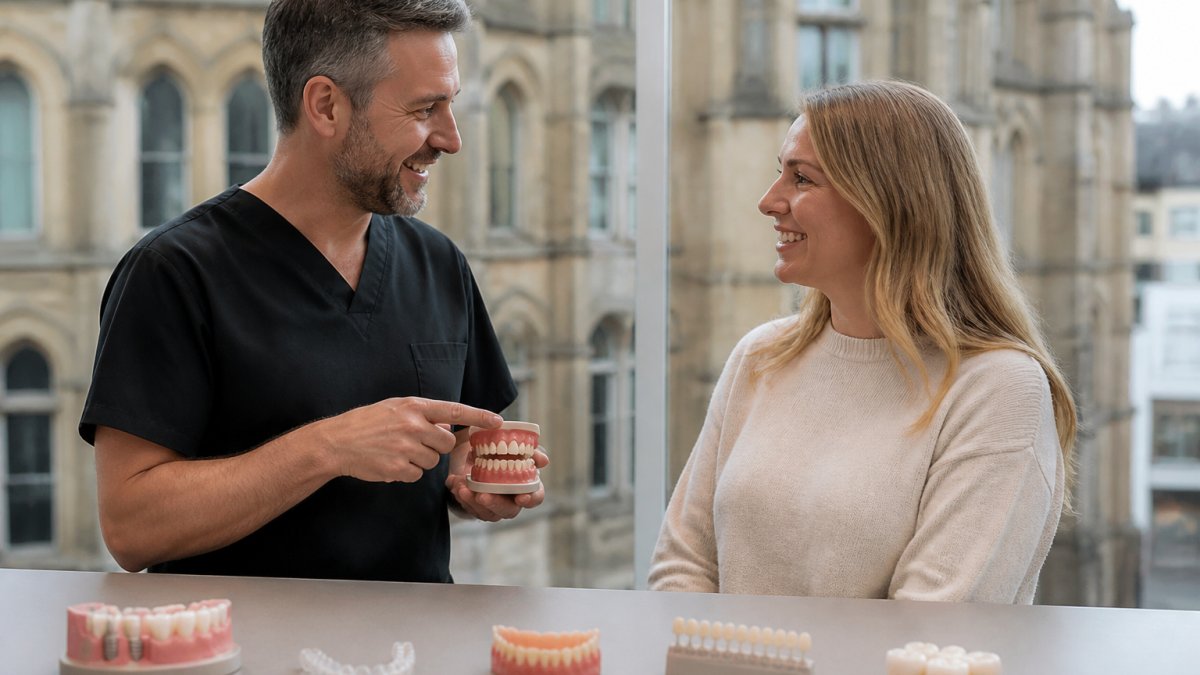
When you're missing all your teeth, the choice between all-on-4 implants and traditional dentures shapes how you eat, speak, and feel about yourself. All-on-4 dental implants provide a full arch of fixed teeth using four strategically placed titanium posts anchored into the jawbone, whilst traditional dentures are removable appliances made of acrylic resin that rest on your gums.
The fundamental distinction comes down to stability and bone preservation. All-on-4 implants prevent jawbone loss through osseointegration, the titanium posts bond with your bone, stimulating it as natural tooth roots do. Traditional dentures sit on top of your gums and cannot stop the bone resorption that occurs naturally after tooth loss. Over time, your face shape changes and dentures require adjustments.
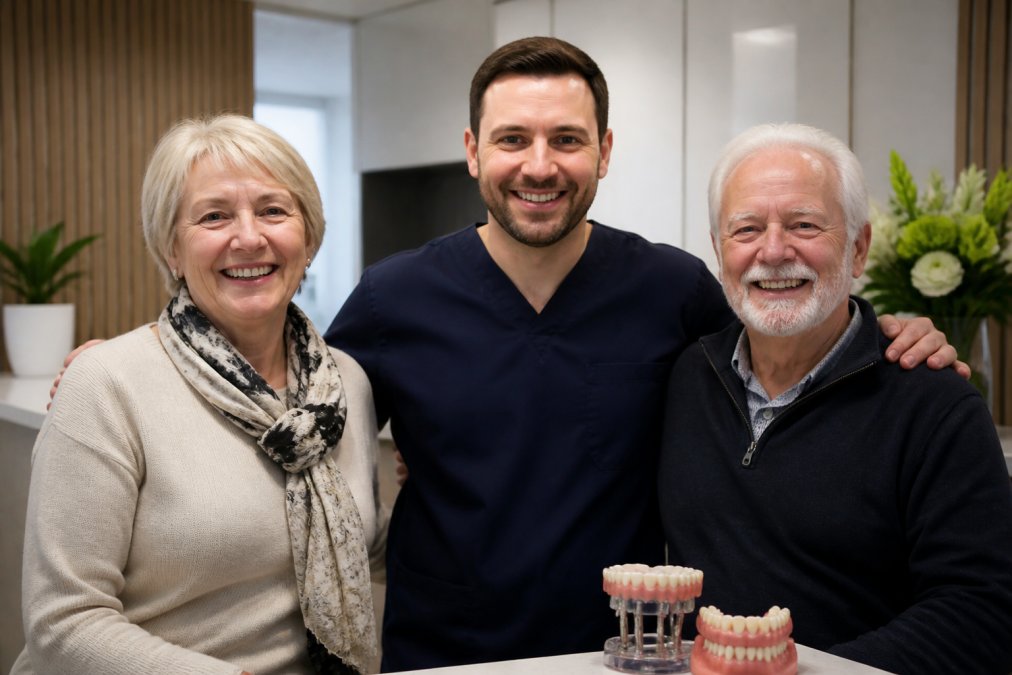
At Rodney Street Dental, we've guided many patients through this decision. The right choice depends on your jaw structure, overall health, commitment to maintenance, and what matters most in daily life.
Suitability for Dental Implants: Who Should Choose All-on-4
All-on-4 implants work best for patients with sufficient jawbone density to support four implants without needing bone grafting. You're a strong candidate if you have failing or missing teeth and want a permanent solution that preserves your jawbone and facial structure. The procedure involves placing four implants at precise angles, two vertical in the front and two tilted toward the back, allowing immediate loading with temporary teeth placed the same day. Most patients see their permanent restoration within 3-6 months.
However, all-on-4 requires healthy gums and good oral hygiene. Peri-implantitis, infection around the implant, is the primary long-term risk. Patients who struggle with plaque control or have a history of periodontal disease face higher complication rates. Smoking increases risk, though it's not an absolute contraindication.

Traditional dentures suit patients who cannot or prefer not to undergo surgery. If you have very little jawbone remaining or are medically unable to tolerate a surgical procedure, dentures remain a valid option.
Dental Implant Recovery Time and Procedure Timelines
All-on-4 is a single surgical appointment lasting 2-3 hours under local anaesthesia with sedation options available. You'll go home the same day with temporary teeth, a major advantage over traditional dentures.
Osseointegration, where your jawbone fuses to the titanium posts, takes 3-6 months. Recovery discomfort is typically mild, with swelling peaking around day 3-4 and subsiding within 7-10 days. Most patients return to light work within a week and normal activity within 2-3 weeks.
Traditional dentures follow a different timeline. Impressions are taken, then you wait 2-4 weeks for fabrication. Once delivered, dentures often need adjustments as your gums settle.
Caring for Dental Implants vs Dentures: Maintenance Compared
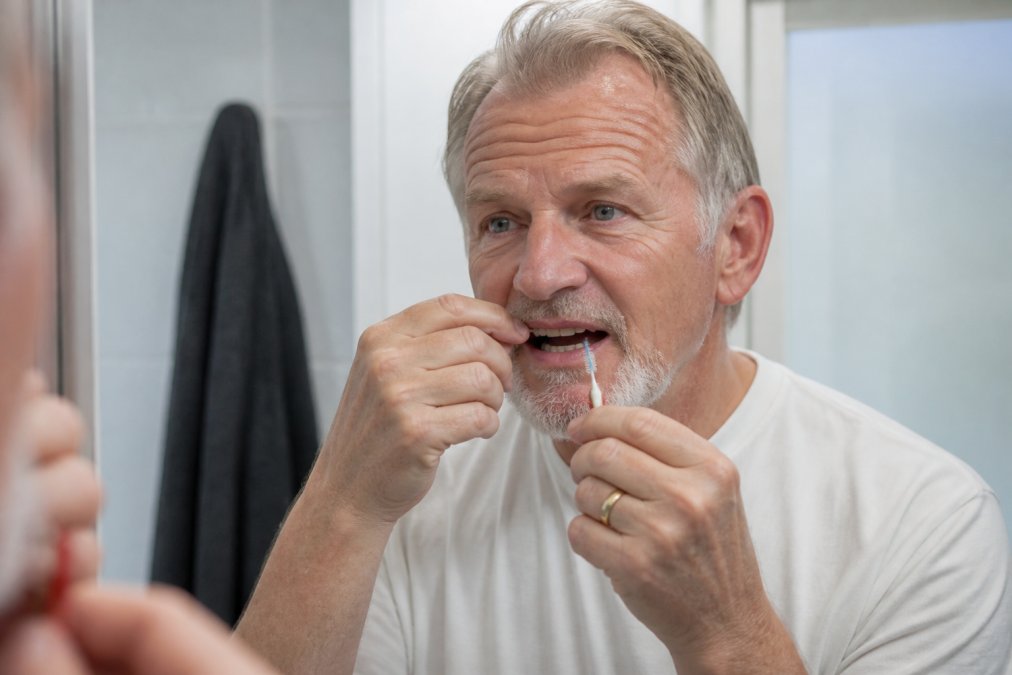
All-on-4 implants demand rigorous daily hygiene. You brush and floss around the implant-supported prosthesis as you would natural teeth. Implants cannot develop cavities, but they can develop peri-implantitis if plaque accumulates. Professional cleaning every 3-4 months is standard practice. Water flossers and implant-specific brushes work well.
Traditional dentures require daily removal and soaking in denture solution. You brush them with a soft brush and denture paste, regular toothpaste is too abrasive. Over time, dentures require relines as your jawbone resorbs and gum shape changes, typically every 1-2 years.
All-on-4 implants are more stable long-term. Once osseointegration is complete, the restoration is fixed and doesn't shift. Dentures become looser as bone loss accelerates, and many wearers eventually upgrade to implants because traditional dentures no longer provide adequate retention.
| Aspect | All-on-4 Implants | Traditional Dentures |
|---|---|---|
| Stability | Fixed, no movement | Removable, can slip |
| Bone preservation | Prevents resorption | Does not stop bone loss |
| Chewing efficiency | 80-90% of natural teeth | 60-70% after adaptation |
| Daily maintenance | Brush and floss in place | Remove, soak, brush nightly |
| Professional visits | Every 3-4 months | Every 1-2 years for relines |
| Speech impact | Minimal adjustment | May affect clarity initially |
| Longevity | 20-30+ years typical | 5-8 years before relines needed |
| Reversibility | Surgical removal possible | Easily discontinued |
Choosing between all-on-4 implants and traditional dentures means weighing permanence against flexibility, upfront investment against ongoing maintenance, and surgical commitment against non-invasive simplicity. If you value stability, bone preservation, and long-term function, all-on-4 is the stronger choice. If you prefer avoiding surgery or need maximum reversibility, dentures remain a legitimate option.
The best decision starts with a thorough consultation where your dentist assesses your bone structure, overall health, oral hygiene habits, and lifestyle priorities. At Rodney Street Dental, we provide bespoke treatment plans with video walkthroughs so you understand exactly what to expect. Our fully-qualified team uses trusted implant brands like Straumann and BioHorizons, and we prioritise patient safety and comfort throughout your restorative journey. Whether you choose implants or dentures, we're committed to delivering the clinical excellence and compassionate care that gives you back your confidence. We also offer teeth whitening to help you achieve the bright, radiant smile you deserve alongside your tooth replacement solution.
British Society of Prosthodontists guidance on tooth replacement options
General Dental Council standards for implant placement and maintenance
National Institute for Health and Care Excellence recommendations on dental implants
Frequently Asked Questions
What is the main difference between All-on-4 implants and traditional dentures?
All-on-4 implants are fixed prostheses anchored to your jawbone using four titanium posts, whereas traditional dentures are removable appliances that rest on your gums. All-on-4 provides greater stability and chewing efficiency, whilst dentures require daily removal and cleaning. All-on-4 also preserves jawbone density through osseointegration, whereas dentures do not prevent bone resorption over time.
How does the dental implant recovery time compare to dentures?
All-on-4 implants typically require 3-6 months for full osseointegration, though temporary teeth can often be placed on the same day. Complete recovery involves gradual healing of the surgical sites. Traditional dentures have minimal recovery time since no surgery is involved, but they may require adjustment appointments over several weeks for proper fit and comfort.
Who is a good candidate for suitability for dental implants?
Candidates for All-on-4 implants generally need adequate jawbone density, good overall health, and commitment to oral hygiene. Age is not a barrier, implants work for patients in their 60s, 70s and beyond. Those with severe bone loss, certain medical conditions, or heavy smoking may require bone grafting or additional evaluation. A consultation determines individual suitability.
Which option is more painful: dentures or implants?
All-on-4 implant placement involves surgical discomfort during the procedure, managed with local anaesthesia and sedation if needed. Post-operative soreness typically subsides within 1-2 weeks. Traditional dentures involve no surgical pain, but may cause gum irritation, soreness, and discomfort during the initial adjustment period as your mouth adapts to the foreign object.
What are the long-term stability and durability differences?
All-on-4 implants offer superior long-term stability, with success rates exceeding 95% over 10 years when properly maintained. They preserve facial structure and jawbone. Traditional dentures may shift or slip during eating or speaking and require replacement every 5-8 years as bone resorption changes the fit. All-on-4 provides greater confidence in daily function.
This article was written using GrandRanker