 listicle
7 Benefits of Dental Implants for Jawbone Health
Table of Contents
- 1. Stimulation of Jawbone Through Osseointegration
- 2. Prevention of Bone Resorption and Atrophy
- 3. Maintenance of Facial Structure and Aesthetics
- 4. Improved Chewing Function and Nutrition
- Frequently Asked Questions
Last Updated: August 21, 2026
1. Stimulation of Jawbone Through Osseointegration
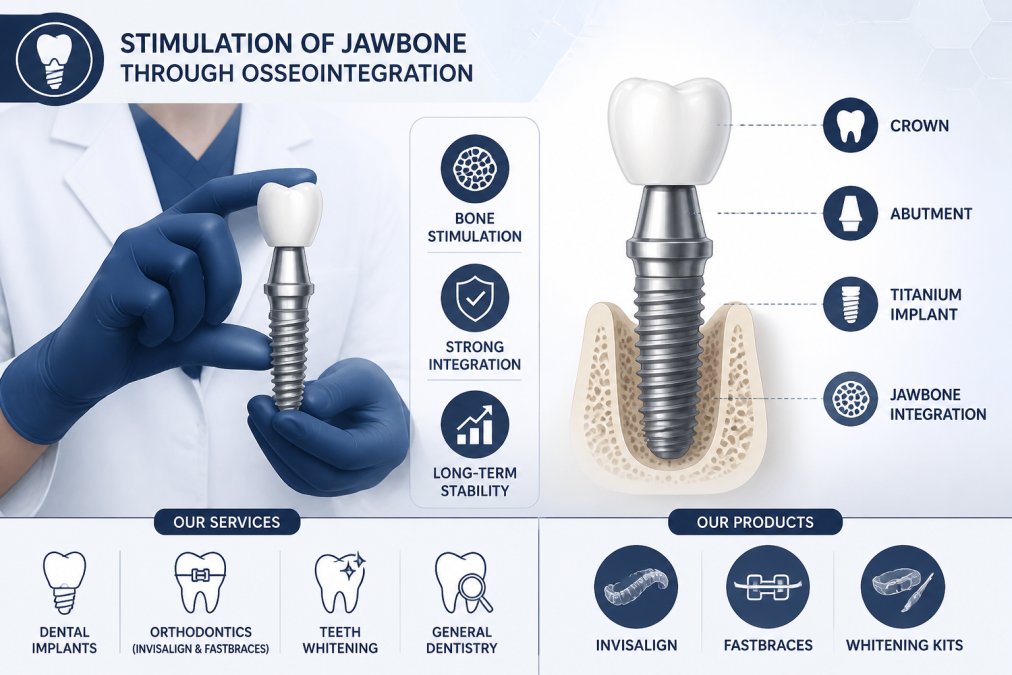
Dental implants work through osseointegration, where the titanium implant post fuses directly with surrounding bone tissue, creating a stable artificial tooth root that transmits chewing forces into the jawbone. When you lose a natural tooth, the jawbone beneath it no longer receives the stimulation needed to maintain its density. A dental implant reverses this by anchoring firmly to the bone and transmitting chewing pressure directly into it, signalling the body that the bone remains essential.
The osseointegration process typically takes several months, during which new bone cells grow around and integrate with the implant surface (the American Dental Association). This biological fusion makes implants far more durable than other tooth replacement options.
2. Prevention of Bone Resorption and Atrophy
Bone resorption occurs naturally when bone tissue is no longer used. After tooth loss, the jawbone begins to resorb almost immediately because no force is transmitted through the tooth root. You can lose up to 25% of jawbone width in the first year following extraction (peer-reviewed research).
A dental implant halts this resorption by replacing the missing tooth root and restoring mechanical stimulation. Because the implant anchors directly into bone and bears chewing forces, it maintains structural integrity and density. Implant patients preserve facial structure far better than those relying on bridges or dentures. The longer you wait after tooth loss to place an implant, the more bone you lose, which is why early intervention matters.
3. Maintenance of Facial Structure and Aesthetics
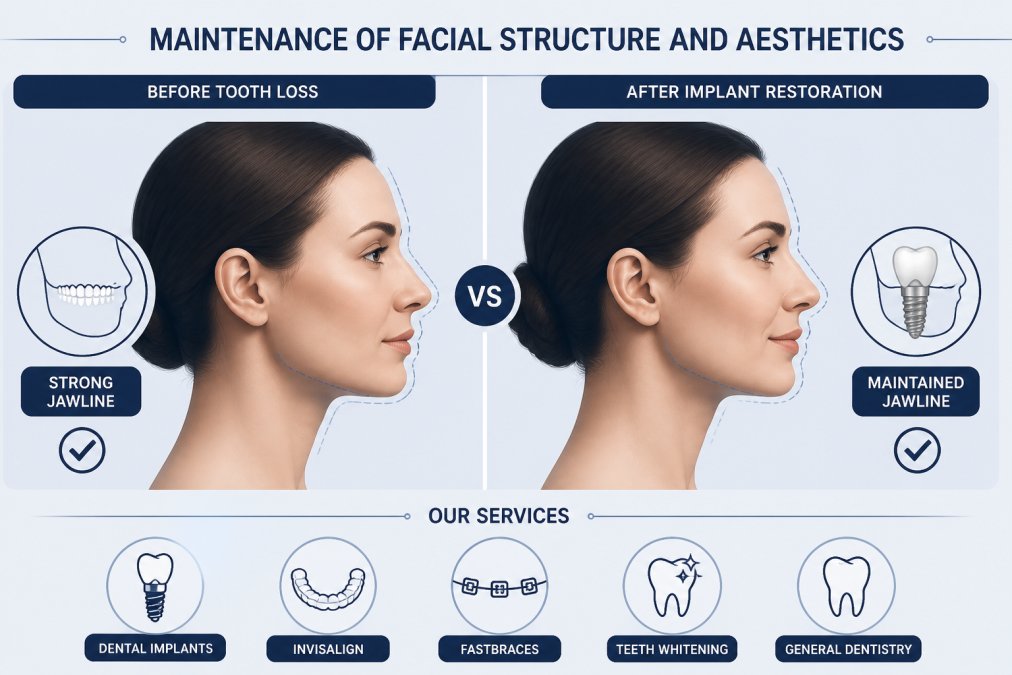
When bone resorbs after tooth loss, your face undergoes visible changes: the lower third becomes shorter, your chin appears more prominent, and your lips lose fullness. Dental implants preserve underlying bone structure, keeping facial contours, lip support, and proportions stable. Your smile maintains natural appearance because the implant supports gum tissue and bone as a natural tooth root would.
Maintaining facial structure also preserves your ability to speak clearly and chew effectively. When the lower face collapses due to bone loss, it affects how your lips move during speech and how your jaw aligns when you bite. Once your implant restoration is complete, you may also wish to enhance your smile further with services such as teeth whitening, which can brighten your restored teeth and boost your confidence in your renewed appearance.
4. Improved Chewing Function and Nutrition
Natural teeth transmit chewing forces directly into the jawbone through the tooth root, allowing significant bite force and efficient food breakdown. Removable dentures lose much of this efficiency because they don't integrate with bone and can shift during use.
Dental implants restore near-natural chewing function because they anchor directly into bone (peer-reviewed research). You can bite and chew with confidence, knowing the implant won't move. This allows you to eat a wider variety of foods, including tougher items difficult to manage with dentures. Better chewing function directly improves nutrition, when you can eat comfortably, you're more likely to consume adequate protein, fibre, and essential nutrients.
Jawbone health is foundational to long-term oral function and facial aesthetics. At Rodney Street Dental, we specialise in comprehensive implant planning that protects your jawbone health for decades to come. Our team uses trusted implant systems and bespoke treatment plans tailored to your specific bone structure and aesthetic goals. Contact us to discuss how dental implants can preserve your jawbone and restore your smile.
Frequently Asked Questions
Q: Do dental implants actually prevent jawbone loss?
A: Yes. Unlike bridges or dentures, dental implants replace the entire tooth root with a titanium post that integrates directly into the jawbone through osseointegration. This process stimulates bone cells and prevents the resorption that occurs when tooth roots are missing. Implant patients maintain significantly more bone density over time compared to those with missing teeth or traditional replacements.
Q: What are the signs of jawbone loss after tooth extraction?
A: Common signs include a sunken or collapsed facial appearance, changes to your profile, difficulty fitting dentures, loose teeth shifting position, and a receding chin. Bone loss can be subtle at first but accelerates over time. Within the first year after tooth loss, the jaw can lose up to 25% of its volume. If you notice these changes, seeking dental implants or other restorative treatment promptly helps preserve remaining bone.
Q: Will I need bone grafting before dental implants?
A: Not always. Bone grafting is necessary only if your jawbone lacks sufficient density or volume to support an implant securely. Your dentist will assess your bone structure through imaging before recommending a treatment plan. Some patients have adequate bone and can proceed directly to implant placement, whilst others benefit from bone grafting to create a stronger foundation. Modern grafting techniques use materials that integrate well and support long-term implant success.
This article was written using GrandRanker